Charlotte envisioned as the 'Silicon Valley' of energy grid modernization

Add Axios as your preferred source to
see more of our stories on Google.
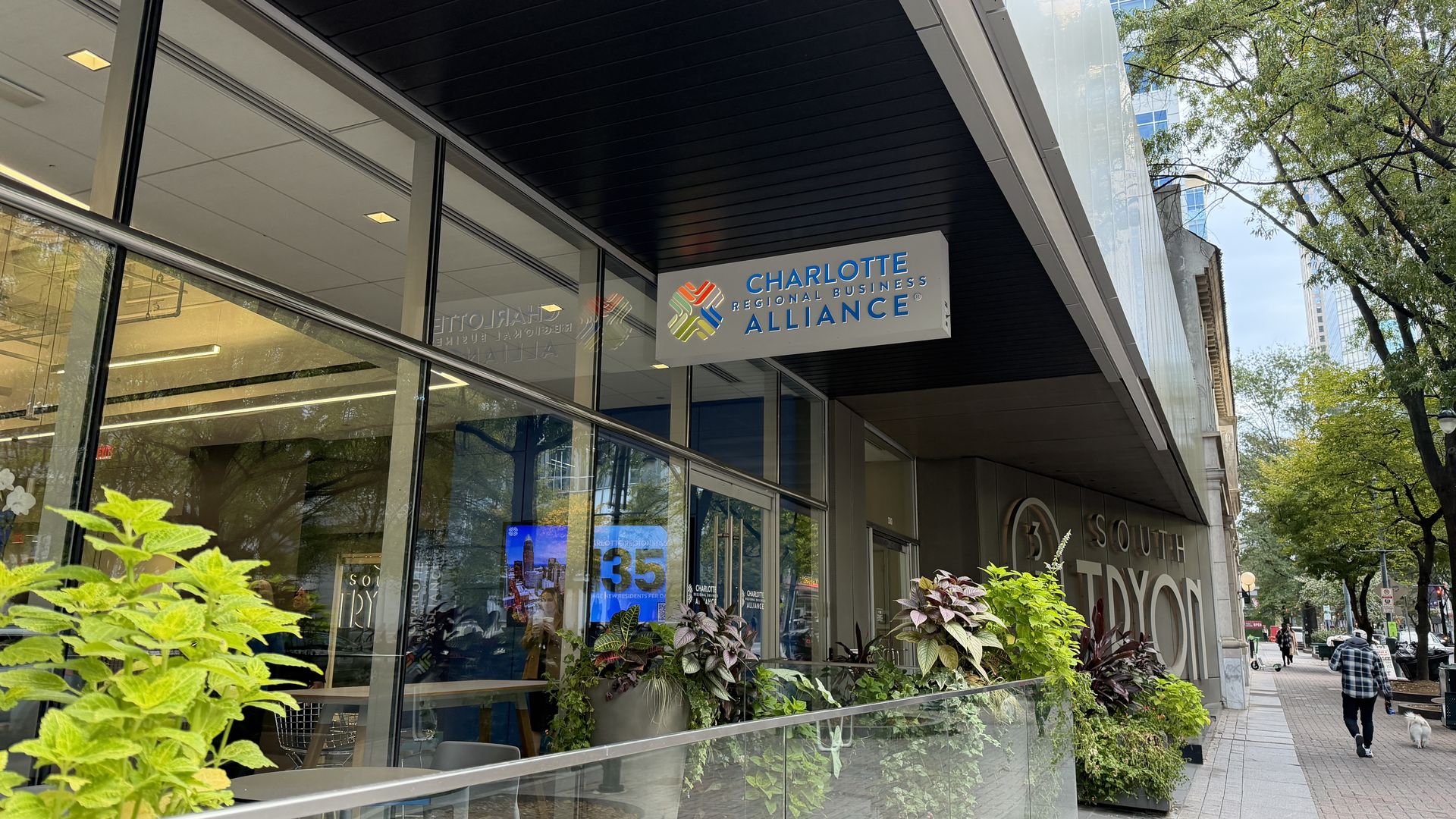
Photo: Ashley Mahoney/Axios
The Charlotte region could become "the Silicon Valley" of energy grid modernization, according to a UNC Charlotte professor.
Why it matters: Charlotte's growth has created a demand for energy, both in terms of residential use and manufacturing.
What they're saying: "We envision this region becoming kind of the Silicon Valley of the grid," UNC Charlotte professor and Energy Production & Infrastructure Center (EPIC) executive director Rob Cox said Monday at a Charlotte Regional Business Alliance energy roundtable.
- This includes grid modernization and infrastructure.
State of play: Cox's vision would see UNC Charlotte in a similar position to that of Stanford University in Silicon Valley. This would allow UNC Charlotte to lead "because of partnerships," he says.
- "If we're going to build affordable and reliable power, we're going to need to be able to train workforce to be able to operate and design," Cox says.
Between the lines: A key piece is seeing innovation implemented faster.
- "It's very easy to come up with new ideas that will help the grid," Cox tells Axios. "It's very, very difficult to get those things adopted." It can take up to 15 years to go from concept to adoption and around half a billion dollars, Cox says. That stems from policy challenges.
- The University is working with major players like Duke Energy and the Electric Power Research Institute (EPRI) to determine how to bring those technologies to market faster, Cox says.
Zoom in: Over the summer, UNC Charlotte was selected to lead the U.S. National Science Foundation Grid Modernization Engine in the Carolinas.
- The grant includes a $15 million federal investment over two years and up to $160 million over the next 10 years depending on performance metrics.
- The designation is intended to help speed up adoption of "solutions that improve grid reliability," according to the university.
Yes, and: A key component of this Silicon Valley dream is funding. Cox tells Axios that venture capital isn't interested in coming into the grid marketplace right now, but he hopes innovation that stems out of the university and working with major players will help address that.
- "If we can address that, we will really unlock a lot of opportunity in this region," Cox tells Axios.
What we're watching: Cox says this regional partnership can help cut the ideation to adoption time in half, because they have the "right players at the table."
- "We're doing that here, in this region, which we think is going to lead to more innovators wanting to relocate and lead to more adoption of technologies that are coming out of the universities," Cox says.
The big picture: The region's grid is aging. It's taking on more load growth—which encompasses everything from data centers to new manufacturers in the area.
- The grid is also subject to extreme weather, whether that's higher temperatures or recent snow storms.
- "It's going to cost a lot of money to make those fixes, but they're necessary," Cox says.