Charlotte small businesses hit with costly rebrands over naming conflicts

Add Axios as your preferred source to
see more of our stories on Google.
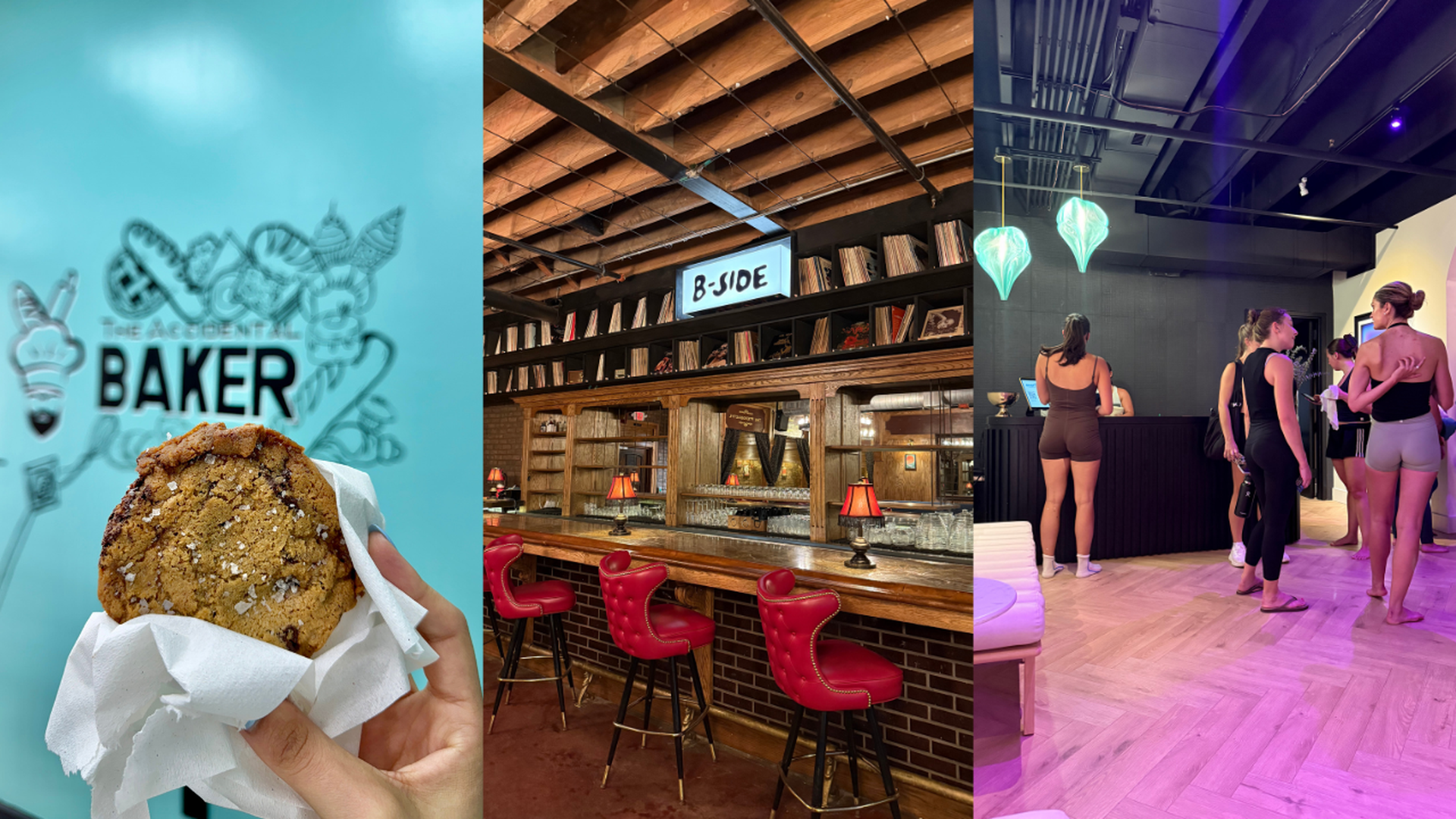
Charlotte's The Accidental Baker (soon to be Panetteria Senza) B-Side Sound Bar (now Deep Cuts), and Drench (now Overflo) have all rebranded after trademark and naming conflicts. Photos: McKenzie Rankin and Laura Barrero/Axios
Charlotte small businesses are losing money and marketing momentum after getting caught up in naming and trademark conflicts — sometimes days before opening.
Why it matters: It's already notoriously expensive to run a local business in Charlotte. But overlooking trademark clearance early on can mean paying for a new name, signage, branding and legal help after thousands of dollars have already been invested.
By the numbers: Federal trademark applications cost $350 per category of goods or services, explains Charlotte trademark attorney Darlene Harris, while hiring an attorney can run roughly $1,000-$5,000.
- Harris acknowledges that's a significant upfront expense for a small business but says conducting a trademark search before investing in a brand can help avoid a much costlier rebrand later.
- Case in point: The owners of one local business say a last-minute rebrand cost them $45,000.
Zoom in: Overflo owners Matt and Martin MacLean were days away from selling founding memberships for their South End fitness studio when they were alerted to a trademark conflict.
- The business was originally called Drench, but a Los Angeles-area hot Pilates studio held a federal trademark for the name Drenched in a fitness category, Matt MacLean tells Axios.
- The L.A. Drenched discovered the Charlotte studio after its creative agency mistakenly pulled the Charlotte business's branding for a presentation — an example of the type of confusion trademarks are intended to prevent.
- "We thought we did our due diligence," he says. The team scrambled to rebrand as Overflo — which ultimately cost $45,000 across merchandise, design services, replacement materials, and legal fees.
Yes, but: Registering an LLC with the state doesn't give a business exclusive trademark protection over its name, Harris tells Axios.
- And names don't have to be identical to potentially conflict. "The point of a trademark is to avoid customer confusion," Harris says. Whether businesses offer similar goods or services can factor into that question.
Another example: South End listening lounge Deep Cuts HiFi had promoted itself as B-Side Sound Bar for roughly three months when owner Preston Abernathy said B-Side Group, which owns Vinyl and Mi Cariño, sent legal paperwork alleging infringement the day before its grand opening in May.
- Abernathy said they changed B-Side's name to Deep Cuts rather than fight, paying for a new sign and design work and scrapping branded video content.
- The bigger loss was the marketing momentum they'd built around the listening lounge, he added.
The other side: B-Side Group partner Kamal Patel said the company was concerned about confusion because the businesses had similar names and operated in the same industry. He said Google AI search results had incorrectly associated B-Side Sound Bar with B-Side Group.
- B-Side Group began filing trademarks related to its businesses in 2023, Patel said, and wants to preserve its ability to use the B-Side name as its hospitality portfolio grows.
The big picture: None of the Charlotte businesses in this story had federally registered their original names before running into naming conflicts.
Yes, and: Matt Cabana, owner of popular gluten-free bakery The Accidental Baker, is trying to avoid that scenario. The bakery will rebrand in the coming months to Panetteria Senza, meaning "Bakery Without" in Italian, he tells Axios.
- He searched the Secretary of State database before forming his LLC in 2024 but later discovered another North Carolina baker had been operating under the same name since 2018.
- He hasn't been contacted to change the bakery's name, he says. Instead, he's proactively rebranding to Panetteria Senza and has applied for a federal trademark.
- "If I'm going to change a name, I want to make sure that it's bulletproof, everywhere," he says.
The bottom line: Trademark law is complicated, but if you're opening a small business, it's worth sorting out your name before building a brand around it.