The latest mental health treatment in Charlotte: Ketamine

Add Axios as your preferred source to
see more of our stories on Google.
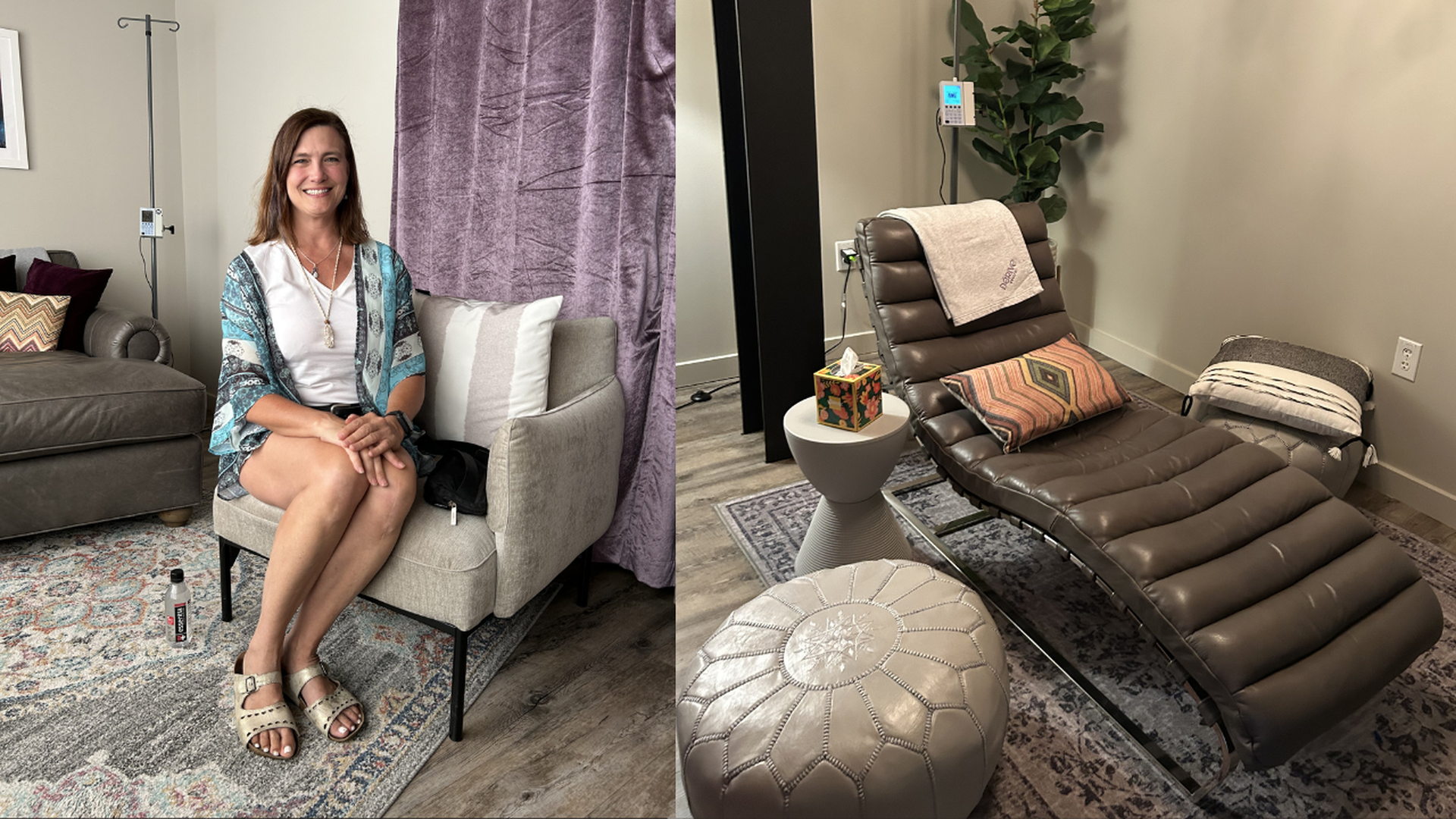
Lake Norman resident Adrienne Craighead is among more than 1,000 Charlotte-area patients treated with ketamine infusions at Derive Health since the clinic opened in 2023. Photos: McKenzie Rankin/Axios
A longtime party drug is finding a new role treating depression and PTSD for hundreds of Charlotteans.
Why it matters: Ketamine infusion clinics are growing in the city and across the country as research points to the drug's mental health benefits.
Context: Ketamine has been used as an anesthetic in surgery and emergency medicine since the 1970s. It later became known as a club drug because of its hallucinogenic effects.
- More recently, doctors have begun prescribing ketamine off-label, often in the form of IV infusions, nasal sprays and lozenges, to treat severe mental health conditions.
By the numbers: The need for new treatments is significant — more than 1 billion people worldwide are living with a mental health disorder, according to the World Health Organization.
- Ketamine has emerged as one promising option. Studies suggest roughly 50% to 70% of people with treatment-resistant depression respond to ketamine infusions.
- While the strongest evidence is for depression, ketamine is also increasingly being used to treat other conditions like PTSD and anxiety.
Zoom in: After years of living with clinical depression, Lake Norman resident Adrienne Craighead had tried everything from traditional antidepressants to meditation in search of relief.
- Then she tried a ketamine infusion at Derive Health in Dilworth, one of several clinics in the Charlotte area offering ketamine as mental health therapy.
- She says she noticed a shift almost immediately.
Wha's happening: During an infusion, Craighead says she feels detached from her body — "like I'm watching a kaleidoscopic movie on television." In the days that follow, she says, she experiences a sense of lightness and moments of clarity.
How it works: Those shifts in perspective are one reason ketamine has emerged as a treatment for conditions like depression and PTSD, says Jonathan Leake, an emergency medicine physician and co-owner of Derive Health and Hydrate Medical.
- Unlike traditional antidepressants, which primarily target serotonin and can take weeks to work, Leake says ketamine acts on the brain's glutamate system to promote neuroplasticity.
- Combined with the psychedelic state patients experience during treatment, Leake says that process can help people approach difficult thoughts and emotions from a different perspective.
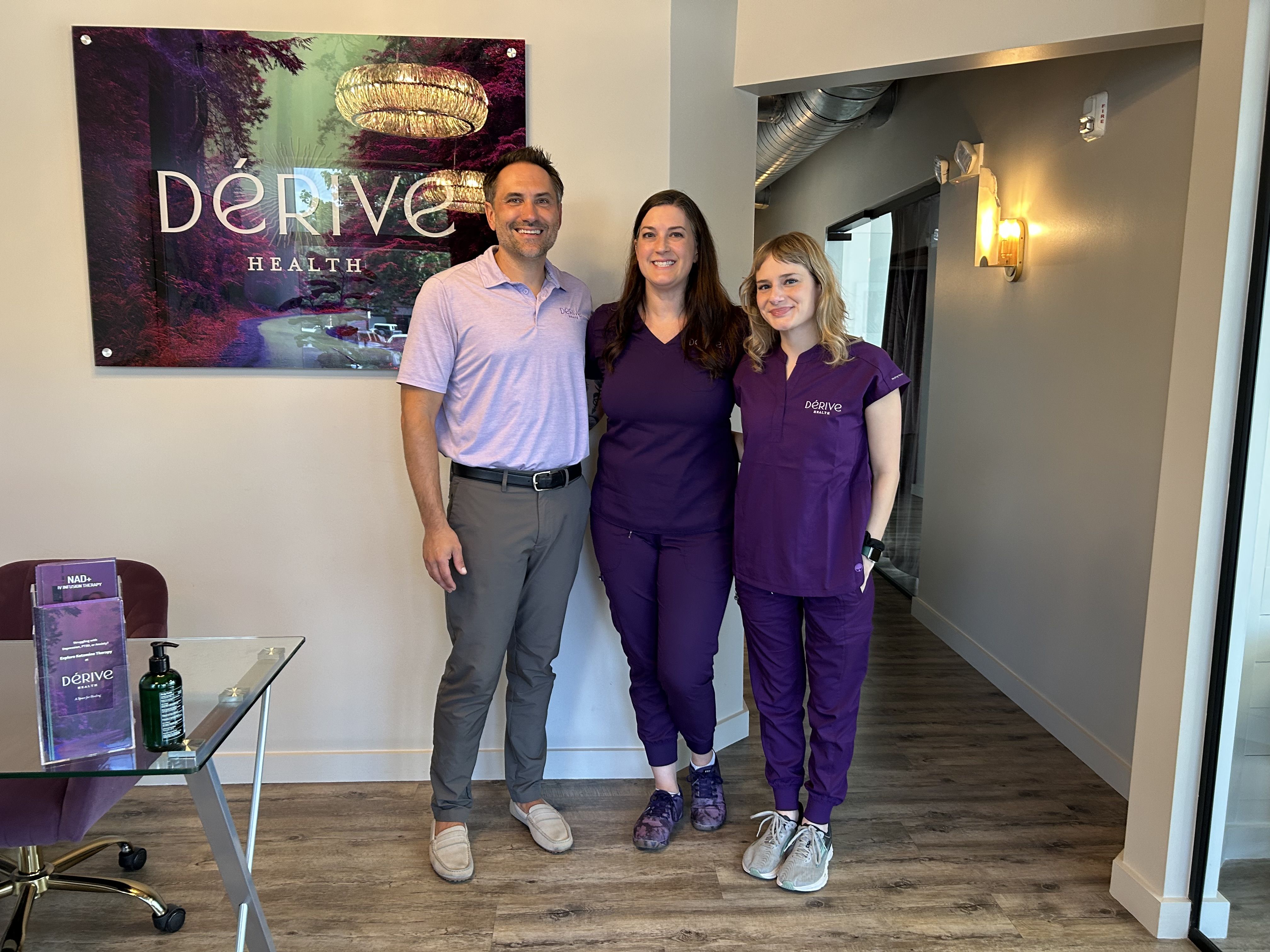
Flashback: Leake says he became interested in ketamine around a decade ago after seeing emerging research while treating suicidal and severely depressed patients in the emergency department.
- "I was seeing people at the lowest points in their lives," Leake said. "It was frustrating feeling like I couldn't help them."
Catch up quick: Since opening Derive in 2023, Leake and his business partner, nurse practitioner Keith Parris, have treated more than 1,000 Charlotte-area patients, administered more than 5,000 infusions and now care for about 500 active patients across their Dilworth and Pinehurst clinics.
- About 90% of patients at the Pinehurst clinic are veterans or veterans' spouses, many from the Special Forces community, seeking treatment for PTSD, says Leake.
- "[Our patients] have gotten better really, really fast. They're noticing they're less reactive and calmer in their body."
Yes, but: Relief comes at a price. Because ketamine infusions for depression are prescribed off-label, insurance rarely covers them.
- At Derive, patients typically undergo a series of six infusions over six to seven weeks, costing about $2,450 out of pocket.
- The goal, Leake says, is lasting relief. After the initial series, many patients may need maintenance infusions only once or twice a year — if at all.
The other side: Ketamine therapy remains a bit of a regulatory gray area. The Food and Drug Administration has only approved one treatment, Johnson & Johnson's nasal spray Spravato,
- And while IV ketamine must be administered by a doctor, nurse practitioner or physician assistant, there are no national standards for how clinics screen or treat patients.
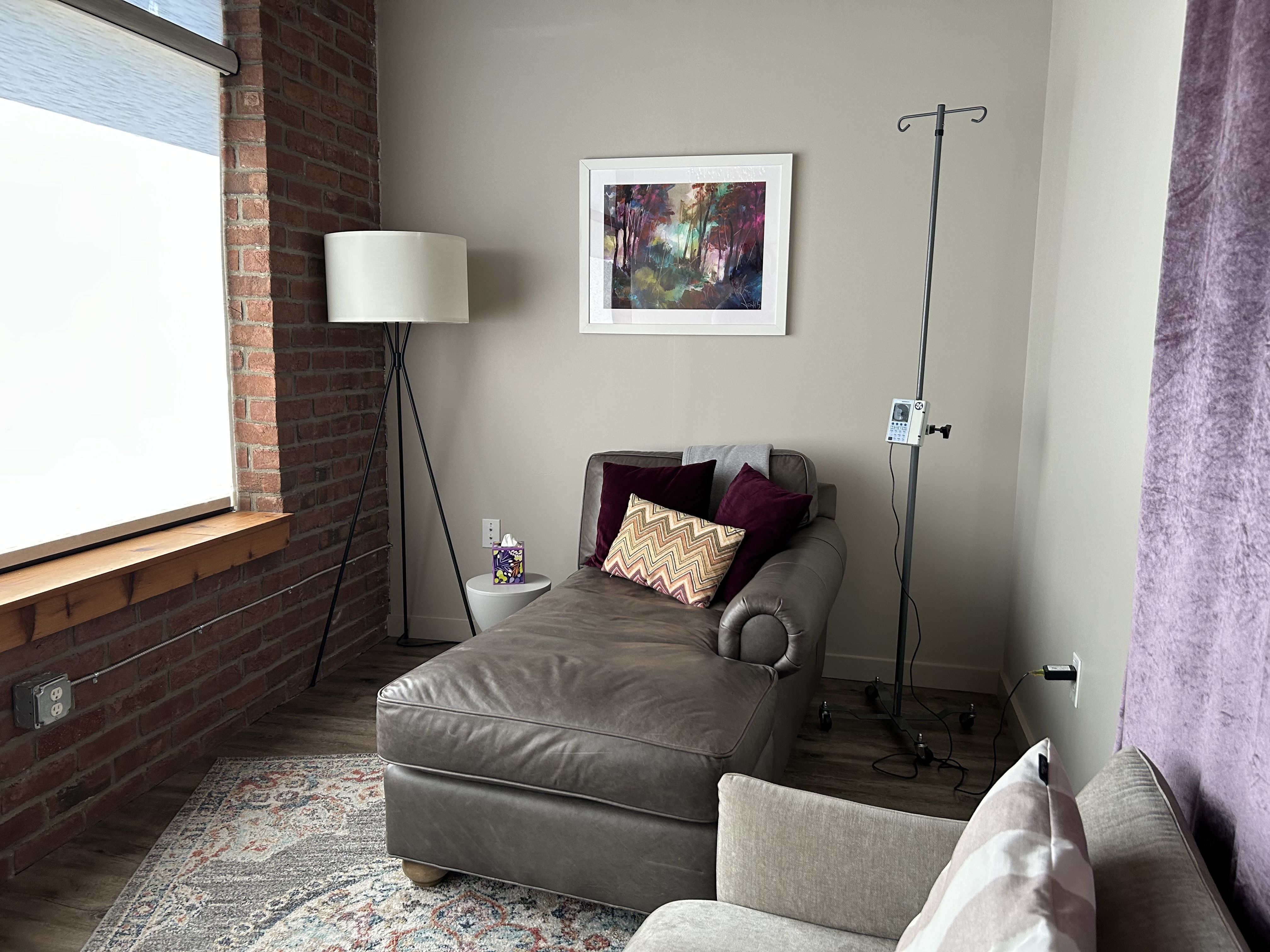
What they're saying: Patients should look for clinics that provide medical and psychological screening, monitor infusions in person and offer support before and after treatment, says Leake.
- At Derive, staff are trained in ketamine-assisted and psychedelic-assisted therapy, and the clinic partners with about a dozen therapists who can join sessions or help patients process the experience afterward.
- "A lot can come up emotionally during treatment," says Leake. "You need somewhere for that to land."
The big picture: Though technically a dissociative anesthetic, ketamine is part of the growing field of psychedelic medicine.
- Researchers are studying psychedelics including psilocybin, the psychoactive compound in "magic mushrooms," and MDMA as potential treatments for depression, PTSD and even addiction.
- The results are promising, but unlike ketamine, those drugs remain illegal outside limited research settings in much of the U.S.
The bottom line: Leake says ketamine isn't a cure or a shortcut — it's a tool that can help people begin the work of healing.
- For Craighead, it's offered a new perspective."It's like putting down a fresh blanket of snow on your mind and letting you start building brand new sled tracks."