Charlotte's food scene has the same identity problem as Charlotte

Add Axios as your preferred source to
see more of our stories on Google.
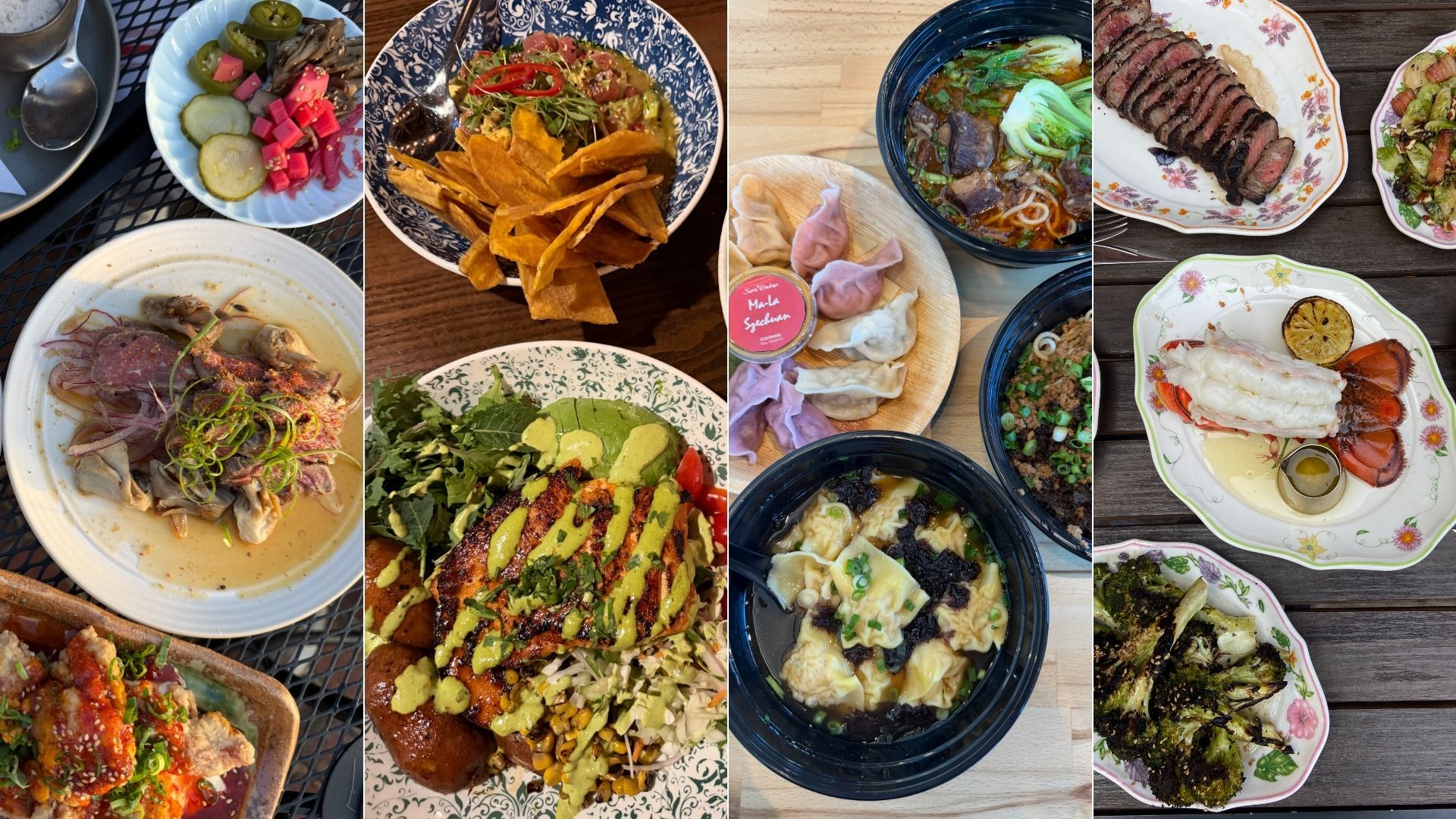
Dozo, Calle Sol, Sun's Kitchen, Supperland. Photos: Ashley Mahoney/Axios
Charlotte, once known for steakhouses and company-credit-card dinners, is chasing recognition for its evolving food scene, investing millions in exposure through "Top Chef" and Michelin.
Why it matters: There are some criteria for building a food-city reputation that money can't buy. Few people can succinctly describe Charlotte's culinary identity. The debate sounds awfully familiar.
- "Charlotte itself is still finding its identity," says Evan Diamond, aka Charlotte Foodie Guy. "Unlike places that built their food culture over generations around one cuisine or specialty, Charlotte is a mix of influences from all over."
Charlotte is historically a trading-post town.
- That's reflected in menus with Appalachian, Piedmont and Lowcountry influences.
- "It's one of the most accessible food cities in the country," Diamond says. "Some of the best meals here aren't in fancy dining rooms. They're in strip malls, food halls, food trucks and family-owned restaurants."
What they're saying: Southern food journalist Erin Perkins says eating in Charlotte used to be an "afterthought" when she visited the city.
- "Now that's the first thing I think about," she says. "There's so much now that I want to try, what's new and what's happening, and I don't want to just stay at my hotel in Uptown at the Capital Grille."
Yes, but: Ask anyone Charlotte's signature dish, and answers range from pimento cheese to livermush to Bojangles. I asked around and got no consensus.
- "People love Charlotte because you can easily get to the mountains, you can get to the coast," says Jamie Brown of Tonidandel-Brown Restaurant Group. "We don't need a signature dish, and nor would it be to our benefit to have one, because then you're not very diversified."
- Jeff Tonidandel says Charlotte's diversity of produce, stemming from its seasonality, may be among the scene's greatest strengths.
- "It means we get foraged ramps in the spring, and we get citrus from Charleston in the winter," Tonidandel says. "We don't need one specific dish to hang our hat on."
The other side: There's a difference between a culinary destination and a city with some good restaurants, says Robert F. Moss, a Charleston-based food writer. It's hard to say what a visitor can find in Charlotte that they can't find in their hometown.
- "I don't see it as really standing out on its own as 'I really need to go to Charlotte to eat,'" Moss says. "Charlotte is still working on what its culinary identity is going to be."
Zoom out: Charleston's food scene blew up around 15 years ago from publicity. It's also invested heavily in promoting its food scene.
Follow the money: Since around 2018, the Charlotte Regional Visitors Authority has ramped up efforts to catapult Charlotte's food scene into the national spotlight.
- "We just need to let more people experience Charlotte," Tonidandel says. "We have a lot of momentum."
- North Carolina tourism offices agreed to pay $345,000 solely for the chance to be included in the Michelin Guide. The gamble resulted in Michelin awards to Counter- and Lang Van.
- To recruit "Top Chef," CRVA spent $1.2 million from its annual $9.7 million paid media budget. Production also got $2.5 million in state film incentives.
- But while "Top Chef" highlighted Charlotte's skyline, the season looked broadly at the Carolinas. It leaned into themes like coastal seafood and whole-hog barbecue, which are not necessarily Charlotte-specific.
By the numbers: Food is critical to tourism. CRVA attributes 25% of all visitor spending to food and beverage.
- CRVA says efforts are paying off. Search terms like "best food in Charlotte" are up 52%.
The bottom line: Charlotte may possess the same ingredients Charleston did back in the early 2000s to achieve food-city status. Good restaurants, growing talent and people starting to pay attention.
- The difference is that Charleston knew what its culinary identity was before the Bon Appétits and the Food & Wines showed up.
- "Our story is very much being written still," CRVA's chief brand and strategy officer Laura White says.