The Zyn can has become a Trade Street staple

Add Axios as your preferred source to
see more of our stories on Google.
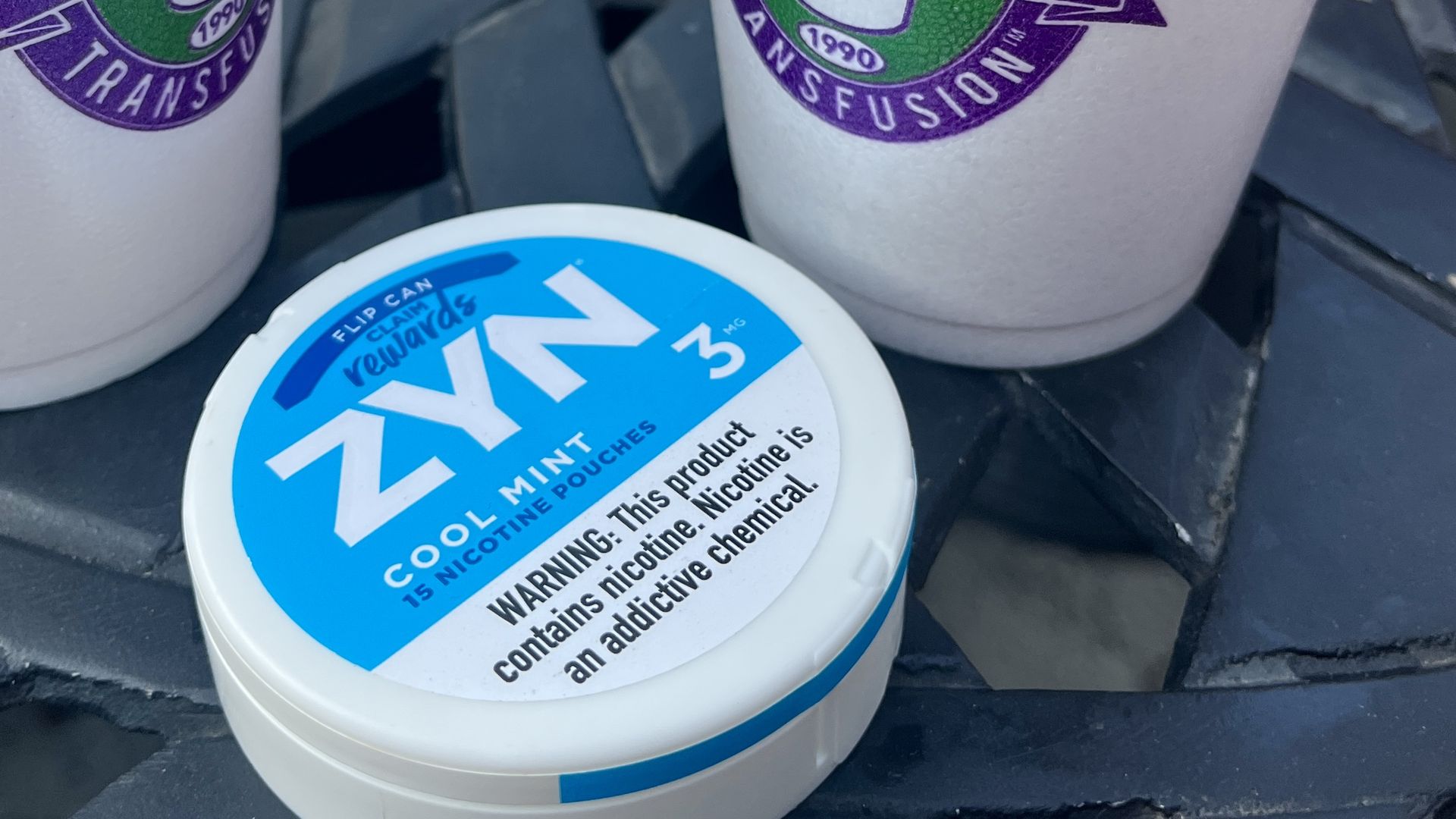
Photo: Alexandria Sands/Axio
The small circular imprint of a Zyn can in a khaki pocket is showing up everywhere on Trade Street, a sign of Charlotte's new workplace habit.
Why it matters: Nicotine pouches are discreet, odorless and easy to tuck between the gum and lip, fueling their rising popularity among white-collar workers who claim the products help them be productive.
- "When I'm researching, working on spreadsheets, or crafting memos, I find that Zyn seemingly enhances my focus. I'm more 'dialed-in,'" says Matt A., a 43-year-old banker who says the pouches helped him quit a pack-a-day smoking habit.
What they're saying: Some users Axios spoke to view the pouches less as a vice and more as a productivity tool. Others say they adopted the habit as a substitute for vaping, smoking or chewing tobacco.
- "They help me focus or lock into a project almost like a coffee would," says Anthony DiGioia, a 29-year-old real estate broker.
- CM, a 30-year-old in supply chain logistics who requested to go by his initials, says he went from smoking to vaping, with a brief attempt at patches and nicotine gum. Now he's using Velo, another nicotine pouch brand, specifically the 6mg Wild Berry flavor.
- "I would say vaping helped me quit smoking, and nicotine pouches helped me quit vaping," CM says. "To quote the Sublime song 'Badfish,' 'I swim, but I wish I never learned.'"
Reality check: Nicotine as a stimulant can temporarily elevate a person's mood and capacity to focus on tasks. But because nicotine is addictive, when users stop, the reverse can happen. Symptoms include difficulty concentrating, as well as anxiety, sadness and irritability.
- "You end up having to continuously use nicotine in order to just maintain a stable baseline normal functioning," says Adam Leventhal, founding director of the USC Institute for Addiction Science.
- Researchers still don't know the long-term health implications of the relatively new product, but they are tracking gum irritation and cardiovascular effects.
Yes, but: Early evidence indicates that nicotine pouches are significantly less harmful than cigarettes, especially since they don't involve any exposure to the lungs, Leventhal says.
- "But that doesn't mean that they are harm-free," he adds.
The big picture: Sales of Zyn nicotine pouches are booming.
- Philip Morris International, a tobacco company and parent of Zyn, markets the pouches as an alternative to other nicotine products that may be less harmful.
- PMI has directly targeted Charlotte, handing out merchandise at the Breakaway EDM music festival and selling products out of tents at the Lovin' Life Music Festival, for example.
- "We have always been clear that those who are concerned about their health should stop, or never start, using nicotine products as they are addictive and not risk-free," the company said in a statement to Axios.
By the numbers: The smoke-free business now accounts for 43% of PMI's total net revenues.
- It shipped 2.3 billion Zyn pouches — or 155 million cans — in the first quarter of this year. Consumers bought 10% more than a year ago.
- PMI estimates its smoke-free products are used by over 43 million people around the world.
The bottom line: Charlotte's new nicotine habit is somehow undetectable and everywhere at the same time.