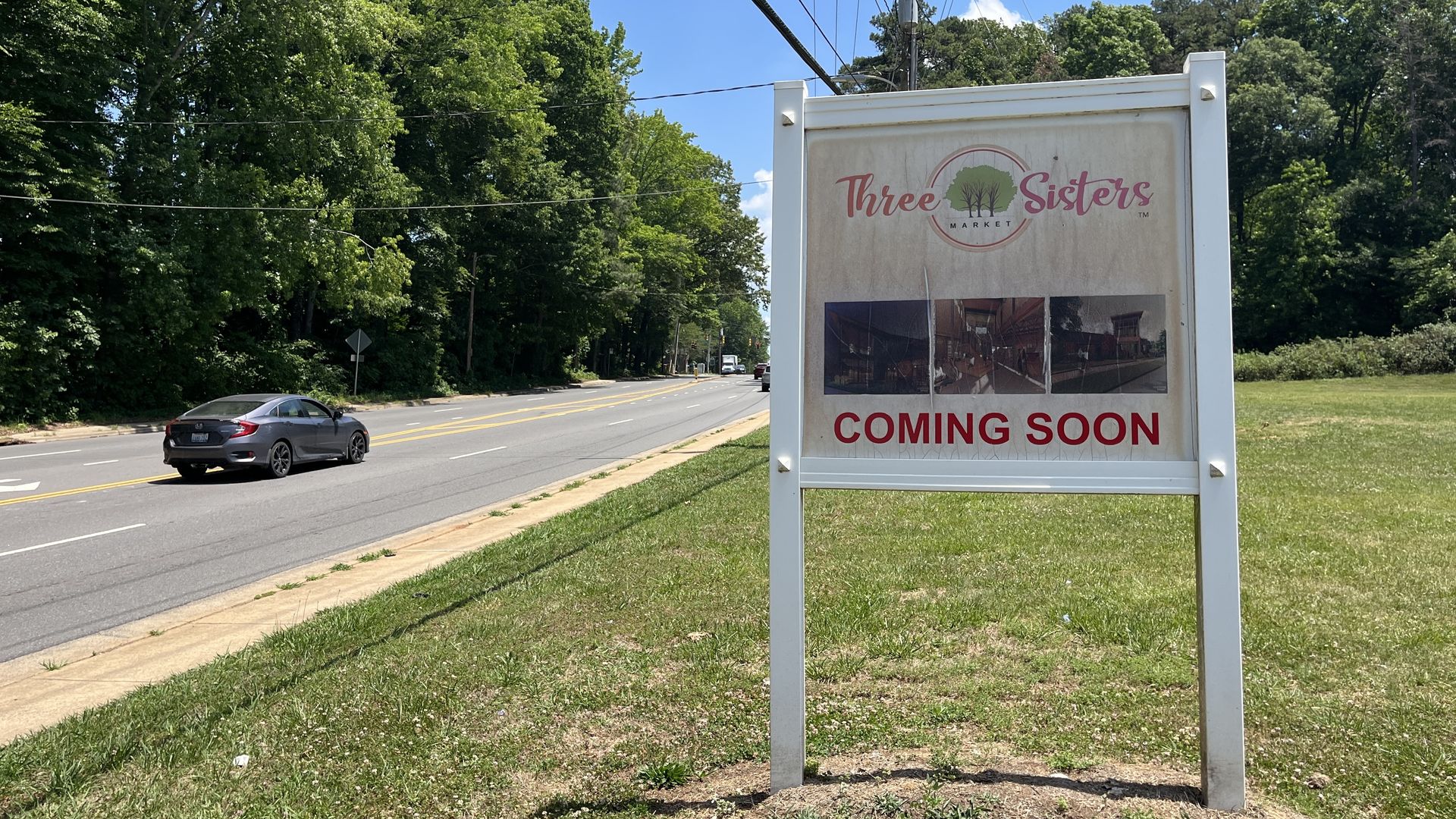
The sign promising that Three Sisters Market is "coming soon" has been up for years, and it shows. Photo: Alexandria Sands/Axios Photo: Alexandria Sands/Axios
In west Charlotte, volunteers have spent years seeking funding for food co-ops, so residents won't have to haul grocery bags down narrow sidewalks as far.
Why it matters: The average age of death in the West Boulevard area is 65.
That's an 11-year gap from Ballantyne, where the typical life expectancy is 76.
The latest: Wells Fargo recently stepped up to commit $1.5 million to The Three Sisters Market, a project nearly a decade in the making on West Boulevard.
And Historic West End Partners secured $4 million in city funding for a food co-op at Beatties Ford and West Fifth Street, incorporating it into a six-story housing and office building to make the project financially viable.
"You have to deliver a total experience these days for it to be profitable or sustainable," says J'Tanya Adams of Historic West End Partners.
Yes, but: Co-ops face the same economic challenges that prevent traditional grocers from opening in the area in the first place:
High food stamp use, higher theft-prevention costs, and higher labor costs because employees would rather work at another store, Lempert says.
Lempert says the best solutions to food access are mobile food units, pop-ups at transit stations, and city-packaged incentives for grocery stores, such as free land and tax breaks.
The bottom line: Wegmans plans to open more North Carolina stores. The not-so-wealthy corners of the city already know they won't be chosen, and they aren't waiting anymore.