NCDOT responds to I-77 toll project backlash with new designs, info center

Add Axios as your preferred source to
see more of our stories on Google.
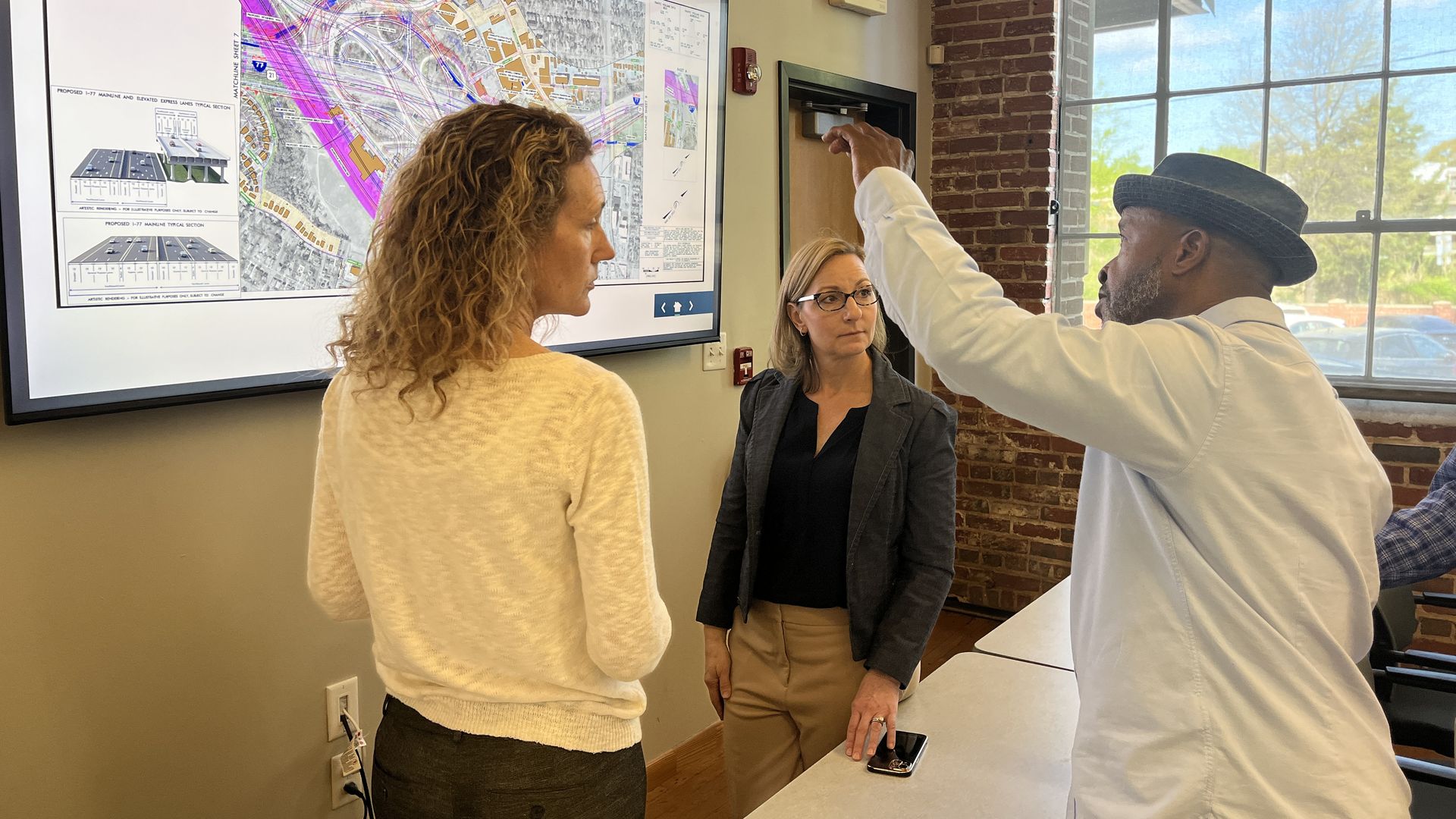
Rickey Hall of the West Boulevard Neighborhood Coalition was one of the first visitors to the center Monday morning. Photo: Alexandria Sands/Axios
The N.C. Department of Transportation is trying to ease mounting opposition to the I-77 South toll lanes by opening a new outreach center and revising designs to "minimize" impacts on homes, parks and cemeteries.
Why it matters: NCDOT isn't backing off on this $3.2 billion public-private highway project that will come up to people's property lines and, in some cases, displace families. But it's eager to strengthen its case.
- This is the first time NCDOT has opened a feedback center dedicated to one project, underscoring the magnitude of the project's footprint, record-breaking cost and resistance.
What they're saying: "There's a very collaborative path forward for this," the state's transportation board chair, Tony Lathrop, said Monday.
- He and other state and city leaders were announcing the opening of the "Community Engagement Center" in a brick building on West Morehead.
Zoom in: The expanded toll lanes will stretch 11 miles between Brookshire Freeway and the South Carolina line.
- The latest design elevates lanes in the Uptown area rather than an at-grade widening. This leaves space for retaining walls between some buildings and the highway.
- Plans no longer take out cemeteries or homes north of the John Belk Freeway. No properties will be affected in the historic Black neighborhoods of McCrorey Heights, Biddleville, Lincoln Heights or the West End.
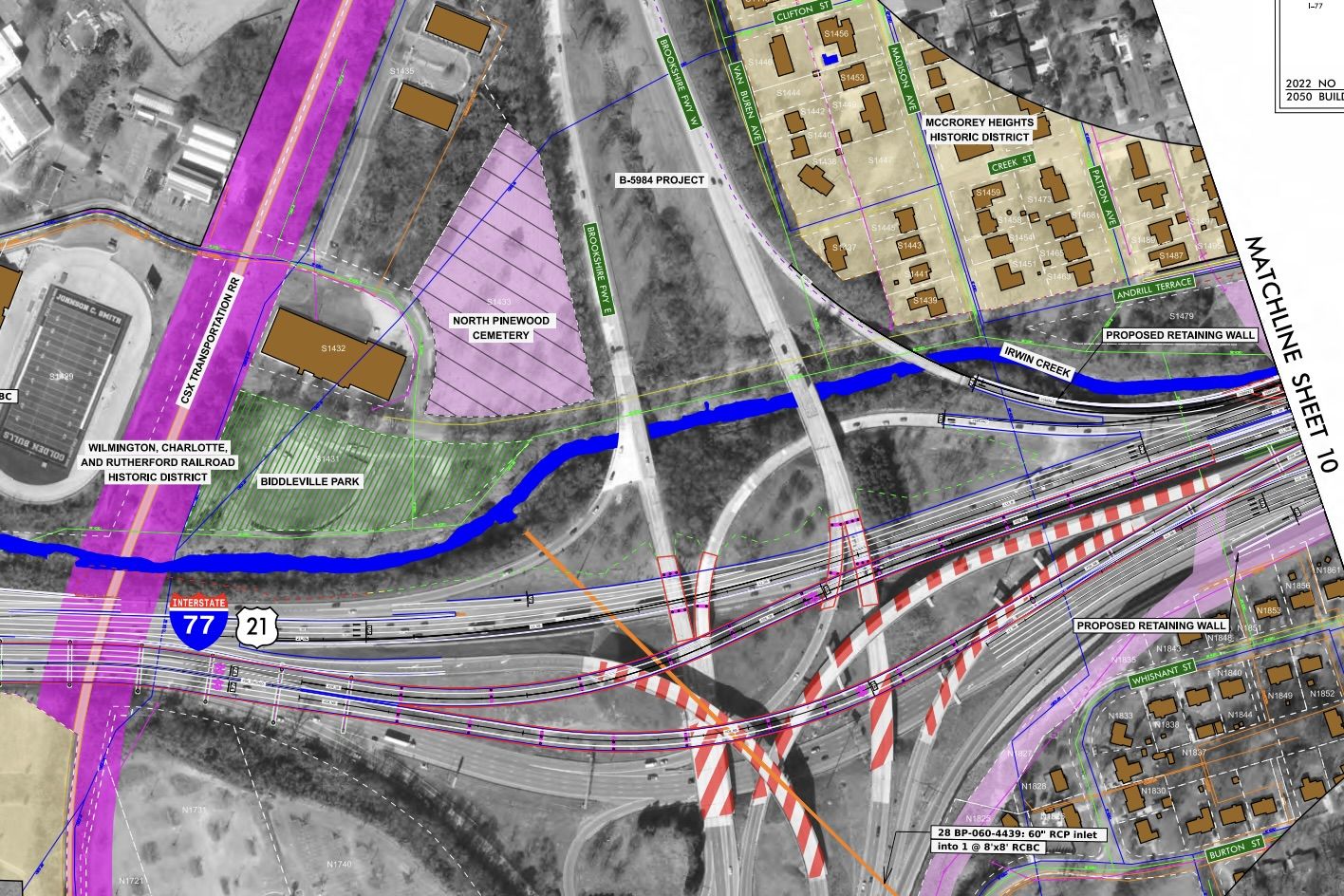
- But maps show a row of homes on Wilmore's Spruce Street would be wiped out. NCDOT staff would not say how many homes early designs would demolish, but confirmed it's fewer than 100.
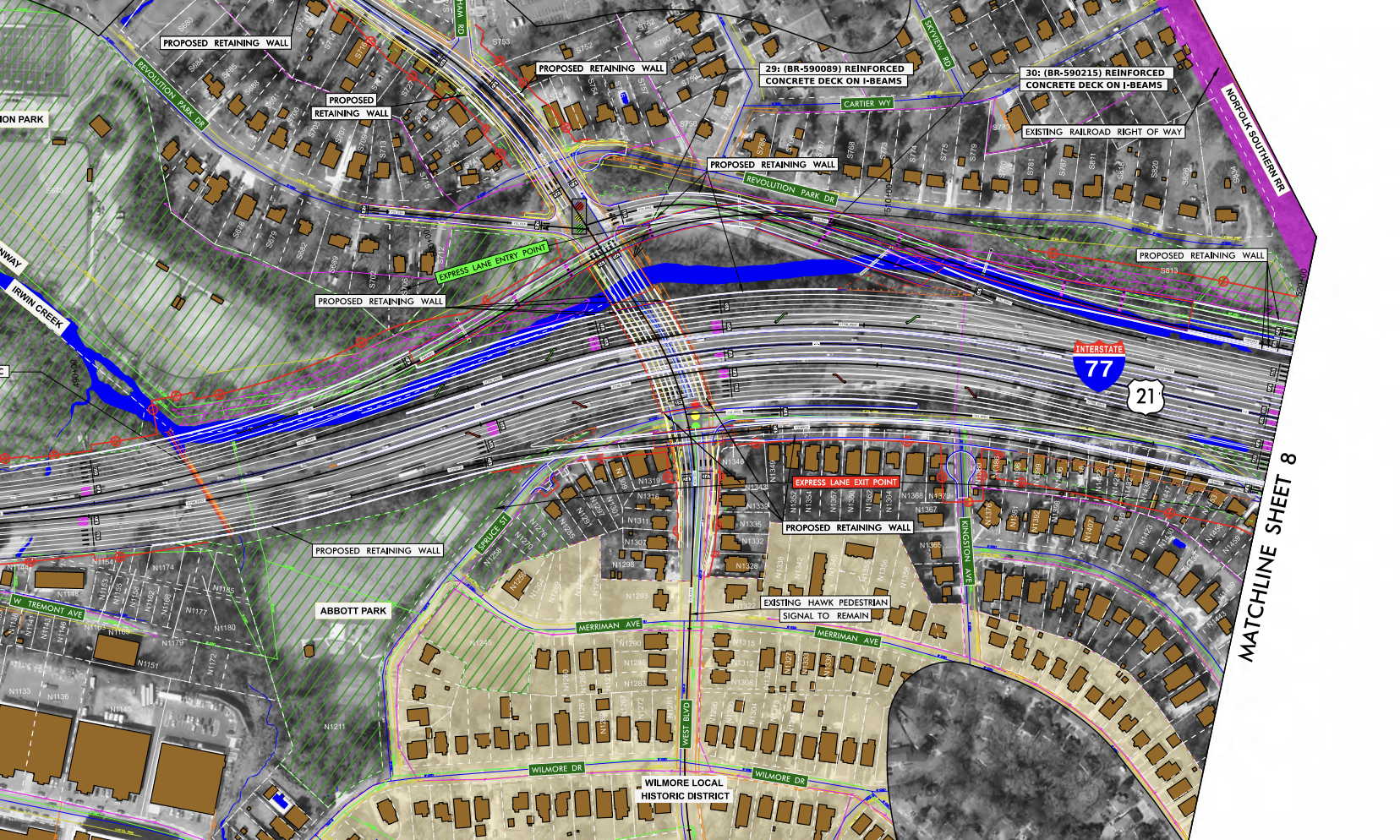
Between the lines: The state must undergo a federal process to work with those homeowners. That process typically starts when the design reaches 65% completion, and it's currently around 10-15%.
- NCDOT stressed that it's working with five different designers to narrow the highway project's footprint.
Zoom out: NCDOT is adding some community benefits to make the project more appealing to neighbors.
- For instance, plans include new bike and pedestrian amenities at interchanges and greenways.
Catch up quick: The Charlotte Regional Transportation Planning Organization approved this project with two votes in 2014 and 2024.
- But in recent months, some local leaders have become opposed after seeing the design's effects and hearing an outcry from upset constituents.
- CRTPO has debated whether it can legally revisit its vote and potentially pause or cancel the project. No action has been taken yet.
- Charlotte Mayor Vi Lyles has not taken a clear position on the tolls. At the opening, she instead cited construction jobs as a benefit, while acknowledging the city's history of harming Black communities, like Brooklyn.
The other side: NCDOT says an I-77 South expansion is necessary to improve safety and travel times on "one of the most congested corridors in the state."
- I-77's crash rate is 2.8 times higher than the statewide average for urban interstates, per NCDOT. Five crashes happen on the corridor daily, and five fatalities occur annually on average.
What's next: The center is expected to stay open throughout the life of the project, hosting events and offering one-on-one meetings.
- In June, NCDOT will put out a request for proposals from private firms.
- Construction on the express lanes won't start until the 2030s.
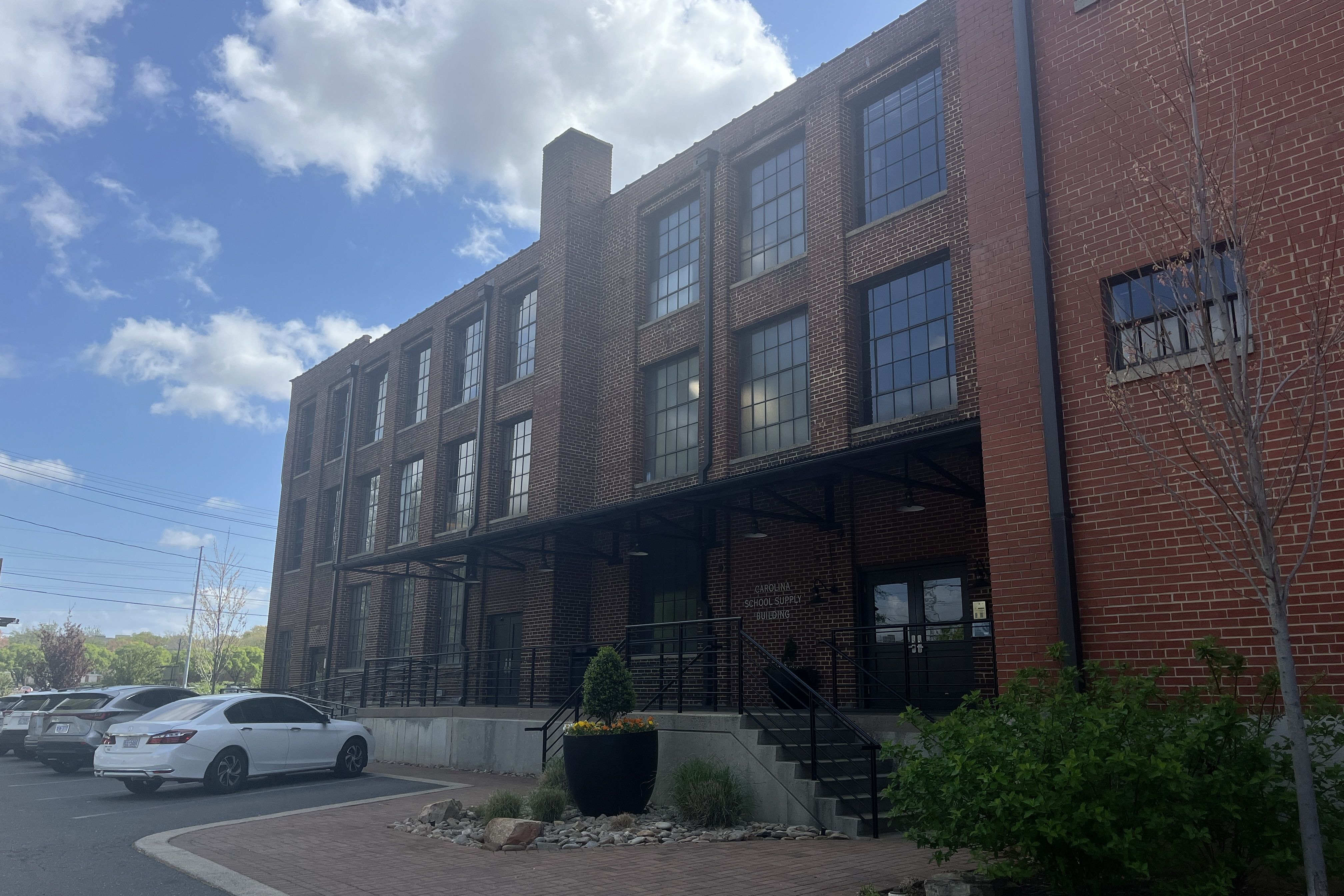
If you go: The center is at 1023 W. Morehead St., Suite 150, off I-77.
- People can drop in or schedule an appointment online or by calling 1‑800‑254‑0498.
- Hours are Monday through Friday, 10am-6pm, and Saturday, 9am-1pm.