See inside: Charlotte's new surgical institute trains thousands of health care workers with robots

Add Axios as your preferred source to
see more of our stories on Google.
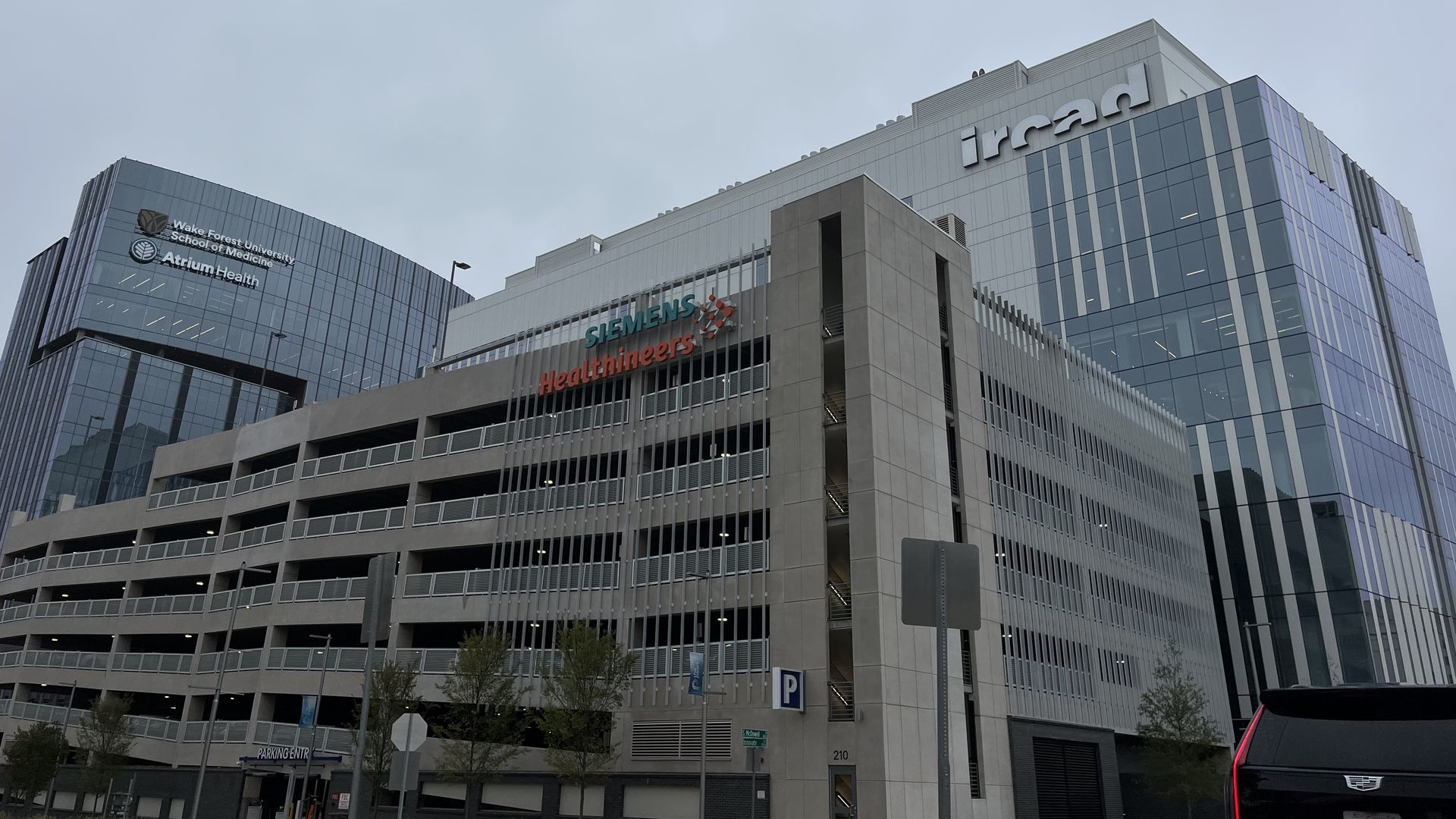
Photo: Alexandria Sands/Axios
A new institute in Charlotte will train thousands of health care workers every year in minimally invasive and robotic surgery — including on equipment so cutting-edge, it's still awaiting FDA clearance to begin training.
Why it matters: IRCAD's North American headquarters, now operating in midtown, is described as the "super magnet" of The Pearl, home to an innovation district and Charlotte's first four-year medical school.
- Leaders say it will attract the world's top medical talent to engineer, teach and make breakthroughs in their fields.
Case in point: IRCAD North America officially opened in September. During the inaugural course, 28 faculty from 14 countries were brought in to teach and mentor 34 Atrium Health (which is part of Advocate Health) residents and fellows.
By the numbers: In its first six weeks, IRCAD has held 27 courses and trained 932 health care providers. It's on track to train 8,000 professionals in the first year.
What they're saying: Ansley Ricker, a surgery resident, said their days began with lectures and studies of the faculty's cases, then they'd move on to hands-on practice in the lab, paired with one of the doctors.
- "They were actually watching me work and making little tweaks to my operative ability," Ricker said. "I took everything that I learned, and the following week was using those same things in the operating room."
The intrigue: This is IRCAD's first and only U.S. location. The French-born institute now has nine centers across eight countries, including Brazil, China, India, Lebanon, Rwanda and Taiwan.
- The Charlotte branch spans 120,000 square feet across four floors, with auditoriums, offices, labs, common spaces and robotic suites.
Between the lines: IRCAD has partnerships with a growing list of medical companies, including Siemens Healthineers, Stryker, Boston Scientific, Medtronic and Johnson & Johnson.
- The companies bring in the equipment, then IRCAD develops relevant courses and provides space for research and development.
- It's also partnered with the Society of American Gastrointestinal and Endoscopic Surgeons, which represents surgeons throughout their training.
Fun fact: The headquarters is a medical-grade building with 19-foot-high ceilings and elevators that can lift 18,000 pounds, strong enough for an MRI machine, for example.
- In the case of an emergency like COVID, it can transition to a hospital.
What's next: The Pearl will eventually be built out to 4.2 million square feet, though there's no timeline for the next phase.
- This summer, the first phase opened with the 14-story Howard R. Levine Center for Education, home to Wake Forest University School of Medicine, and the 10-story research building, anchored by IRCAD.
- Across the street from IRCAD's facility, an empty grass lot is slated for a hotel, where an anticipated 8,000 to 10,000 visiting surgeons could stay each year.
IRCAD gave reporters a tour of the facility on Wednesday. Take a look around.
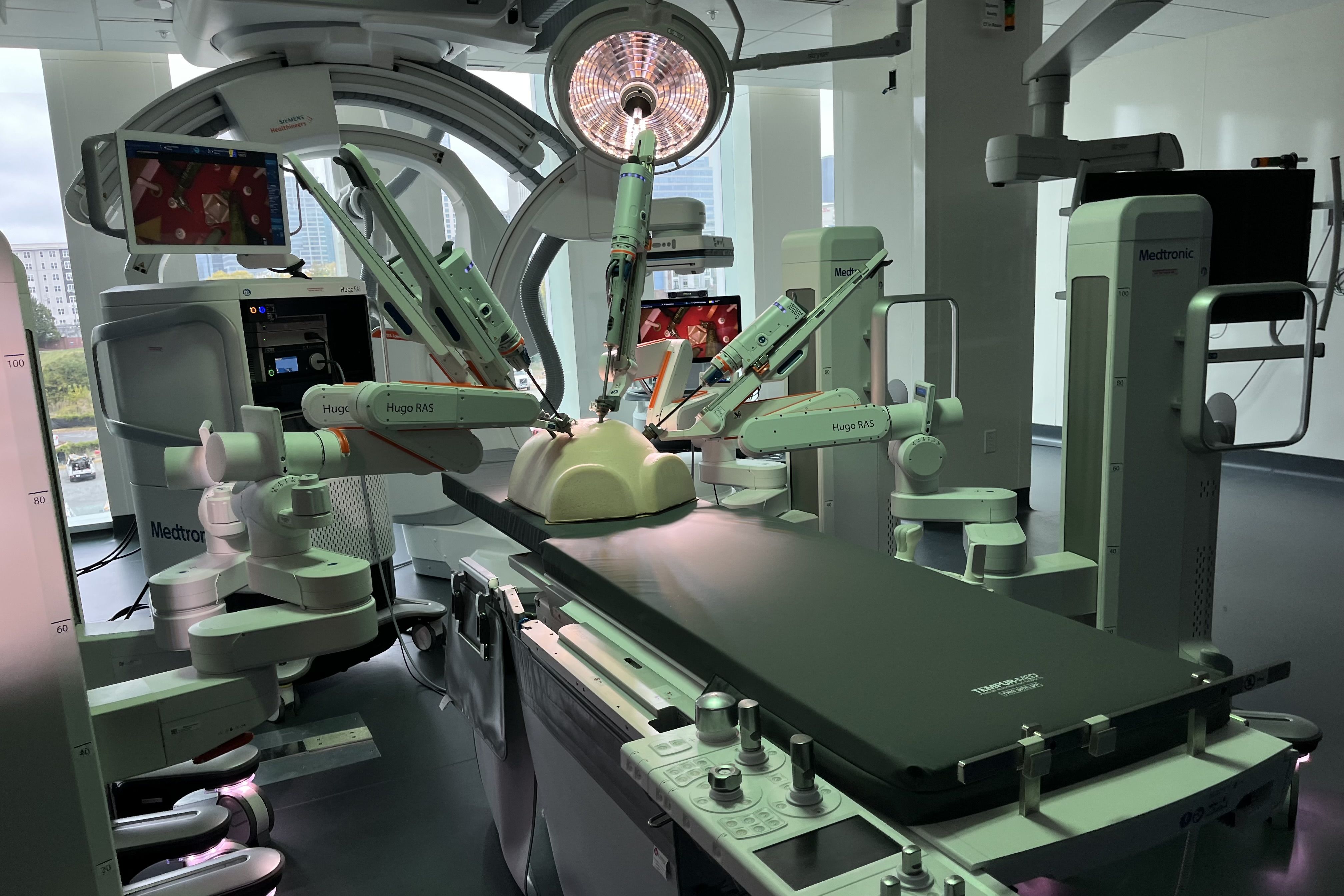
This robotic-assisted surgery device by Medtronic is expected to receive approval for clinical use in the U.S. in 2026.
- It's already being used in Europe.
- "We know that it's a very, very good robot," said Dionisios Vrochides, a general surgeon and executive director of IRCAD North America.
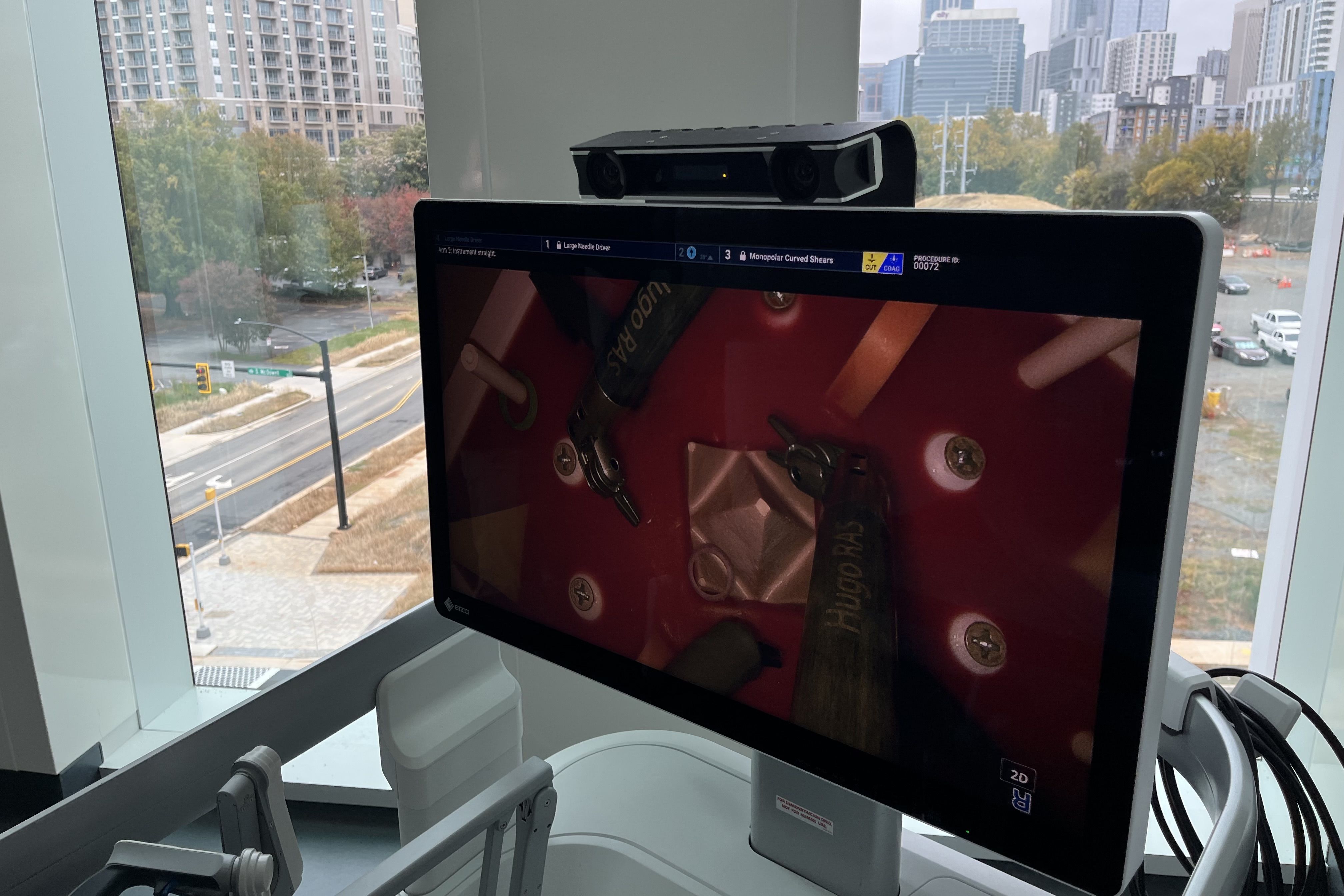
Relying on robotic arms and monitors can extend a surgeon's career. The job takes a toll on the neck and back, Vrochides explained.
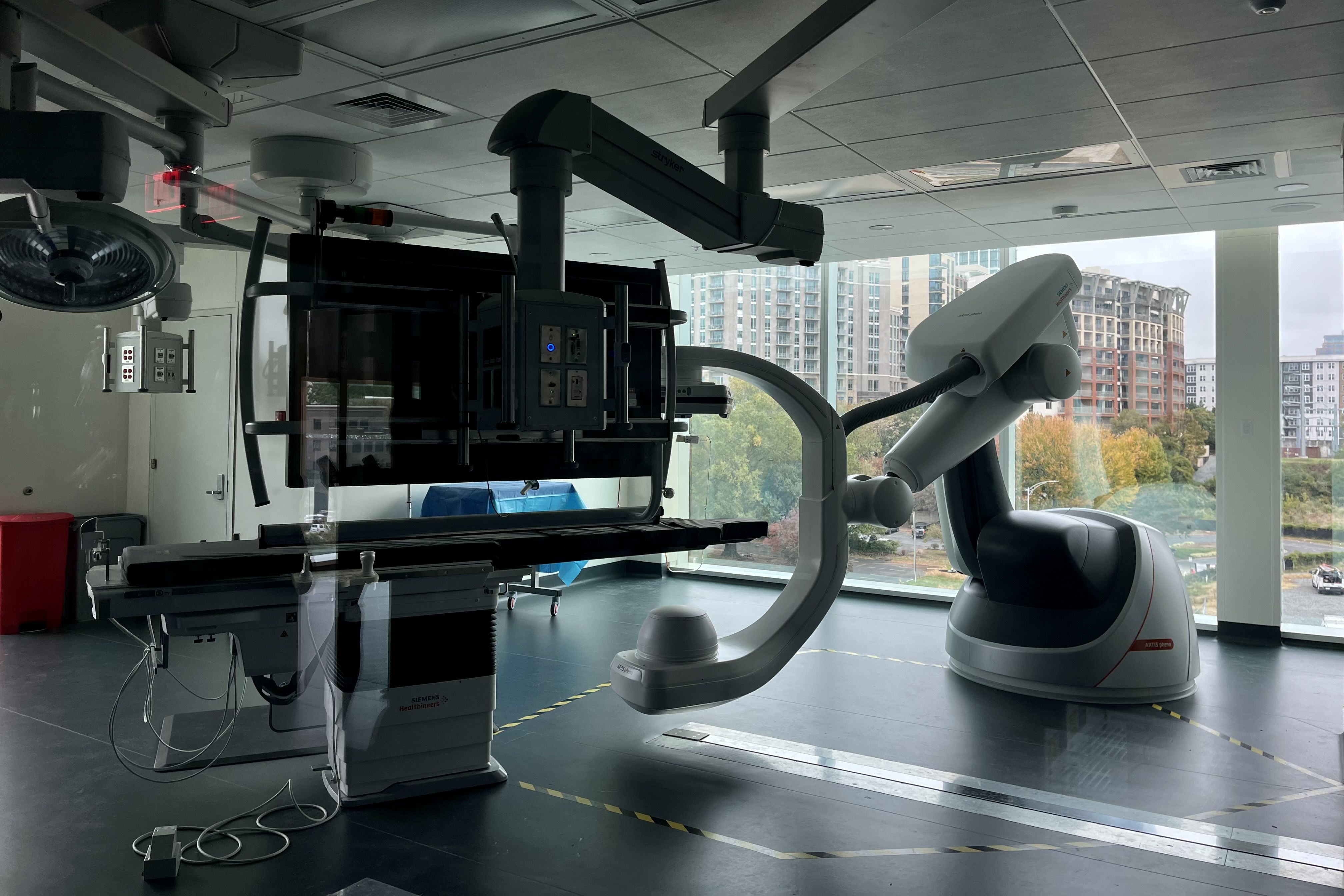
Here's one of three operating rooms on the top floor, home to a Siemens imaging robot.
- "It is quite a treat to actually be able to see the Hugo robot here alongside the Siemens imaging equipment," said Rasu Shrestha, chief innovation and commercialization officer at Advocate Health. The Hugo robot is not yet available for clinical use, but IRCAD North America has access to it, he added.
- That allows surgeons to begin training soon and find the best clinical practices to use the machines together.
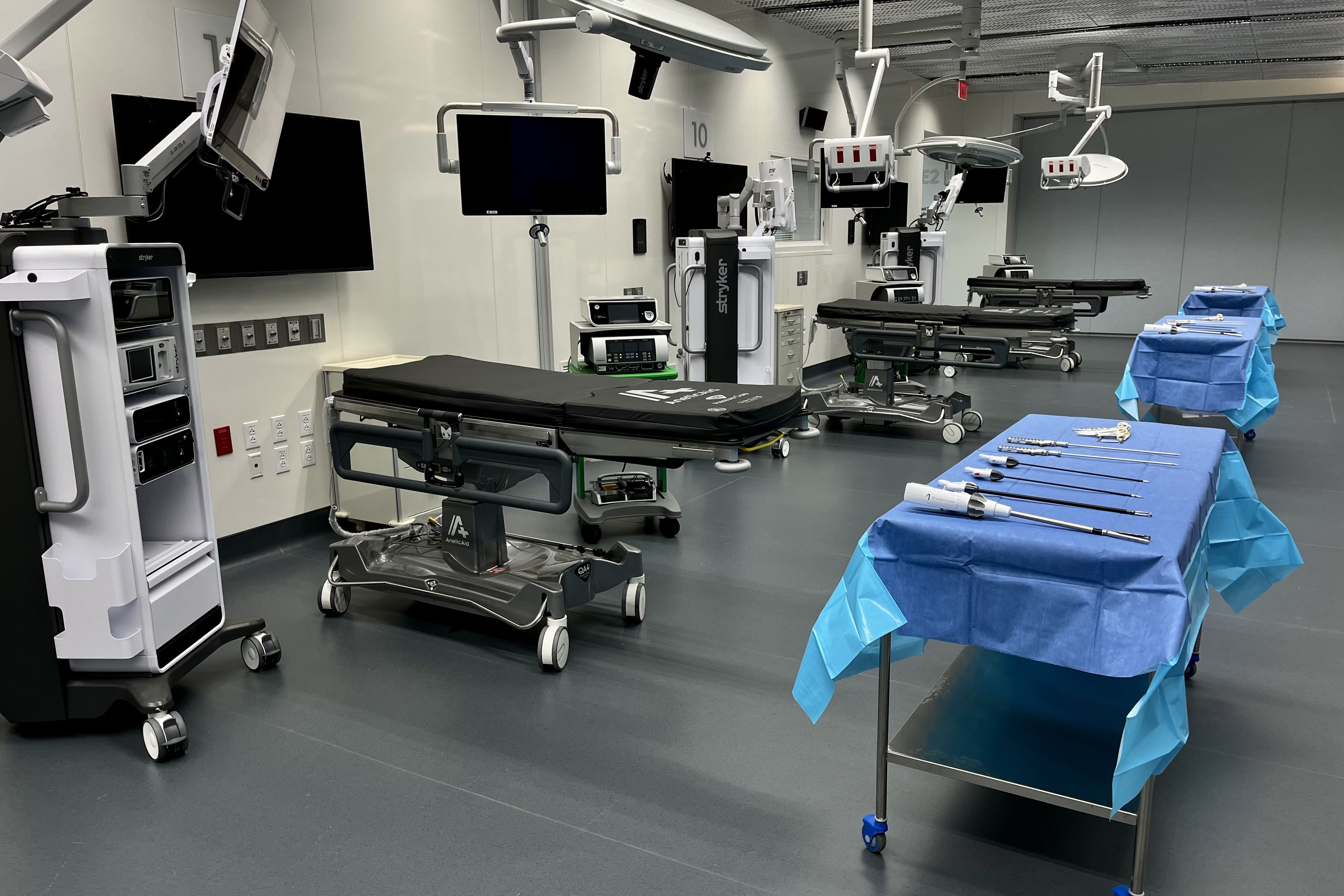
The surgical ballroom on the third floor has 26 operating tables.
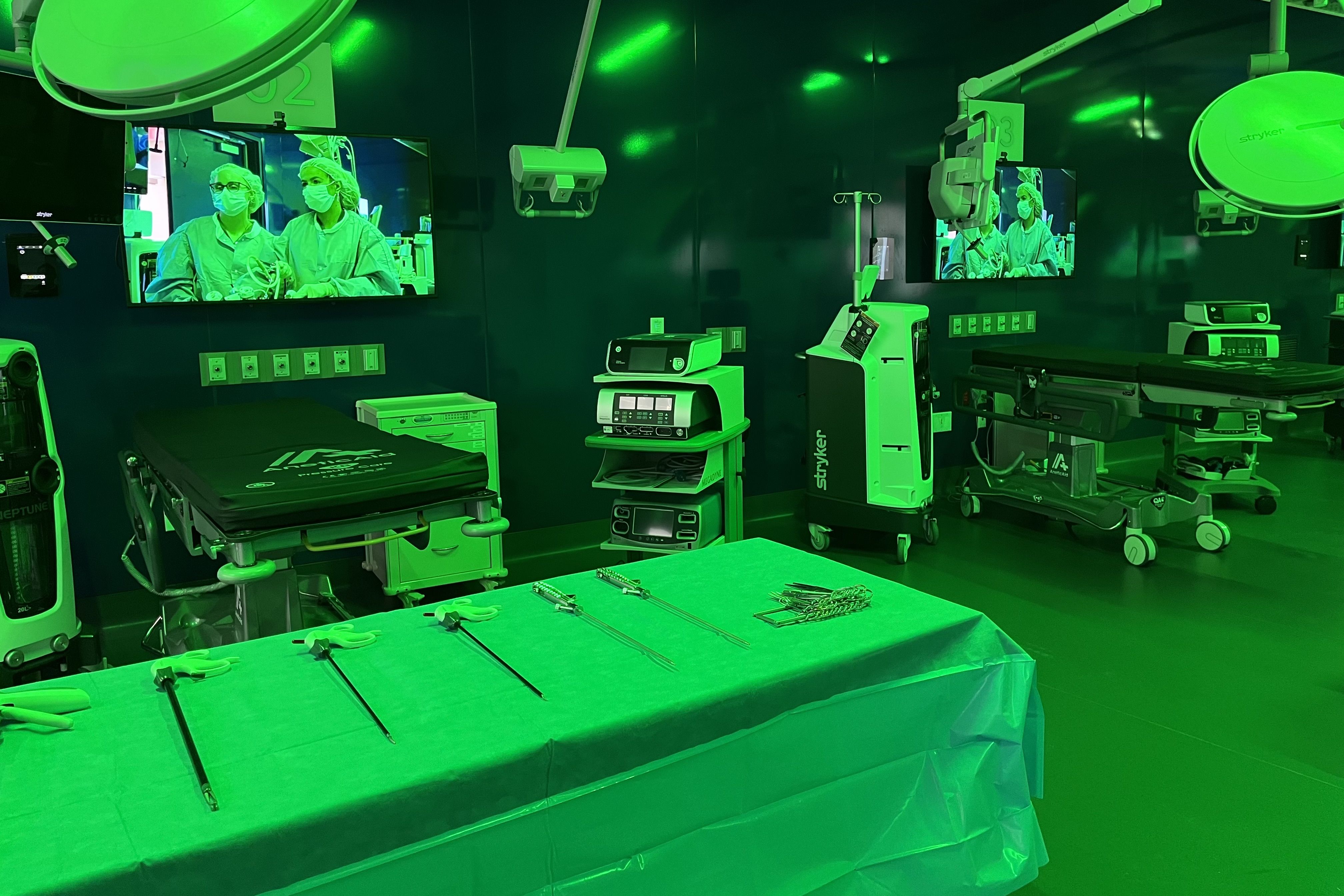
The green light setting is easier on surgeons' eyes during minimally invasive surgery.
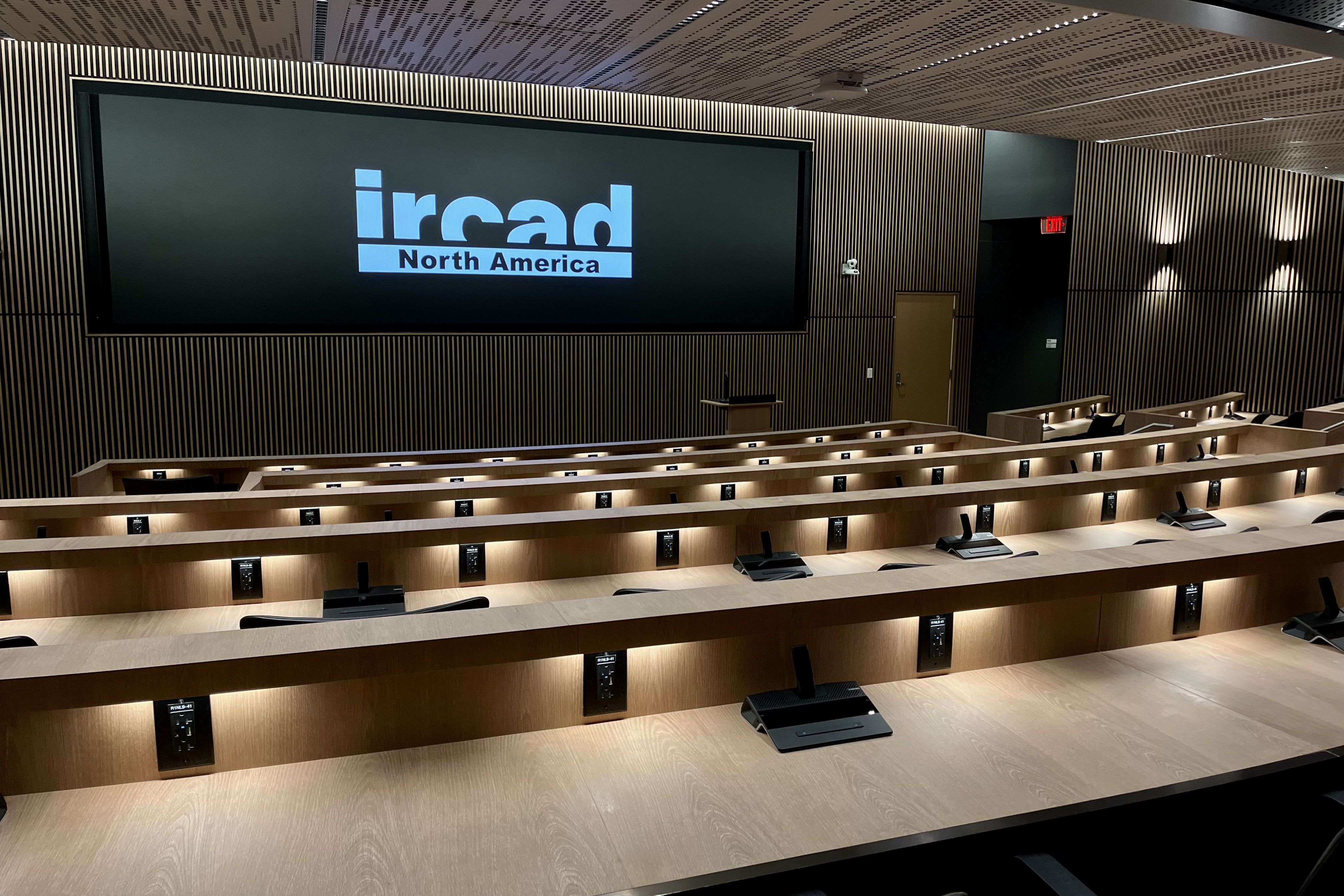
IRCAD North America has three auditoriums.
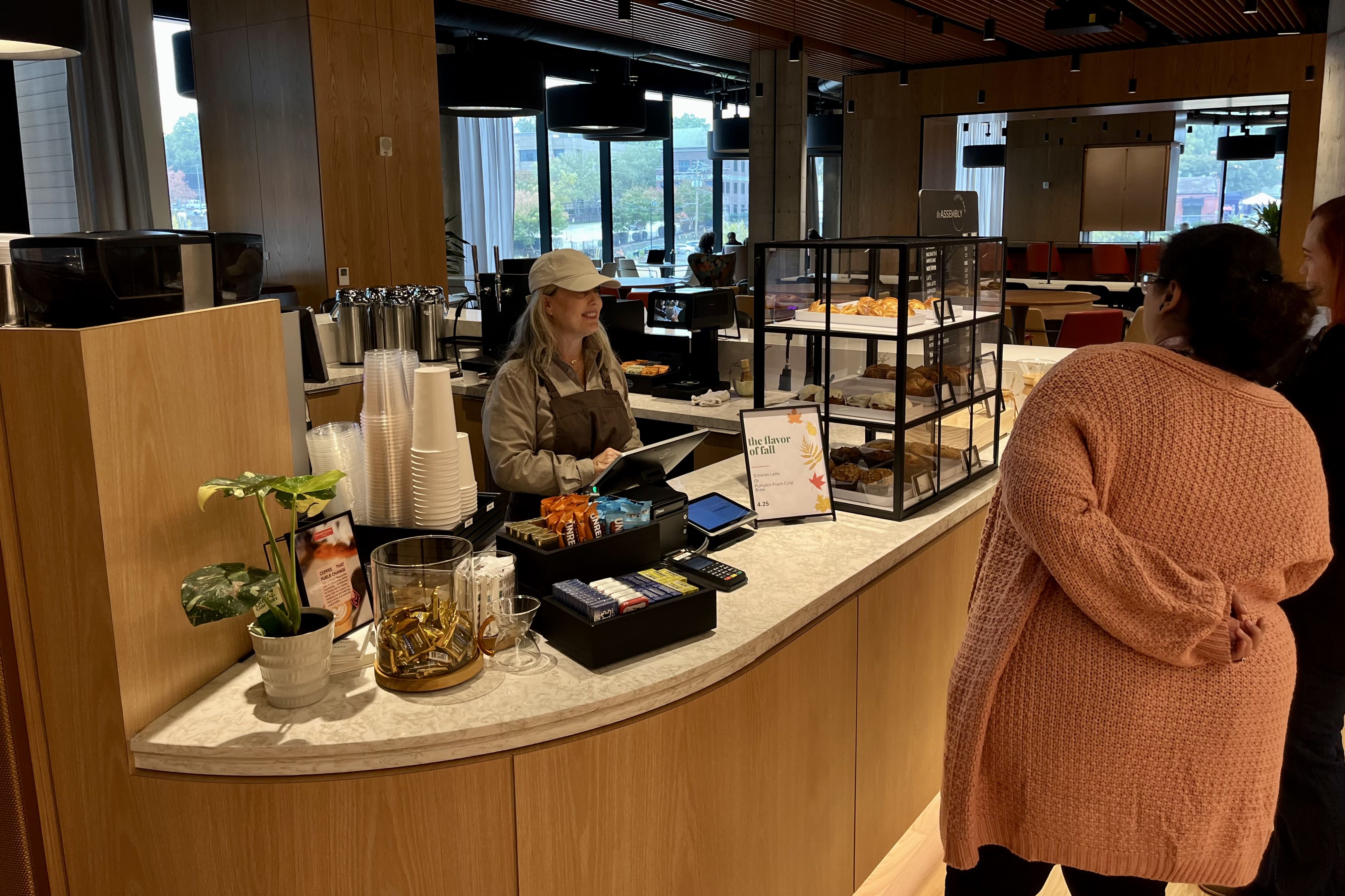
Open to the public, this common area and cafe is right outside IRCAD's front doors. It was intentionally planned for researchers, surgeons, industry leaders and investors to mix and connect.
Photos by Alexandria Sands/Axios