How Camp North End bets on local businesses

Add Axios as your preferred source to
see more of our stories on Google.
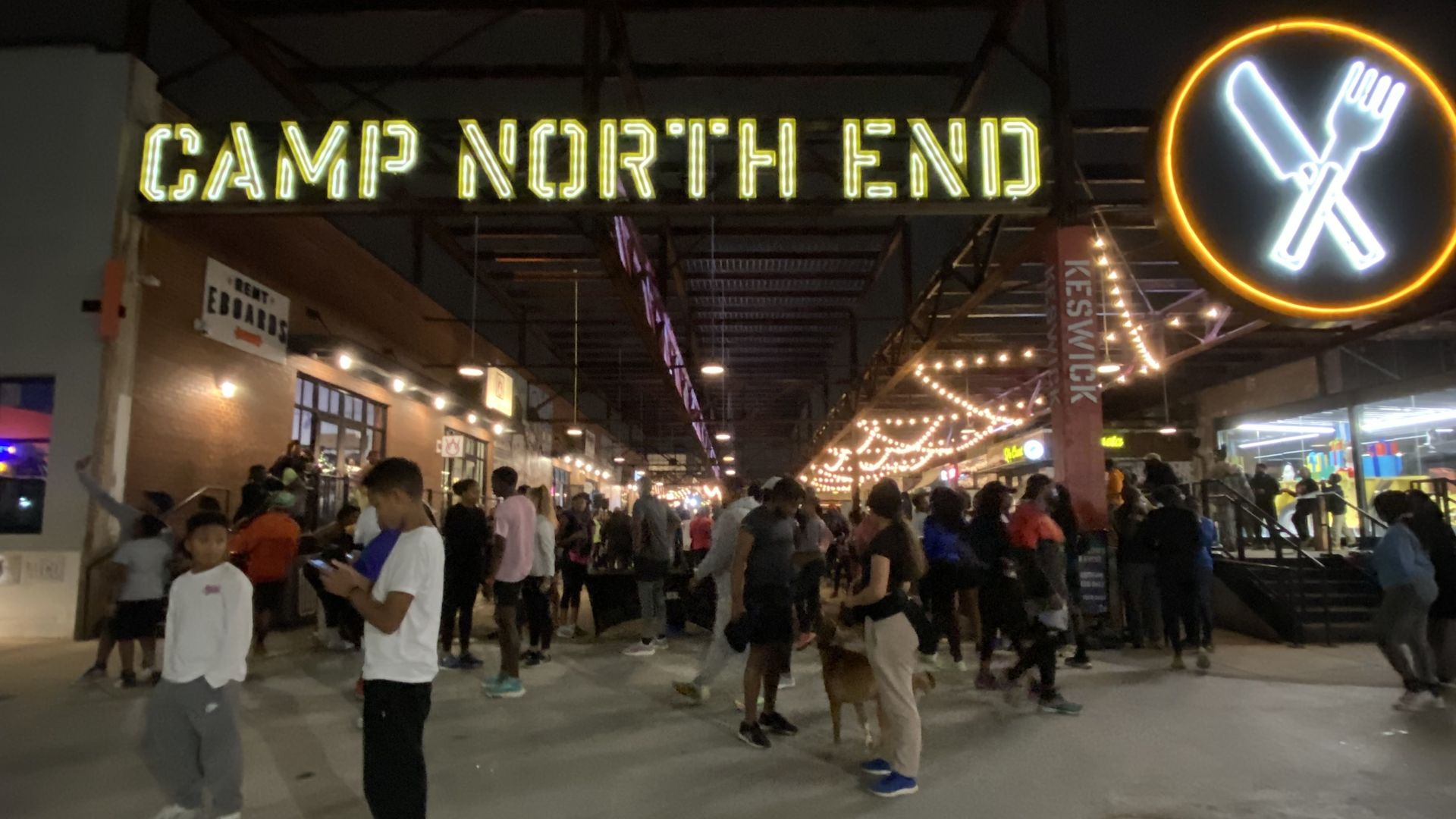
Photo: Alexis Clinton
Developers often chase big-name national tenants that can guarantee a quick return on investment. Camp North End is largely doing the opposite, and it's helping ensure that local ventures can thrive there.
Why it matters: In a climate where small businesses face rising costs and shrinking consumer spending, Camp North End's model offers a rare path to survival and success.
The concept, which is not new or unique to Camp, is called "percentage rent," explains Damon Hemmerdinger, lead developer and co-president of ATCO, the property's developer.
- It's used commonly in shopping centers and not typically in urban locations, where landlords own entire buildings or multiple properties, for example.
How it works: Instead of locking retail tenants into high fixed rents, Camp North End sets a lower base rent, then collects a percentage of sales above a set threshold.
- It's a shared risk, shared reward model. If tenants do well, the landlord benefits. If they struggle, they're not crushed by rent they can't afford.
- It also creates aligned incentives. The structure motivates the developer to market the space, attract complementary businesses and drive foot traffic.
Zoom out: Despite its proximity to Uptown, the North End didn't see as much new commercial development less than a decade ago as it does now. The 76-acre property where Camp North End sits used to be a wartime warehouse site, and a car factory before that.
- "We had to create a reason for people to come to us instead of going somewhere else," says Hemmerdinger. Unique, locally owned spots — many born from pandemic side hustles — give people a reason to visit.
Yes, but: Several notable businesses have closed at Camp North End in recent years, including Leah & Louise, Wentworth & Fenn and Popbar.
Between the lines: Most Camp retail spots are small, adaptable spaces. Their leases help support the project's bottom line — and bigger tenants, like large offices or retail brands such as Tipsy Pickle or The Revelry, further offset costs.
- "We built a business plan that allowed us to target local tenants, and then we structured our deals with these tenants in such a way to maximize their chance of being successful," Hemmerdinger tells Axios.
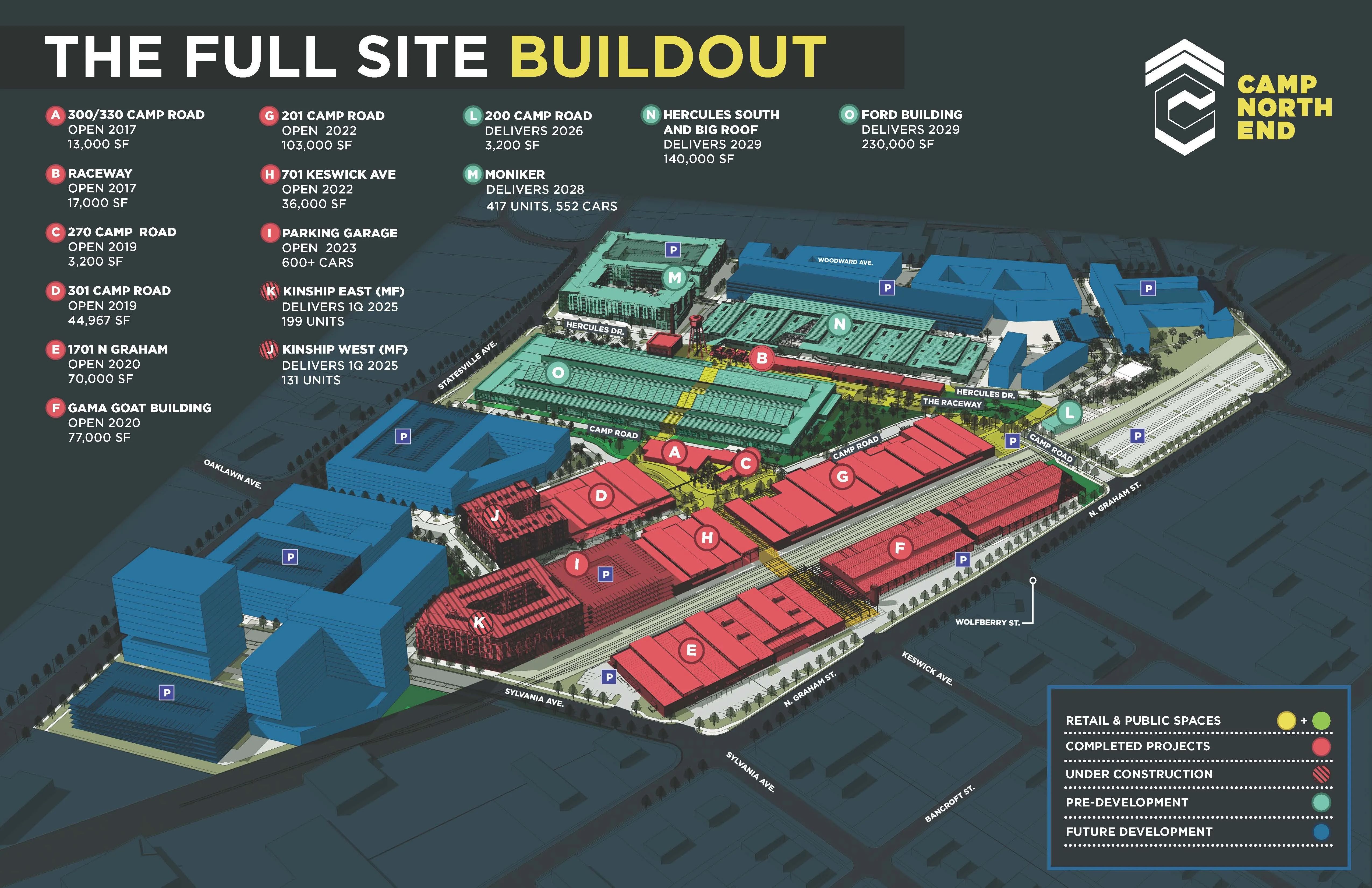
What's next: Camp North End is only 29% developed, and they've added about half a dozen new tenants in the past couple of months, with several more anticipated to open by year's end.
Go deeper: Everything there is to see, eat and do at Camp North End