This crisis in Charlotte has killed 31 people in 2025

Add Axios as your preferred source to
see more of our stories on Google.
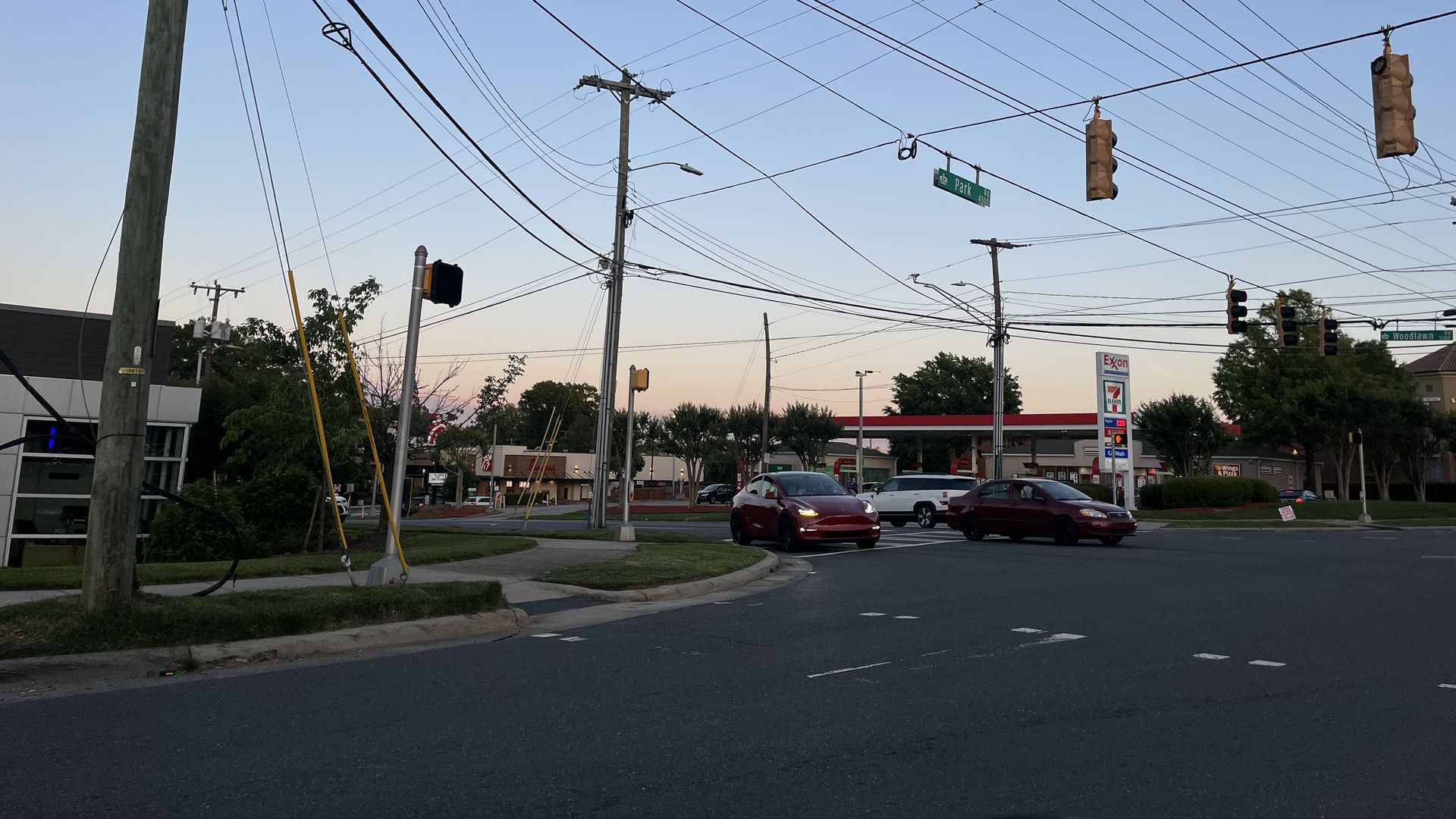
Photo: Alexandria Sands/Axios
On a Friday in May, 73-year-old Bill Yoder was riding his recumbent bike, as the grandfather often did to maintain his independence. Traffic had backed up at the intersection of East Woodlawn Road that afternoon, halting a tractor-trailer in a fading crosswalk.
- Yoder attempted to move around the truck, as many cyclists might in that situation. But at the same time, the semi drove forward, striking Yoder. He died on the scene.
The big picture: Charlotte's streets are becoming more dangerous, and Yoder's death has raised new alarm over the issue.
- Less than halfway into 2025, 31 people — including five cyclists and four pedestrians — have died in crashes, according to the city's latest data as of May 28.
- Including those that caused serious injury, there have been nine crashes involving cyclists this year — up from seven in 2024 and four in 2023. Only one case is reported for 2022 and 2021, each.
What they're saying: Yoder was the father of a member of the Sustain Charlotte team, a nonprofit advocating for safer streets and overall smarter city growth. The organization is using his death to push for street improvements, arguing that traffic violence has become normalized.
- "If there was anything else happening in Charlotte that had caused 30 people to die, everybody would be talking about it," says Shannon Binns, Sustain Charlotte's executive director.
The City of Charlotte has pledged to eliminate traffic deaths through the "Vision Zero" initiative it launched in 2019, investing millions in pedestrian crossings and hosting events to spread awareness of safe driving.
Yes, but: There's no real goal or deadline for reaching zero. Charlotte doesn't have benchmarks for when it expects to reduce traffic fatalities, while the number of crashes is rising yearly.
- An internal audit, which Axios reported on last year, criticized the city for not executing the Vision Zero program effectively. Among the findings, it stated the Charlotte-Mecklenburg Police Department was not concentrating enforcement efforts in areas with the most deaths and injuries.
- CMPD made 7,223 motor unit stops in 2024 — a 41% drop from 2023, according to the department's annual report. Chief Johnny Jennings has said there's "not as much time to go out and enforce traffic as there used to be," and more resources, such as red light and speed cameras, would help.
- Charlotte City Council has not formally discussed the audit results, but the Charlotte Department of Transportation says a Vision Zero plan update is slated for the coming year. It may introduce new strategies to reduce crashes.
- Of 73 actions outlined in the audit, 43 actions (59%) have been completed, according to CDOT. Sixteen actions (22%) are in progress, and a small batch has not started, "largely due to resource constraints or shifts in priorities."
By the numbers: Charlotte has recorded 76 crashes with fatalities or serious injuries so far in 2025, the Vision Zero dashboard shows.
Between the lines: It's hard to pinpoint what's causing the increases. Potential factors could be the return of commuting since the pandemic, Charlotte's fast population growth and clashing driving styles from different regions, and reduced traffic enforcement.
- Exceeding the speed limit is the top contributing factor for Charlotte crashes, per the city's dashboard.
What they're saying: Sustain Charlotte's Binns says city leaders aren't discussing the issue as much as they should. He calls it "a matter of political will."
- "If you are intentional about how you design your city and your mobility network, you can really almost eliminate these deaths and serious injuries," he says. "But you have to be intentional, and you have to be committed. They're not just going to go away."
Zoom in: The intersection where Yoder died is flagged alarm-color red in the city's High Injury Network, a map of corridors with high rates of fatal and serious crashes.
- Despite being close to Sugar Creek Greenway and attracting many bikers and pedestrians, the area lacks dedicated bike lanes.
- CMPD is still investigating Yoder's May 9 crash. Once the crash report is complete, CDOT says it will conduct an engineering investigation to determine if improvements, like more markings or signs, are needed at East Woodlawn Road and Park Road.
- At the least, Binns suggests the city should add more paint and fresh bollards to create space between bikes and cars in problem areas. Those improvements would be quicker and less expensive than concrete changes.
- A more expensive but impactful option is "road diets," like the one starting soon on Matheson Avenue near NoDa. A 0.6-mile stretch, between North Tryon Street and Jordan Place, is being transitioned from four lanes to two to slow down cars and make the route safer for bikers and walkers. It's a $12.9-million undertaking.
What's next: Mecklenburg County is working toward putting a 1-cent sales tax referendum on this November's election ballot. If passed, the tax would generate an estimated $19.4 billion over 30 years for transportation projects, not including potential federal matching dollars.
- Roughly $7.8 billion would be earmarked for road projects, which could include new bike lanes, sidewalks and lighting.