Charlotte-based, women-led rideshare app promises safer travels

Add Axios as your preferred source to
see more of our stories on Google.
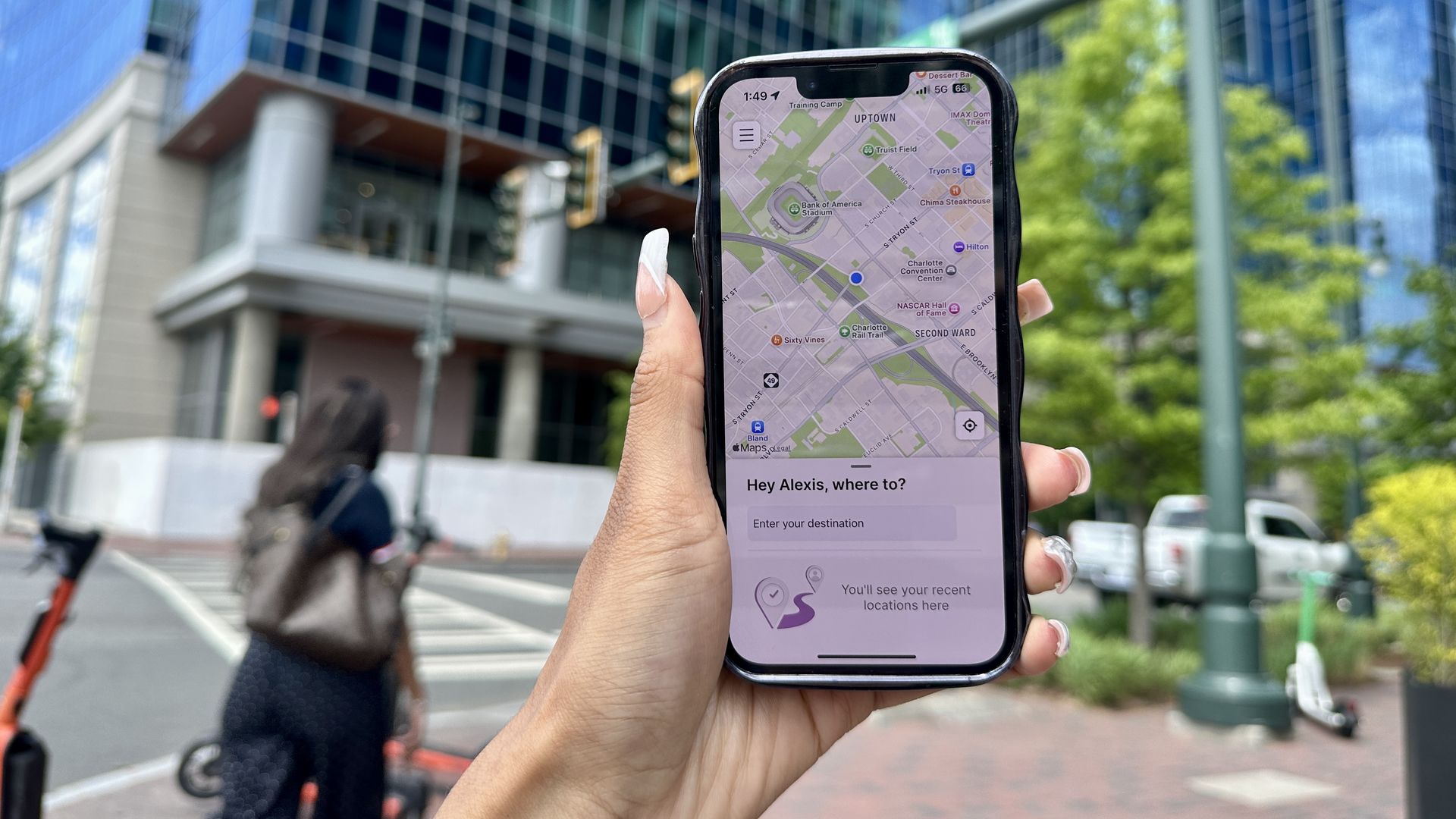
Just Her Rideshare app. Photo: Alexis Clinton/Axios
Just Her Rideshare is a Charlotte-based rideshare company created for women by women.
Why it matters: "We're here to offer peace of mind," founder Kimberly Evans tells Axios, adding that their top priority is creating a safe environment for drivers and passengers across the Carolinas.
Context: For Evans, the cause is personal. In 1987, a friend of hers was abducted while waiting for a ride. As rideshare companies emerged, and similar tragic stories made headlines, including the murder of a University of South Carolina student, Evans avoided using rideshare apps for years.
- In 2020, she launched Just Her Rideshare, making safety a core value of her company.
- "Uber and Lyft had become so big that I knew they had lost touch with what it looks like to create a safe ride for women," Evans added.
How it works: Just Her Rideshare is just like Uber and Lyft, except all the drivers are women.
- Drivers must pass a background and driving record check. They must be 21 years or older, have access to a four-door vehicle with five seat belts, and their car must be less than 15 years old, according to the application.
- Like Uber and Lyft, you can schedule rides in advance and modify your experience. Whether you want a silent ride, a certain temperature in the car, or a specific genre of music, just let your driver know in the app's "notes" section.
- The drivers have the option to choose whether they want to transport passengers who do not identify as female.
- The app is available on the App Store and Google Play Store.
Zoom out: Just Her Rideshare has more than 2,000 drivers across seven cities, including Charlotte, Raleigh, Greensboro, Durham, Charleston, Columbia, and Greenville, South Carolina.
- Evans plans to expand by launching Just Her in Washington, D.C. and surrounding areas in the coming months.
The big picture: Both Lyft and Uber have long been criticized by victims for not doing enough to protect passengers and drivers, Axios' Kia Kokalitcheva writes.
- Lyft's most recent safety report found that there were fewer serious sexual assaults from 2020 to 2022 compared to the previous report in 2017–2019, but an increase in fatal physical assaults.