How a family with Charlotte ties helped launch Brown v. Board


Add Axios as your preferred source to
see more of our stories on Google.
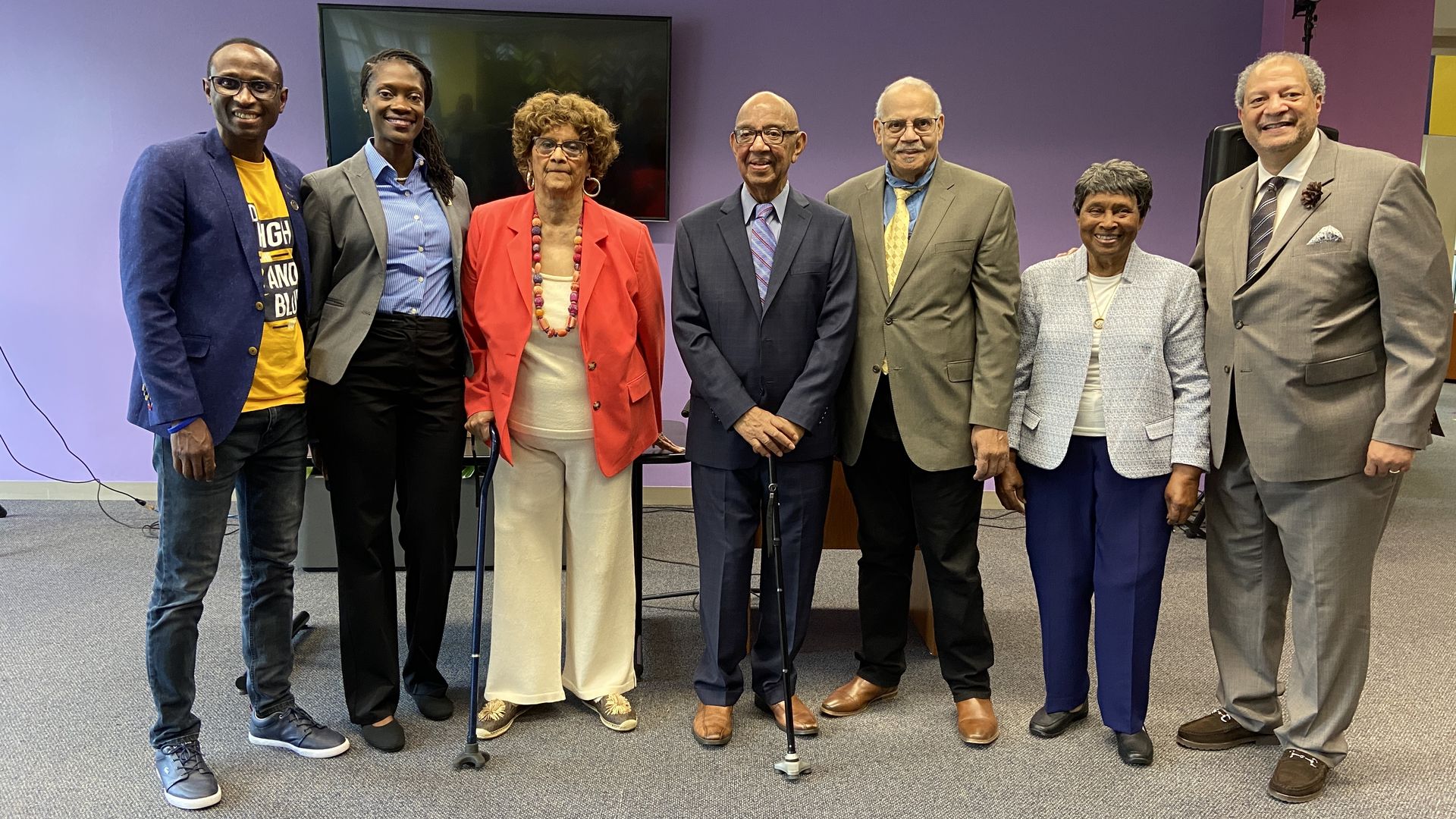
From left: JCSU provost Dr. Thierno Thiam, JCSU president Dr. Valerie Kinloch, civil rights leader Dot Counts-Scoggins, Joseph A. De Laine Jr., Marguirite L. De Laine and David C. Belton gather at Johnson C. Smith University. Note: The individual third from the right could not be identified by JCSU. Photo: Ashley Mahoney/Axios
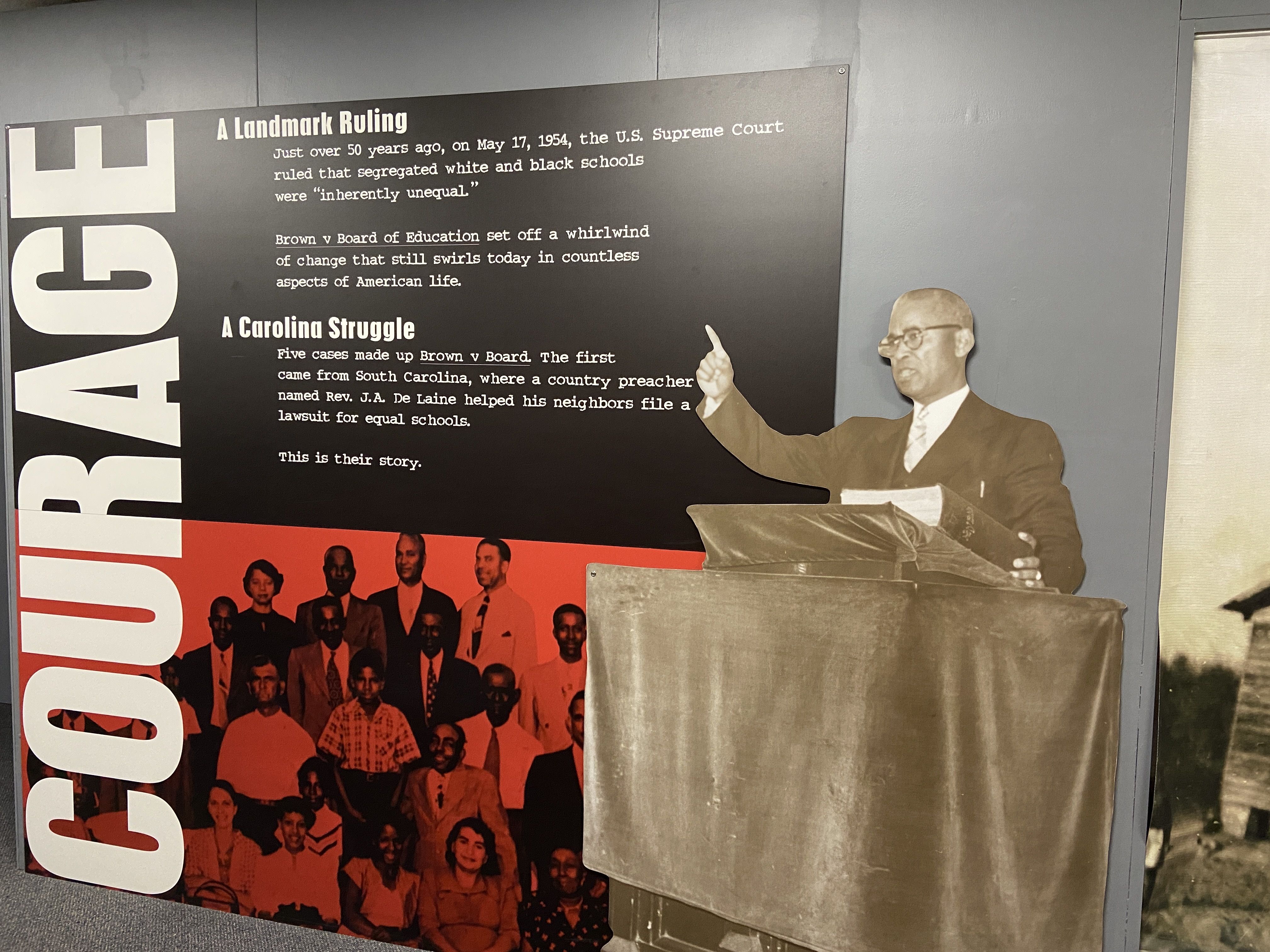
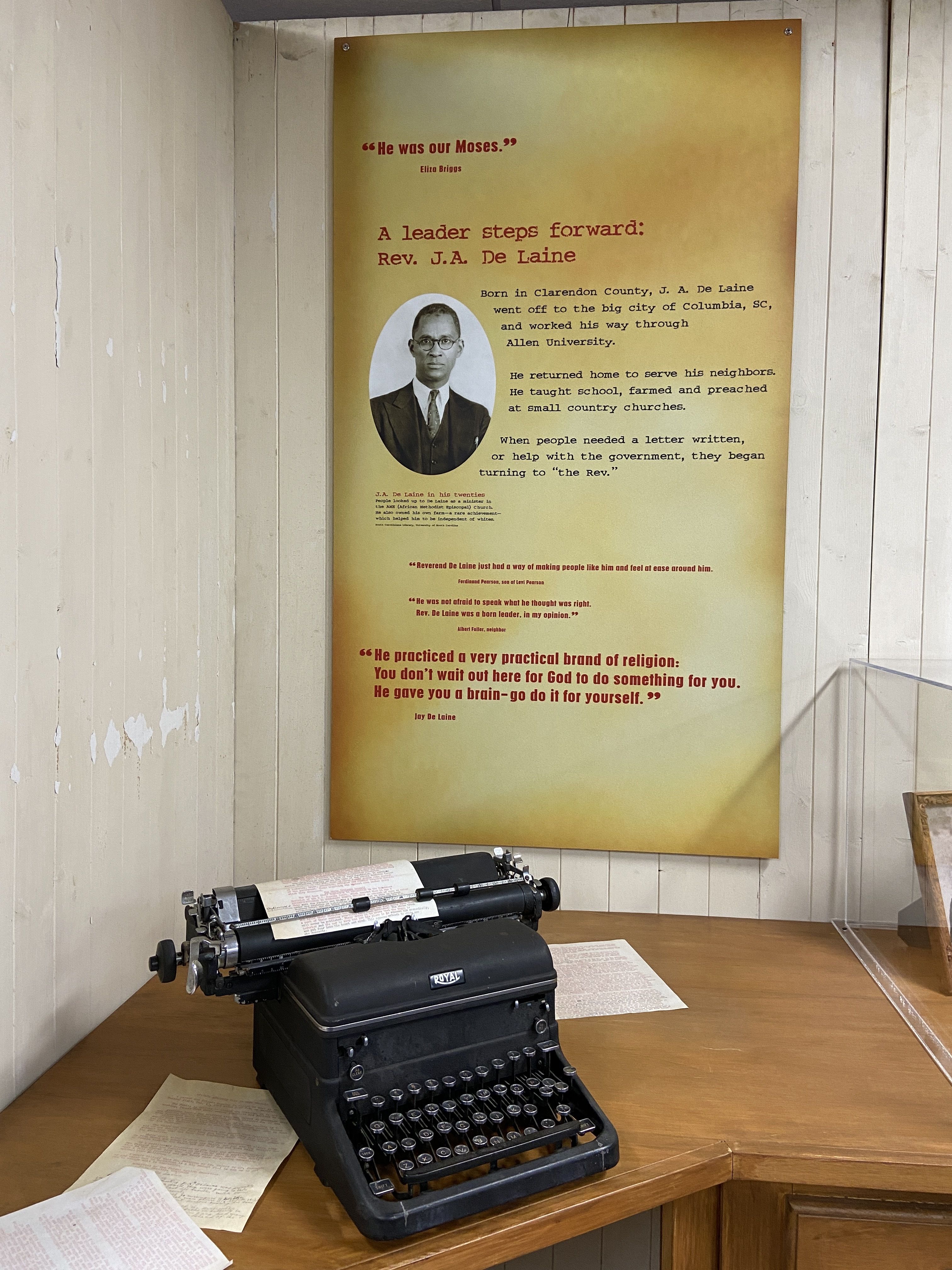
Charlotte resident Joseph A. De Laine Jr. watched his father, the Rev. Joseph Armstrong De Laine, spark a movement that would set the foundation to integrate public schools.
Why it matters: Classrooms across the country include lessons on how Brown v. Board of Education ended forced segregation in U.S. schools, but it takes a deeper analysis to see that five cases rolled into Brown.
- The Rev. De Laine led one of those: Briggs v. Elliott in South Carolina.
Flashback: De Laine was an educator and president of the local NAACP chapter Clarendon County, S.C. in the 1940s. The county had more than 30 school buses for white children, but none for Black children.
- Some Black children were walking nearly 10 miles to school each day.
- De Laine organized a petition for a single bus, which the school board ignored. So he and the NAACP organized a larger petition for equal educational opportunities for Black and white children, and the first signatures were from parents Harry and Eliza Briggs.
- After a lower court ruled against the petitioners, they appealed and the case wound up in the U.S. Supreme Court, where justices consolidated it with other four other similar cases around the country, including Brown v. Board of Education of Topeka, Kansas.
De Laine faced death threats for his efforts. The family's home was burned down and their church destroyed. As the case made its way through the courts, the reverend and his family fled and moved to New York.
- But when De Laine found out he had terminal cancer, he and his wife, Mattie De Laine, moved to McCrorey Heights so she could be near her brothers, one of whom worked at Johnson C. Smith and the other who was a school principal in Charlotte.
- He asked his oldest son to help see that a house was built and that his wife would be taken care of.
Joseph A. De Laine Jr. is now 91. He had spent two years (1950-1952) at Johnson C. Smith before transferring to Lincoln University, an HBCU in Pennsylvania, because he had to get out of the South. He didn't approve of his father's wishes to return to the Carolinas.
- "I had no intention of them moving here or my moving here," De Laine Jr. tells Axios. "I had to kind of melt and give in."
- De Laine Jr., who still calls McCrorey Heights home, has lived in Charlotte for 30 years.
State of play: JCSU commemorated the anniversary of Brown v. Board last Friday with members of the De Laine family.
- The Levine Museum of the New South's exhibit "COURAGE: The Carolina Story that Changed America" is on view at the university's James B. Duke Memorial Library. It explores Briggs v. Elliott and the role of the De Laine family.

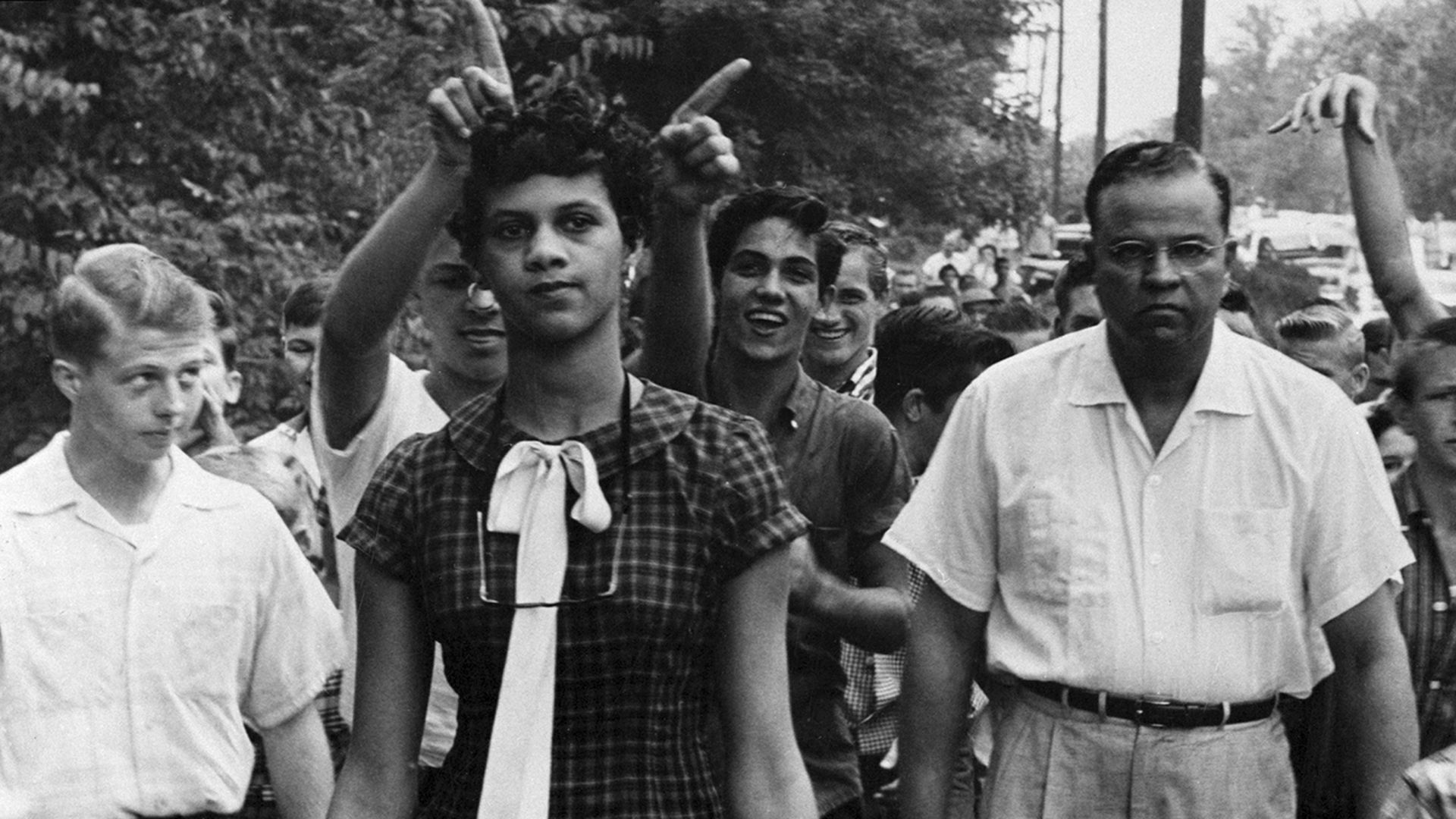
Three years after the Brown ruling, four Black Charlotte students integrated formerly all-white schools on Sept. 4, 1957: Delois Huntley at Alexander Graham Junior High, Gus Roberts at Central High, Girvaud Roberts at Piedmont Junior High, and Dorothy Counts at Harding High.
- Counts, a longtime educator and advocate who now goes by Dot Counts-Scoggins, was among those in attendance at Friday's event.
- We are responsible for making sure children know their culture and their history, Counts-Scoggins tells Axios.
Go deeper: Charlotte-Mecklenburg Schools struggle with segregation 70 years after Brown v. Board ruling