8 things you need to know about Charlotte’s history

Add Axios as your preferred source to
see more of our stories on Google.
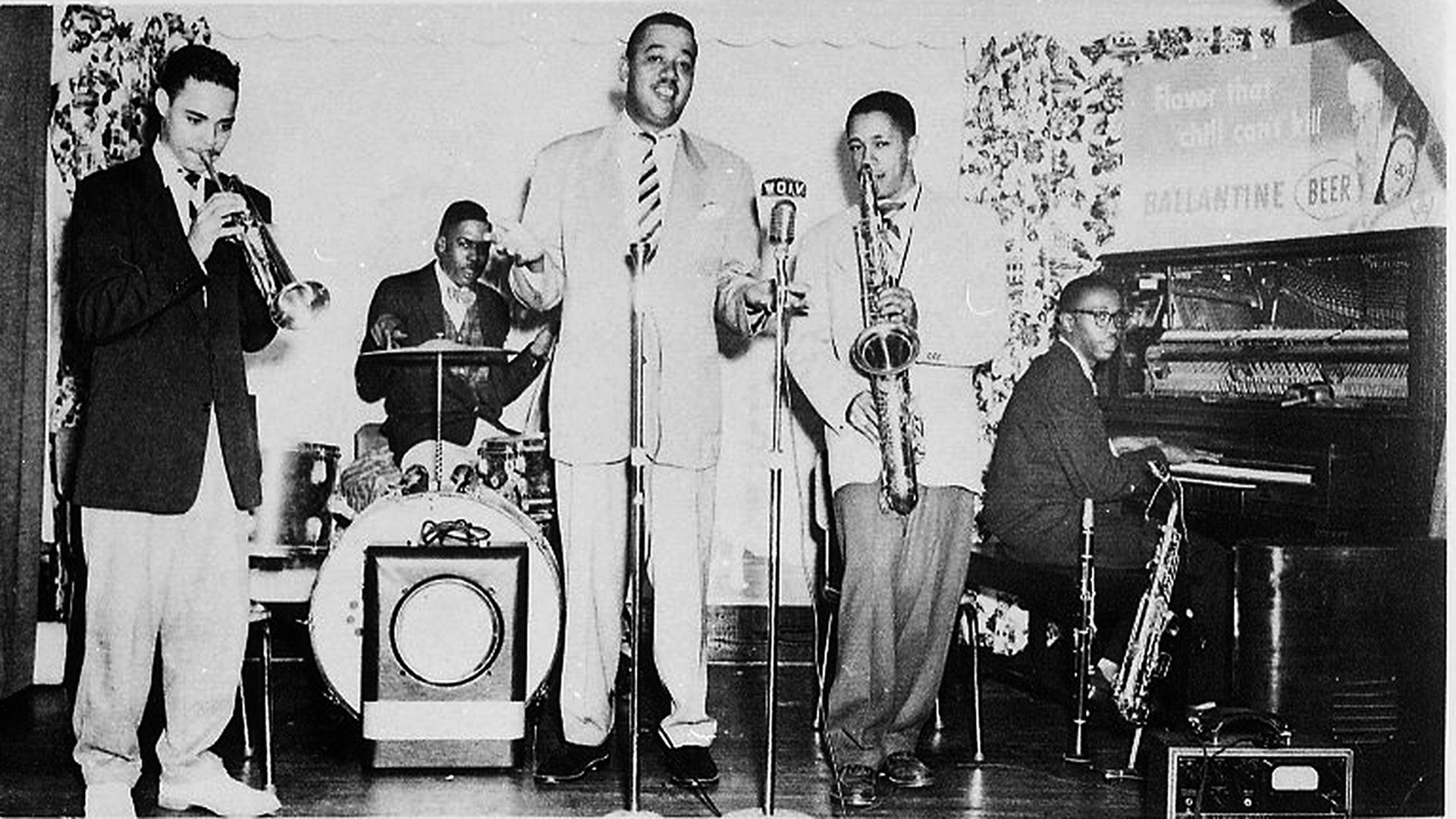
A band performs at the Excelsior Club in the late 1950s. Courtesy of the Robinson-Spangler Carolina Room at the Charlotte Mecklenburg Library
People here often say Charlotte has little history to speak of. But there’s plenty for those who look.
Why it matters: Charlotte evolved over the years from a buzzy trading hub into a textile manufacturing destination. Now it’s a major bank town that’s home to a growing number of industries, from professional sports to technology.
The big picture: Change will continue to sweep across the city in the form of new towers, fresh faces filling newly constructed apartments, new restaurants and sports teams.
Here are eight things you should know about Charlotte’s history:
Brooklyn
Brooklyn was a thriving Black neighborhood in Uptown. It was razed in the name of urban renewal in the 1960s and ’70s, costing Black families millions in generational wealth. This helped set into motion hurdles Charlotteans still face today with economic mobility.
- Several businesses found in The Negro Motorist Green Book, a guide listing businesses that didn’t discriminate against Black travelers, were located in the Brooklyn.
What we’re watching: The Brooklyn Village redevelopment – a long-awaited and long-debated project that’ll include multi-family housing, office and hotel space, retail and a park.
/2024/01/18/1705543636487.jpg)
Charlotte’s ties to American independence
Mecklenburg Country reportedly declared independence from Britain more than a year before the Declaration of Independence was signed.
- A group of people in Mecklenburg County signed the Mecklenburg Declaration of Independence on May 20, 1775.
- Captain James Jack delivered the MeckDec to the country’s early leaders Philadelphia.
Of note: MeckDec day is celebrated annually in Charlotte. David Fleming, a local ESPN writer, wrote a book about the MeckDec called “Who’s Your Founding Father.”
/2024/01/18/1705543636808.jpg)
Eastland
Years before Eastland Mall was a massive construction site, it was the coolest mall around, a destination for the East Side that drew visitors from all over the region thanks to its ice rink, expansive food court and movie theater. The mall closed in 2010, and the city demolished the building three years later. For years, the city-owned property sat mostly vacant as local officials debated its future.
The site’s redevelopment began in August 2022. The major mixed-use development going up in its place, Eastland Yards, will include housing, retail and a 29-acre sports, tech, and arts and entertainment venue, as Axios’ Alexandria Sands reported.
/2024/01/18/1705543636985.jpg)
Excelsior Club
The Excelsior Club can also be found in the pages of the Green Book. The once popular social club, which hosted performances from Louis Armstrong, Nat King Cole and James Brown, still stands on Beatties Ford. It was listed on the National Trust’s 11 Most Endangered Historic Places of 2019.
What we’re watching: Efforts to save the historic site continue to face obstacles.
/2024/01/18/1705543637195.webp)
Music City — almost
Charlotte could’ve been Nashville, Axios’ Michael Graff wrote. WBT, a local radio station that turned 100 in 2022, was originally a country music radio station with variety shows. It came on the scene three years before Nashville’s WSM.
- “With a bit more effort and a bit more luck … Charlotte might have pre-empted Nashville’s later claim to the title ‘Music City, U.S.A,” musician Cecil Campbell told historian John Rumble,
What we’re watching: Charlotte leaders told Axios’ Katie Peralta Soloff they want to Charlotte to become a music city. They’re launching a festival with major headliners, including PostMalone, Stevie Nicks and Noah Kahn, this spring in Uptown.
/2024/01/18/1705543637436.jpg)
People
Many powerful individuals shaped Charlotte. This is not meant to be a list of all of them, but a few names any newcomer should know include:
Dorothy “Dot” Counts-Scoggins: At age 15, she integrated Charlotte’s schools on Sept. 4, 1957.
James Ferguson and Julius Chambers: The civil rights attorneys were founding partners of Ferguson, Chambers and Sumter. Chambers represented the Swanns in Swann v. Charlotte-Mecklenburg Board of Education. The case would set a national precedent for using busing to desegregate schools.
Harvey Gantt: Charlotte’s first Black mayor in 1983. The Harvey B. Gantt Center for African American Arts + Culture in Uptown was named for him.
Hugh McColl: The banking titan retired as chairman and CEO of Bank America in 2001. McColl didn’t just make Charlotte a successful banking town, he made it an interesting place for people to live. A park in Uptown has been named after him.
Sarah Stevenson: A longtime education advocate, she became the first Black woman to serve on Charlotte’s school board.
/2024/01/18/1705543637666.jpg)
Queen City
Charlotte is known as the Queen City because it was named for England’s Queen Charlotte from Mecklenburg-Strelitz, Germany. She’s the same one from “Bridgerton.”
/2024/01/18/1705543637880.jpg)
Sports
Some of Charlotte’s sports teams are still in their infancy. Many of the ones that are playing are struggling.
- Bank of America Stadium, home to the Carolina Panthers and Charlotte FC, was built on a the former site of Good Samaritan Hospital, the only hospital that would treat Black people. Joseph McNeely was lynched outside the hospital in 1913.
- Charlotte’s hockey success dates back to the 1950s when the Baltimore Clippers relocated here due to a fire. The team would ultimately become the Charlotte Checkers.
Charlotte’s had a few championships, just not a major league one (though the Panthers have made it to the Super Bowl twice). Before Charlotte had a major league sports franchise, Carolina Lightnin’ was the hottest ticket in town, winning the ASL championship in 1981.
/2024/01/18/1705543638199.jpg)