What a Charlotte-area race says about GOP power in North Carolina

Add Axios as your preferred source to
see more of our stories on Google.
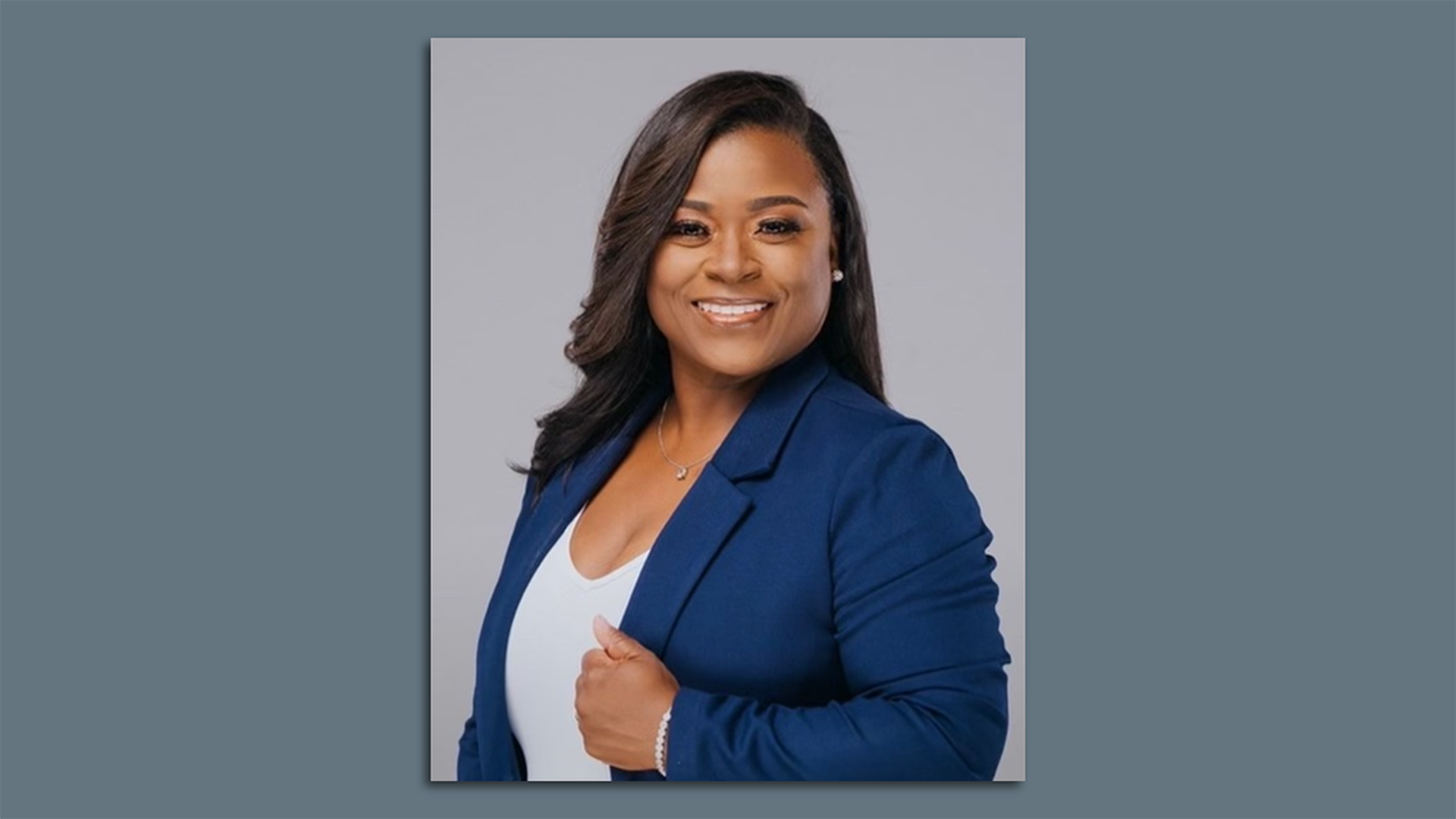
Photo courtesy of Diamond Staton-Williams.
History would have been made in Cabarrus County no matter who won on election day.
But by a margin of 629 votes, Democrat Diamond Staton-Williams became the first person of color to represent Cabarrus in the North Carolina General Assembly, according to Aimy Steele, CEO of the New North Carolina Project.
- The victory is a sign of the demographic and political shifts in the county just outside Charlotte.
What’s happening: Staton-Williams, who is Black, defeated Republican Brian Echevarria, a Black and Hispanic father who went viral for a speech criticizing critical race theory at a school board meeting, in the race for North Carolina House District 73. The seat is currently held by GOP Rep. Larry Pittman, though the district was redrawn.
State of play: Democrats weren’t as successful in North Carolina as in other states, but flipping District 73 helped them stave off a GOP supermajority by one seat.
- And Staton-Williams is a shift from Pittman, one of the most controversial state legislators who once compared Abraham Lincoln to Hitler.
Redistricting that made the once-reliably Republican district a swing seat played a major role in Democrats flipping the seat.
Why it matters: But the win also shows how, as Charlotte’s population growth spreads to outlying counties, it’s shifting the political dynamics there, and setting them up as battlegrounds.
What they’re saying: Down Home North Carolina, a grassroots progressive group that organizes in rural and semi-rural areas, had workers knock on more than 28,000 doors in Cabarrus County for Staton-Williams.
Cabarrus County — home to Concord, the 10th largest city in North Carolina — isn’t exactly rural, but it’s what the group’s communications director Gwen Frisbie-Fulton calls “countrypolitan,” a transitioning county with both rural and urban areas. The group was told that the district wasn’t winnable for Democrats, she says.
- “The Democratic party has been focused on urban and very suburban spaces and just making sure their turnout is there, and we would ask them to look at this win and to realize the type of power that rural folks can wield,” she says.
By the numbers: Cabarrus County grew faster than any other county that borders Mecklenburg between 2010 and 2020, an Axios analysis earlier this year found. The growth was almost entirely driven by people of color.
- In that time, the Black population increased by 56%, the Hispanic population grew by 63% and the Asian population jumped 245%.
Staton-Williams says engaging diverse communities, like the Southeast Asian and Hispanic populations, as well as unaffiliated voters, was crucial to her win.
She’s part of the influx of people to the area, too, having moved with her family to Harrisburg in 2008. The 45-year-old nurse grew up in Charlotte with her grandmother in the Boulevard Homes public housing complex, now redeveloped as The Renaissance.
- In 2017, she became the first Black woman elected to town council in Harrisburg, a fast-growing town in the southern part of Cabarrus County.
When Staton-Williams was first approached about running for the state legislature, she said no. But after having conversations with others in the community about what was at stake when it came to abortion rights, she changed her mind. She’d experienced it personally: She had three unviable pregnancies in between her middle daughter and her son.
- “I know how hard it can be just trying to mentally prepare for something and it’s not turned out the way that you want and then you have to have these procedures to potentially save your life,” Staton-Williams says. “No woman should ever have to worry about that for themselves.”
The other side: Echevarria believes he lost because of a campaign ad featuring Gov. Roy Cooper paid for by Staton-Williams’ campaign. It used a fake mugshot of him and referenced him using a bad check. He says he was never arrested and calls the ad racist.
- A News & Observer fact check found that he was charged when he was 20, but was not convicted. A charge for “passing a worthless bank check” was dropped in court.
- In response, Staton-Williams said that “there were a lot of negative ads going around.”
The close margin between the two candidates shows increased diversity doesn’t translate to automatic victories for Democrats, Echevarria tells me.
- Most of his 130 volunteers knocking doors for him were also people of color, he says.
- “Typically, yes, Blacks vote Democrat, and also typically, Republicans do not message to the Black community,” he says. “But the moment that I did, you can see the big difference.”
Of note: As of Sunday, Echevarria had not conceded his race yet, though a text message Staton-Williams shared with Axios shows he congratulated her the Wednesday after the election. But he posted on Facebook that Thursday that he would wait to concede until all ballots are counted and the Cabarrus County Board of Elections completes its canvass.
- Cabarrus County Board of Elections officials told Axios that as of Nov. 18, the canvass was finished, all ballots were counted, including mail-in and provisional, and the results had been made official.
- The BOE is holding a hearing on a protest filed by a voter on Monday at 12:30, according to an email from the county’s board of elections director Carol Soles that was shared with Axios.
- Echevarria is waiting to officially concede until after that, he told Axios Sunday, but says he doesn’t expect the protest to be successful.
What’s next: Steele, with the New North Carolina Project that aims to recreate Stacey Abrams’ voter mobilization efforts in Georgia, lives in Concord. She believes the outskirts of urban areas will require the most substantial investments heading into the 2024 election cycle.
- “If we only focus on the urban communities, and ignore the ones that are rapidly growing … then we’re leaving people on the table, especially people of color,” Steele says.