A reflection of 2 years since George Floyd’s murder


Add Axios as your preferred source to
see more of our stories on Google.
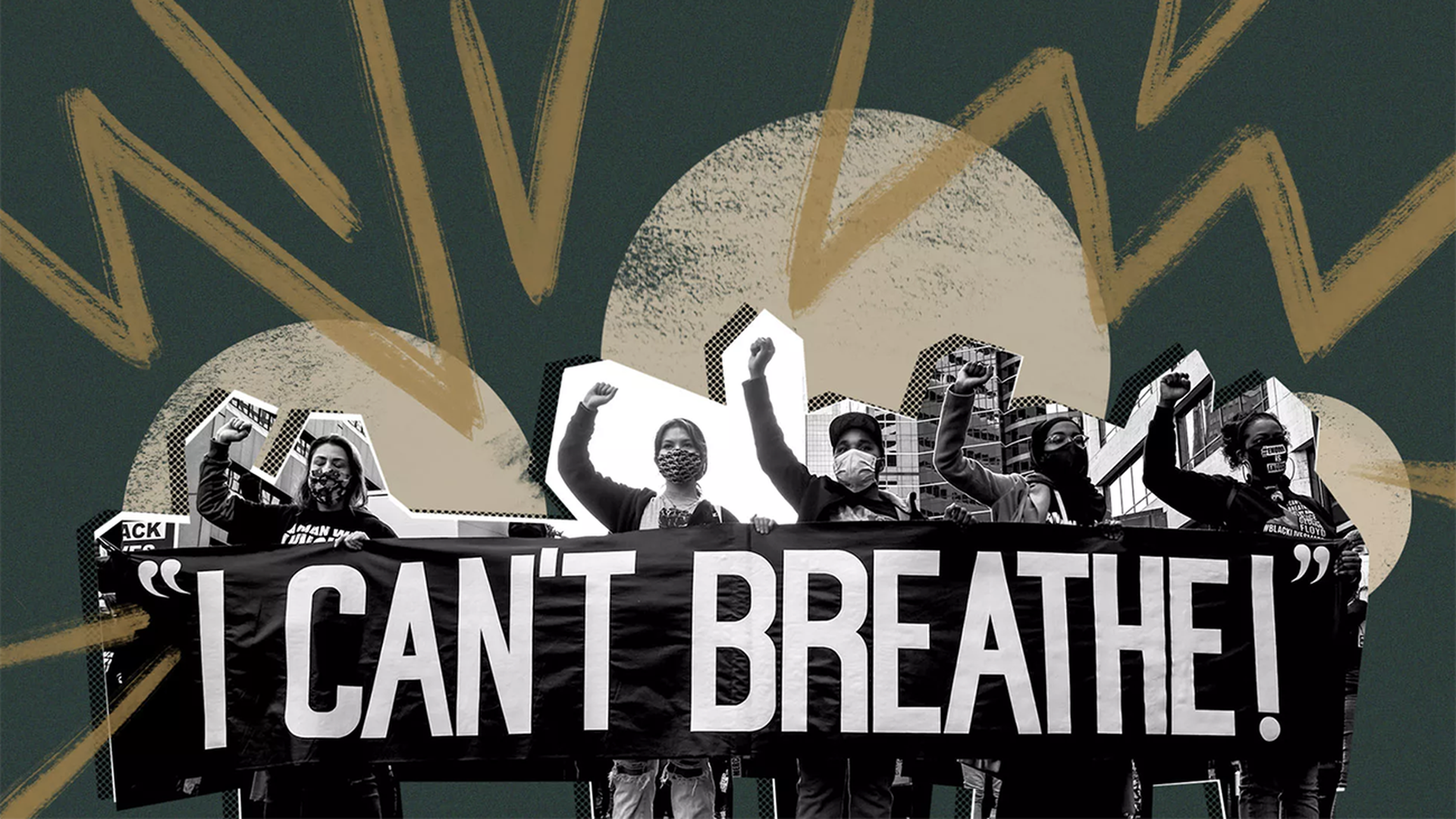
Photo illustration: Allie Carl/Axios. Photo: Chandan Khanna/Getty Images
Eight minutes, 46 seconds.
That was the length of time, now burned into the American consciousness, that Minneapolis police officer Derek Chauvin kneeled on George Floyd’s neck two years ago today. A jury later found Chauvin guilty of multiple counts of murder.
- People filled the streets across the country, including on Beatties Ford Road in Charlotte on May 29. That was the first night of protests against police brutality that lasted weeks here, as people knelt for 8:46 from Waxhaw to Myers Park to Huntersville.
- In early June that year, another video went viral of Floyd’s 6-year-old daughter Gianna saying, “Daddy changed the world.”
Why it still matters: Leaders in Charlotte and nationwide vowed to make good on a promise to Gianna to make systemic changes following Floyd’s murder.
- They pledged money, promised police reform and committed to programs to encourage Black leadership in business.
Zoom in: Locally, the biggest announcement came last fall, when Mayor Vi Lyles and area business leaders announced the “Mayor’s Racial Equity Initiative,” a public-private campaign to raise $250 million for:
- Bridging the digital divide;
- Strengthening Johnson C. Smith University;
- Encouraging employers to hire a diverse workforce;
- Investing in Corridors of Opportunity, a $24.5 million investment in six Charlotte areas, which the city launched in September 2020.
The initiative has raised $220 million of its $250 million goal, per a May press release. One month earlier, initiative leaders said they were developing proposals for how to spend the money.
- Johnson C. Smith University, for example, wants to use $20 million for scholarships in areas like business, finance, pre-med and data analytics, according to president Clay Armbrister.
- Bruce Clark, executive director of the Center for Digital Equity at Queens University of Charlotte, says his organization’s goal this year is to help distribute 20,000 laptops and to get at least 10,000 households connected to the internet.
The big picture: Statewide, the GOP-led legislature passed, and the Democratic governor signed, three criminal justice reform bills in a rare bipartisan effort late last summer.
- The largest was SB300, which created a database that monitored police officers’ backgrounds.
- SB300 also established a statewide duty to intervene, meaning an officer who sees a colleague using excessive force must step in and report it within 72 hours.
- Mental health training has been expanded for officers and families of people severely hurt or killed by police can now request body-camera footage.
The bottom line: Some symbolic gestures have faded — like the once vibrant Black Lives Matter mural on Tryon Street, which is now a few scattered specks of paint.
But others are more permanent, like the 12 new street names that took the place of those named after Confederate leaders and white supremacists.
Zoom out: Long before he moved to Minnesota, George Perry Floyd Jr. was from North Carolina, born in a hospital in Fayetteville and raised in Raeford, two hours east of Charlotte.
- His uncle Roger, who attends regular racial equity meetings in Charlotte with a group called the Champions, says he was the third person to hold Perry Jr. in the hospital after he was born. “That’s so vivid right now in my mind and in my spirit,” he says.
- Floyd’s North Carolina family has since set up the George Floyd Memorial Center in Raleigh.
- The GFMC is hosting a “weekend of enlightenment” in the Triangle, with a sold-out golf tournament. There’s a virtual conference on Saturday to discuss moving “from perpetual trauma to transformation.” (Tickets)
Between the lines: Progress is more personal for the families. Take, for instance, the case of Big Jake Blake, father of Jacob Blake, the Black man shot several times in the back by police in Kenosha, Wisconsin in summer 2020.
- Big Jake is a Charlotte resident. He’s become friends with Floyd’s family and the family of Breonna Taylor. They’ve formed an organization that provides financial and psychological support to families of victims of police violence.
- “That’s going to be my life, man,” Big Jake told Michael in November. “We stand with these families. We use our energy trying to support these people.”