2 more street names linked to white supremacy are out in Charlotte

Add Axios as your preferred source to
see more of our stories on Google.
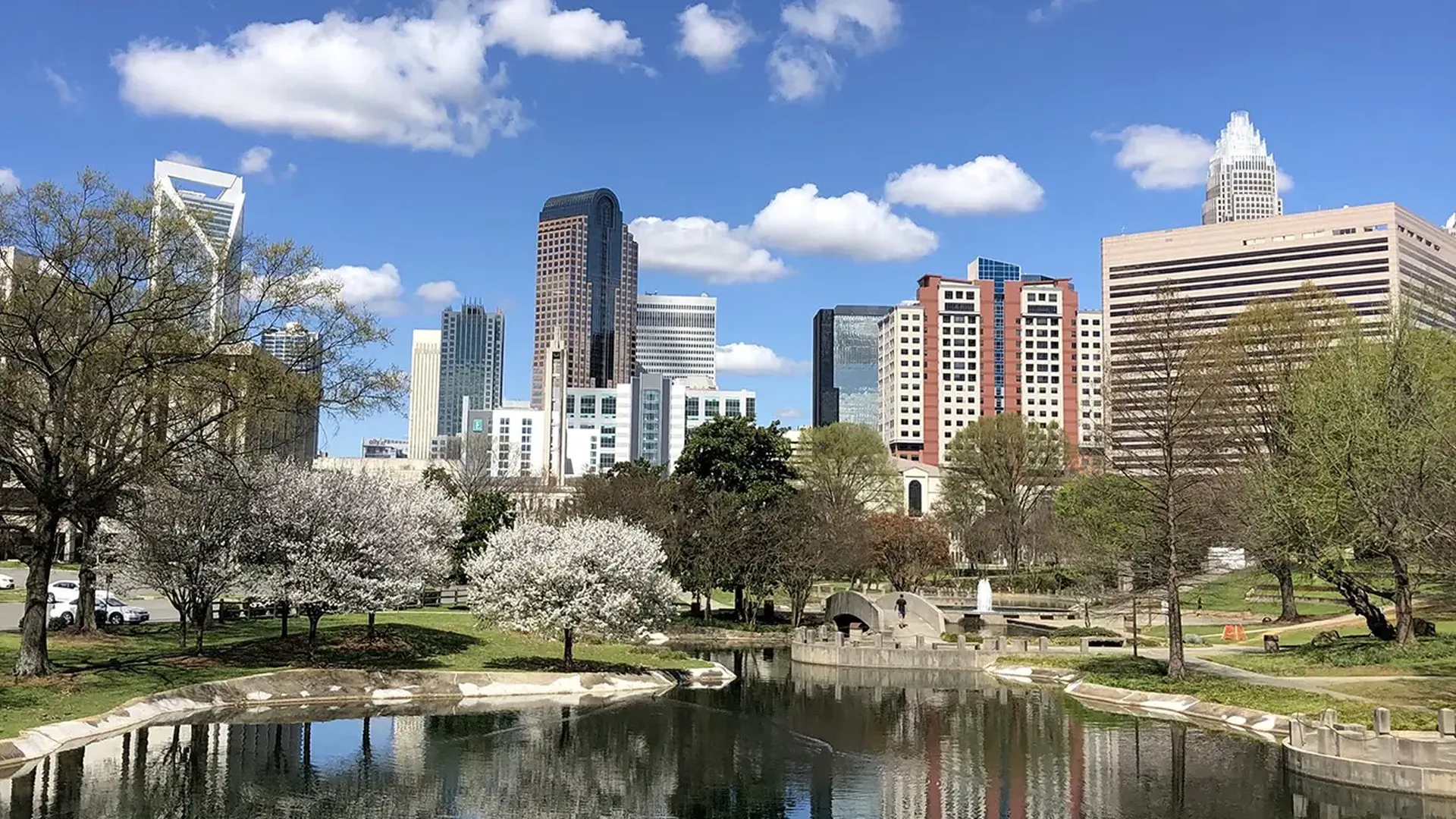
The view from Marshall Park in the what was once the thriving Black neighborhood of Brooklyn. Photo: Axios archives
The city of Charlotte has renamed seven streets with ties to white supremacy since 2021.
The latest: Two more street names will join that list, city officials announced Wednesday.
- Stonewall Street will be renamed Brooklyn Village Avenue, effective June 30, to pay homage to what was once a thriving Black neighborhood. Urban renewal, which was done in the name of progress, displaced 1,007 families and demolished 1,408 buildings during the 1960s-70s, per the city.
- Revolution Park Drive will replace Barringer Drive on May 23, honoring the Dr. Charles L. Sifford Golf Course and Revolution Park history. The golf course, then Bonnie Brae Golf Course, was desegregated in 1957. Osmond L. Barringer, Charlotte’s first automobile dealer, donated the land it sits on with the caveat it would be for white people only. The area was predominantly white until urban renewal forced Black residents out of Brooklyn.
Context: Jefferson Davis Street was the first to change. It became Druid Hills Way last summer. Ultimately, the city set out to change nine names, but ended up with 12, giving different parts of Hill Street four names. Other name changes include:
- Aycock Lane to Wall Street
- Jackson Avenue to Cross Trail Drive
- Morrison Avenue to Carnegie Boulevard
- Phifer Avenue to Montford Point Street, which honors the first Black Americans, some of whom were Charlotteans, who enlisted in the Marine Corps in 1942
- W. Hill Street to Westmere Avenue, Stadium View Drive, Civil Street and Good Samaritan Way
- Zebulon Avenue to Yellowstone Drive
Yes, but: The city has been all about words to show its commitment to its Black residents, and while symbols are nice gestures, they don’t change policy.
Flashback: Cities across the country took ceremonial steps to right the wrongs of the past in the wake of nationwide protests after George Floyd was murdered by police in June 2020. Seventy-three statues upholding racism came down across the country in the last year, but 723 Confederate monuments remain in the U.S.
- Charlotte painted Black Lives Matter on the streets of Uptown and Mayor Vi Lyles launched and tasked a Legacy Commission with creating a list of street names, monuments and other markers honoring slave owners, Confederate veterans or romanticized ideas of the antebellum South that fateful June.
Willie Griffin, Levine Museum of the New South staff historian, presented an initial list of over 70 qualifying names.
Charlotte City Council approved adopting Legacy Commission recommendations to change streets named for Confederate leaders and white supremacists in February 2021.
The city also launched the Mayor’s Racial Equity Initiative, a $250 million public-private initiative to address racial inequity. In September 2020, they also launched the Corridors of Opportunity Initiative, a $24.5 million investment in six Charlotte areas.
Yes, but: Residents aren’t happy with Brooklyn Village Avenue.
- “It wasn’t a village, it was a neighborhood,” CLT Development tweeted. “And the 20 year long debacle to redevelop the neighborhood certainly isn’t worth celebrating. It’s Brooklyn Ave. Fix it.”
- Brooklyn Village is a planned 17-acre mixed-use development where Brooklyn once stood.