Dispersal orders explained. Why they’re issued and what to do when they are

Add Axios as your preferred source to
see more of our stories on Google.
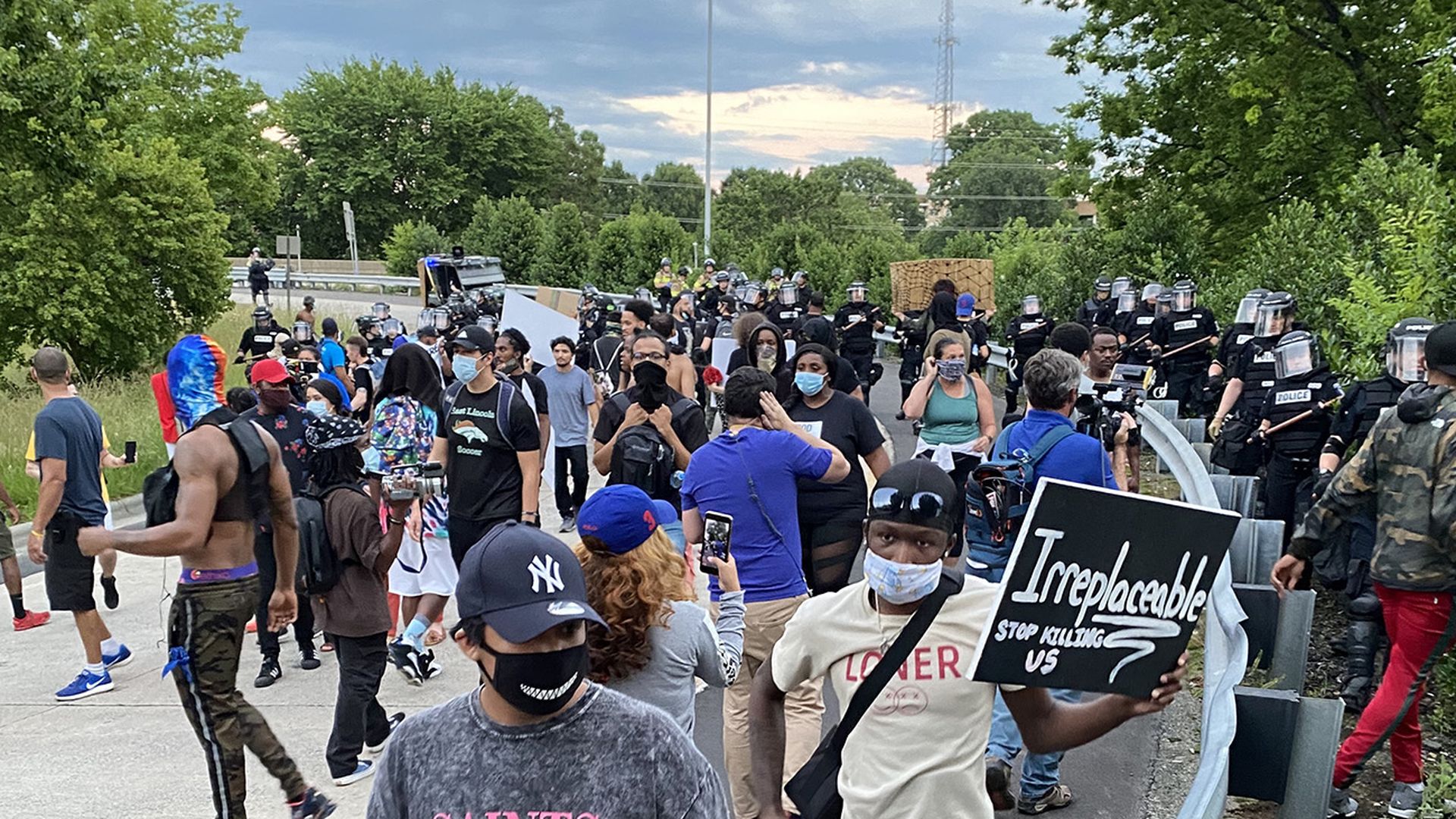
Protesters marching on I-277 were pushed back by police.
Charlotte’s protests in memory of George Floyd and other Black victims of violence have told two different stories, day and night. Demonstrations start peacefully and end with dispersal orders and tear gas.
Why dispersal orders are issued: When it comes to protests, dispersal orders are issued when police feel the crowd is getting out of hand. This could mean people are looting, harming officers, or each other. In the last week police have reported protesters throwing fireworks, bottles, and bricks at them. Some Uptown businesses have also been damaged by looters. It’s important to note though, this is a small minority of protesters.
[Related Agenda story: Weekend protests erupt in Charlotte in response to police killing of George Floyd]
How: The dispersal orders, issued verbally, are the first step in getting protesters to leave voluntarily. “The first one is the one that matters most. That’s what determines this is now a riot, so everybody needs to disperse,” said CMPD Chief Kerr Putney.
What to do: When the protest becomes unlawful, according to Putney, officers repeat the dispersal order multiple times. At this point, protestors are supposed to leave.
“We make the first and it goes until people have dispersed. So we do give repeated (dispersal orders) because we want to make sure everybody hears us. It gives people the opportunity to cooperate,” Putney said.
Though previous orders were issued earlier in the night, both protestors and reporters say there was no dispersal order during an incident Tuesday night when protestors were trapped between two clouds of tear gas on 4th Street.
Putney says otherwise, “That is not true. I can’t wait to show you without a doubt the evidence thereof.”
[Related Agenda story: Charlotte protesters demand answers from city leaders and police following viral video]
/2024/01/05/1704498224613.jpg)
Potential charges: Of the 120 people arrested during protests over the last week, the most common reason was for failing to disperse. That includes city councilman Braxton Winston who was arrested Friday night.
Other protest related charges include injury or burning to personal property, resisting an officer, and assault on a government official.
No curfew: Though Charlotte is under a state of emergency related to the George Floyd protests, the city is not under a curfew. Mayor Vi Lyles believes curfews prevent protestors from exercising their constitutional rights.
However, dispersal orders have been given around the same time, between 9 and 10 p.m., most nights.
[Related Agenda story: Two days, two cities, one Charlotte: My hope for my hometown in the wake of another police killing]
Know your rights: According to the ACLU, protesters must get clear and detailed notice of dispersal orders including, exit routes, time limits, and consequences for failing to disperse before arrests can be made.
Charlotte Uprising organized a Jail Support program to bail protesters out. Any protester who’s been arrested can call 980-224-2097 for help.
More coverage of the protests in Charlotte: