Neighborhoods begin lining up against school reassignment plan

Add Axios as your preferred source to
see more of our stories on Google.
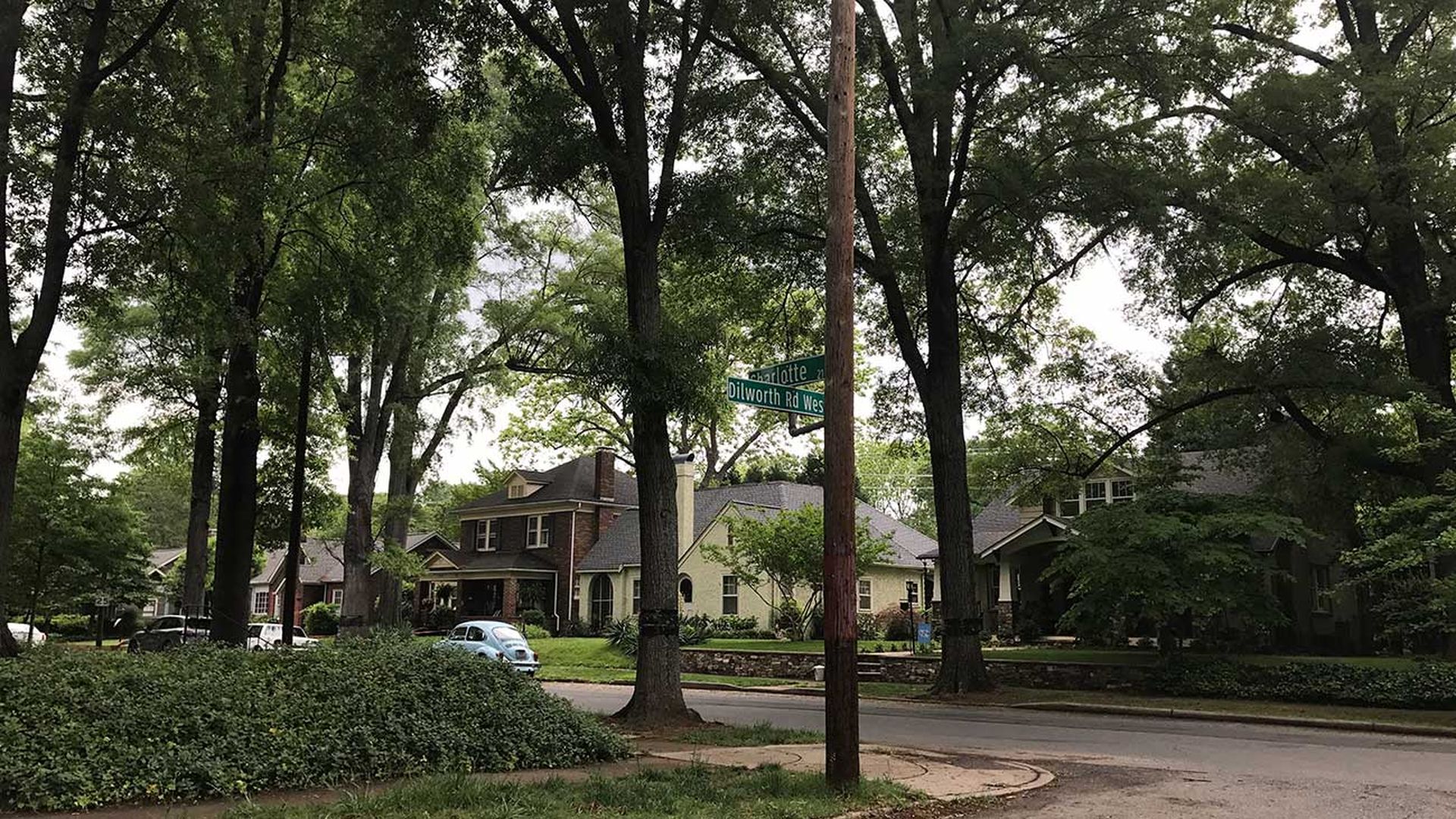
All politics is local. And when it comes to reaction to a new student assignment plan — it’s hyperlocal.
Neighborhoods are beginning to figure out a position either for or against the proposal floated by Charlotte-Mecklenburg Schools last week that would change how students are assigned to 75 different schools.
Some advocates have panned the plan as not going far enough to break up concentrations of poverty around the county. And overall, it’s not as jarring as a lot of people had expected it to be.
But that doesn’t make much difference to the people who are having their kids sent to different schools.
The brutally short time period between when the plan was released and the final vote scheduled for May 24 has forced neighborhood associations and parent groups into overdrive. They’ve spent the past few days hastily arranging meetings and holding emotional discussions.
Two of Charlotte’s long-established neighborhoods — Dilworth and Cotswold — are particularly affected by the new plan. They’ve quickly banded together to discuss the proposal but the reaction remains disjointed.
Other unofficial groups are beginning to pop up as well. Most of the mobilization has been against the CMS proposal — with one major exception in Sedgefield.
Dilworth and Cotswold still don’t have an official stance.
Under the CMS plan, Dilworth Elementary’s zone would be combined with Sedgefield Elementary, creating one combined school that’s split based on grade level between the two campuses. Sedgefield is a low-income school.
In a letter to Dilworth parents, Principal Terry Hall described the benefits this pairing would have, including being able to avoid doubling up classrooms, having a full-size art room and allowing the Spanish teacher to have a classroom.
The neighborhood association does not appear to have a firm position yet, but they did hold a community meeting late last week.
The Agenda has heard from a number of Dilworth residents who have said they’re exploring private schools. However, there also appears to be a willingness from some Dilworth parents to give the arrangement a shot and then to support Sedgefield Middle.
/2024/01/05/1704478083808.jpg)
In the same type of arrangement, Cotswold Elementary would be combined with Billingsville Elementary creating its own mega district. Billingsville is a low-income school with a large black population.
Cotswold has held several meetings to share feelings but has not announced an official position. The Billingsville community also hasn’t taken a public stance.
Sedgefield supports the “paired” schools.
Sedgefield Elementary and Middle perhaps stand to gain the most from the CMS proposal, and homeowners there are eager for the vibrancy a rejuvenated neighborhood school could have.
Both schools have earned “D” grades for the most recent year. Sedgefield Middle was an “F” school in 2015.
In a letter to Dilworth families, Sedgefield Neighborhood Association President Will Johns asked for support for the proposal that would merge the attendance zones for the two neighborhood schools.
“Because of the high poverty concentration at those schools, and (until recently) the relatively low number of children in our neighborhoods, we simply have not had the critical mass to effect meaningful change at the schools,” he wrote.
“We strongly believe, however, that the time is now and that the proposed school assignment plan offers the best opportunity to create strong community schools and help remediate a situation that reflects poorly not only on the neighborhoods involved but on our city as a whole.”
A petition supporting the plan had nearly 300 signatures by Tuesday afternoon. Parents who signed on said they were ready for a change to Sedgefield Elementary and Middle.
/2024/01/05/1704478084048.jpg)
Chantilly likely to push to stay at Myers Park High.
The Chantilly Neighborhood Association held an emergency meeting two days after the plan was held to discuss a response. Their neighborhood had their high school assignment changed from Myers Park High (B grade) to Garinger High (D grade). So far, they’ve come up with four possible ways forward to advocate for:
- Push for no change to the current arrangement, keeping children at Oakhurst STEAM, Eastway Middle and Myers Park High.
- Asking for a rezoning to send children to the Billingsville/Cotswold paired elementary schools, Alexander Graham Middle, and Myers Park High.
- Pushing to stay at Oakhurst STEAM, but then moving on to McClintock Middle and East Mecklenburg High.
- Accepting the CMS proposal as is but asking for a plan for school improvement at Garinger High.
/2024/01/05/1704478084563.jpg)
The neighborhood association is planning to vote Thursday by secret ballot on which to support.
Montclaire wants to change its high school.
Montclaire is one of those neighborhoods that’s caught up in the gerrymandered districts of CMS.
[Agenda story: The most gerrymandered school districts in Charlotte]
The neighborhood is less than 4 miles from South Mecklenburg High, but kids there get sent more than 8 miles up to Harding University High.
The neighborhood has been pushing for several years to get this changed with no success. They were hopeful that this year’s proposal would change that.
They’ll be renewing their push before the final vote.
There’s a growing movement to delay the vote.
Because the proposal is so large and so complicated, it’s been hard for neighborhoods to wrap their heads around it. That’s why the latest tactic popping up around the city is to push to delay the May 24 vote.
This petition had more than 750 signatures by Tuesday afternoon. It’s especially popular in Dilworth and in Huntersville, where changes to Hopewell and Hough high school boundaries would send students from Hough (with an A+ grade from the state) to the lower-income Hopewell (C grade).
But there is also a sizable contingent who say they have not formed an opinion on the proposal. They say they just don’t have enough time to fully consider it before the final vote.
“With so many changes, how can CMS possibly manage and respond to the communities’ questions and considerations in just 4 weeks?” one man wrote.