Group takes credit for CU shooting hoax


Add Axios as your preferred source to
see more of our stories on Google.
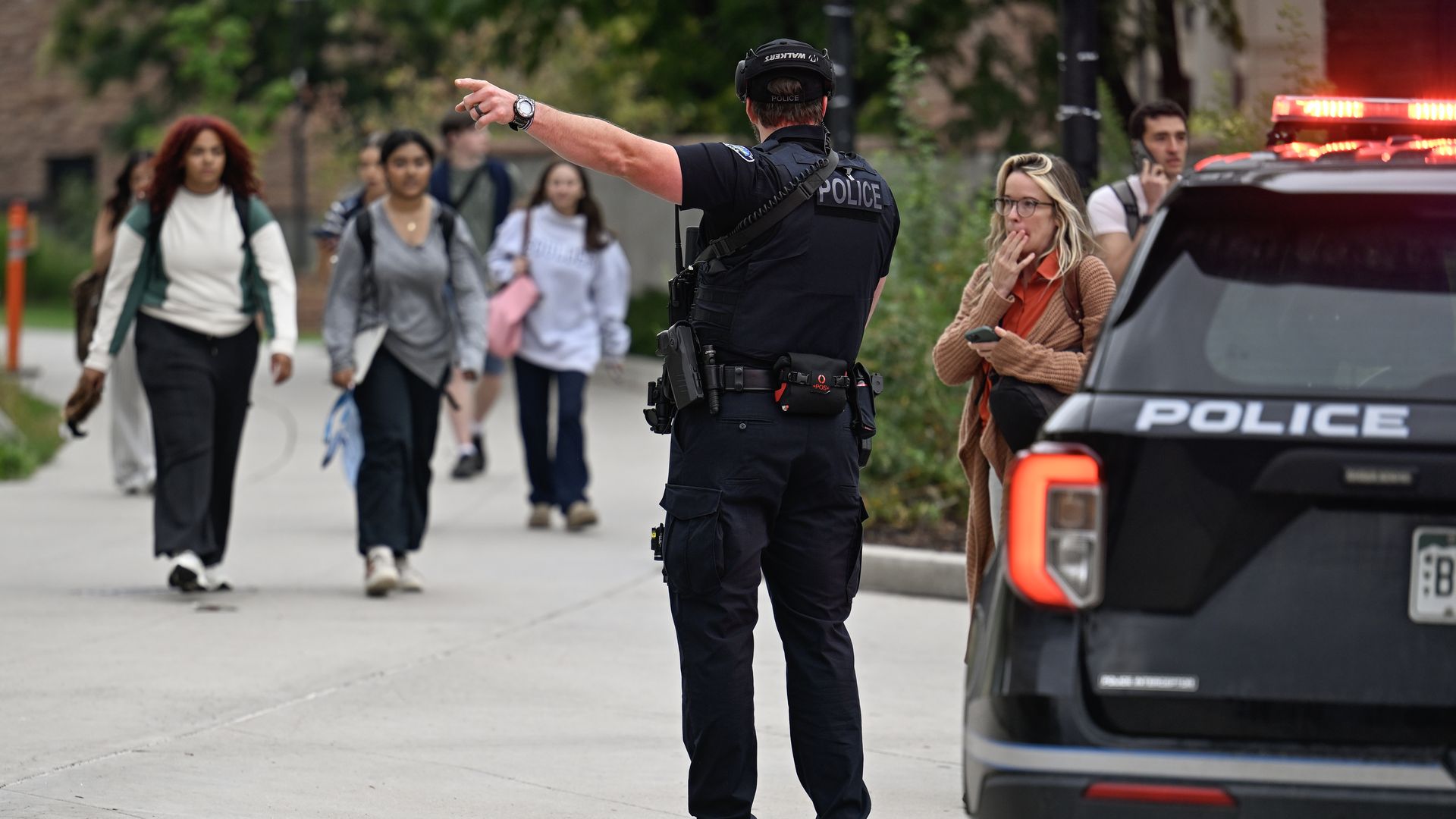
A Boulder police officer directs people at the University of Colorado on Aug. 25. Photo: Matthew Jonas/MediaNews Group/Boulder Daily Camera via Getty Images
An online group has claimed responsibility for the false shooting report at several colleges last week, including the University of Colorado.
Why it matters: Identifying the actors involved in swatting sprees has become increasingly difficult for law enforcement as the attacks frequently originate online, overseas or by using AI software — and it's only going to get worse, multiple public safety officials told Axios.
The latest: An online group called Purgatory has claimed credit for the alerts issued at CU, Villanova University and the University of Tennessee at Chattanooga campuses in recent days, according to Wired Magazine.
- Axios was unable to independently verify the group's claims. According to Wired, the group is known to offer an online "menu" of illegal services.
Zoom in: CU police tell us that dispatchers received a report at 5pm on Aug. 25 from an individual who claimed they heard gunshots coming from the direction of Norlin Library.
- Police evacuated the library and issued a shelter-in-place order for the entire campus. The library was cleared at 8:18pm and no evidence of a shooter was found.
The big picture: The FBI has seen swatting incidents increase nationwide, similar to the spate of false calls that caused terror in schools during the 2022-23 school year.
Flashback: Boulder High was targeted by a hoax shooting call in 2023 though the source of that call was never identified.
State of play: "Swatting" is when someone calls first responders with fake emergency reports, often with the intention of eliciting a major law enforcement response.
- Identifying the fake callers can be difficult due to new techniques that allow people to mask their identities, such as using AI-generated voices, caller ID spoofing and masking a user's IP address.
- "It's hard for any agency to justify that level of investment in enforcement if at the end of the road your target is going to be someone outside of your jurisdiction," Mark Reddish, a certified master firefighter and the former director of external affairs at the Center for AI Policy, told Axios.
Threat level: Schools and universities are an easy target for bad actors looking to affect a large number of people as quickly as possible, Reddish added.
- Research shows that students involved in swatting incidents also face significant trauma amid the police presence and required safety protocols.
The bottom line: Law enforcement takes swatting seriously, and schools aren't alone in facing false calls.