Report: Over 1 in 6 Central Texans face food insecurity


Add Axios as your preferred source to
see more of our stories on Google.
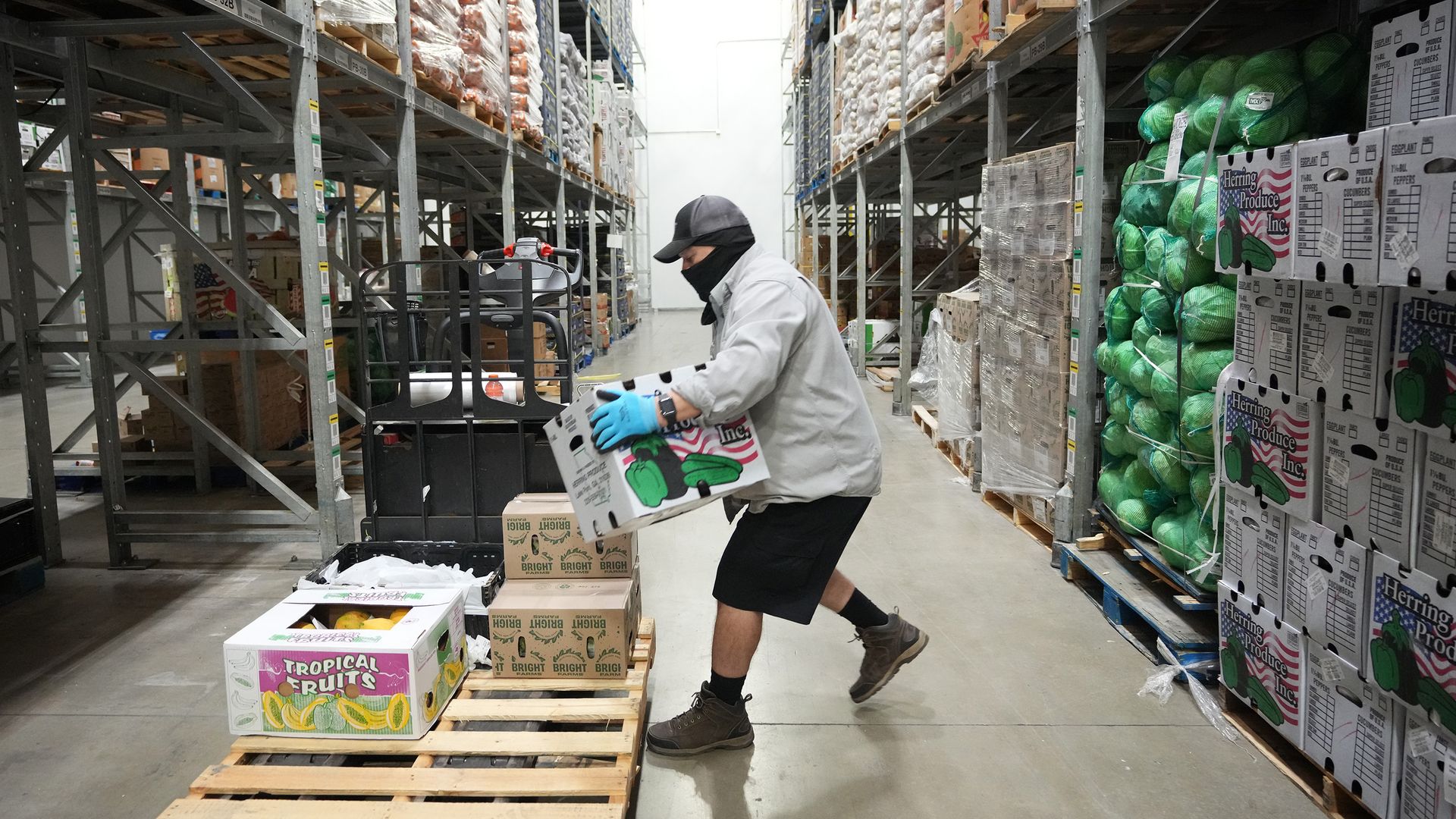
A worker at the Central Texas Food Bank. Photo: Jay Janner/The Austin American-Statesman via Getty Images
More than 1 in 6 residents in the Central Texas Food Bank's 21-county service area struggle to consistently access enough food, a new report shows.
Why it matters: Food banks say they're seeing greater need as many families continue to grapple with high costs for groceries, housing and gas, while changes to the Supplemental Nutrition Assistance Program create additional uncertainty.
The latest: Feeding America's recently released annual Map the Meal Gap report, which is based on 2024 data — the latest available — shows food insecurity is rising throughout the state.
- About 19% of Texans experienced food insecurity in 2024, up from nearly 18% a year earlier.
What they're saying: "Food insecurity is not a distant problem — it is present in every community in America," Denis McDonough, Feeding America CEO, said in a statement.
- "The data help us understand the scale of need, knowing that behind every number is a child, a family, a senior, a veteran, a neighbor working hard to make ends meet."
By the numbers: About 17% of residents in the Central Texas Food Bank's service area experienced food insecurity in 2024, per the report. That's up from about 16% the year before.
- The report estimates 593,860 people in the region experienced food insecurity.
- "Central Texas Food Bank numbers remain higher than the national average," Sari Vatske, president and CEO of the food bank, tells Axios.
- "While 1 in 4 children go to bed hungry throughout the 21 counties we serve, they comprise nearly 30% of the total population of neighbors facing hunger."
Zoom in: Travis County's food insecurity rate reached nearly 18%, or about 235,440 people, per the county-level estimates.
- The report also estimates nearly 63% of food-insecure residents earn too much to qualify for SNAP benefits based on income, highlighting the role food banks play for families outside the federal safety net.
Between the lines: Food banks worry demand could continue to rise as Texas implements federal changes to SNAP.
- Beginning in 2027, states with SNAP payment error rates above 6% will have to shoulder a share of benefit costs.
- Texas' error rate was 9% in fiscal year 2025, meaning the state could face up to $709 million a year in additional costs beginning in fiscal year 2028 if the law remains unchanged.