The rise of mood drinks

Add Axios as your preferred source to
see more of our stories on Google.
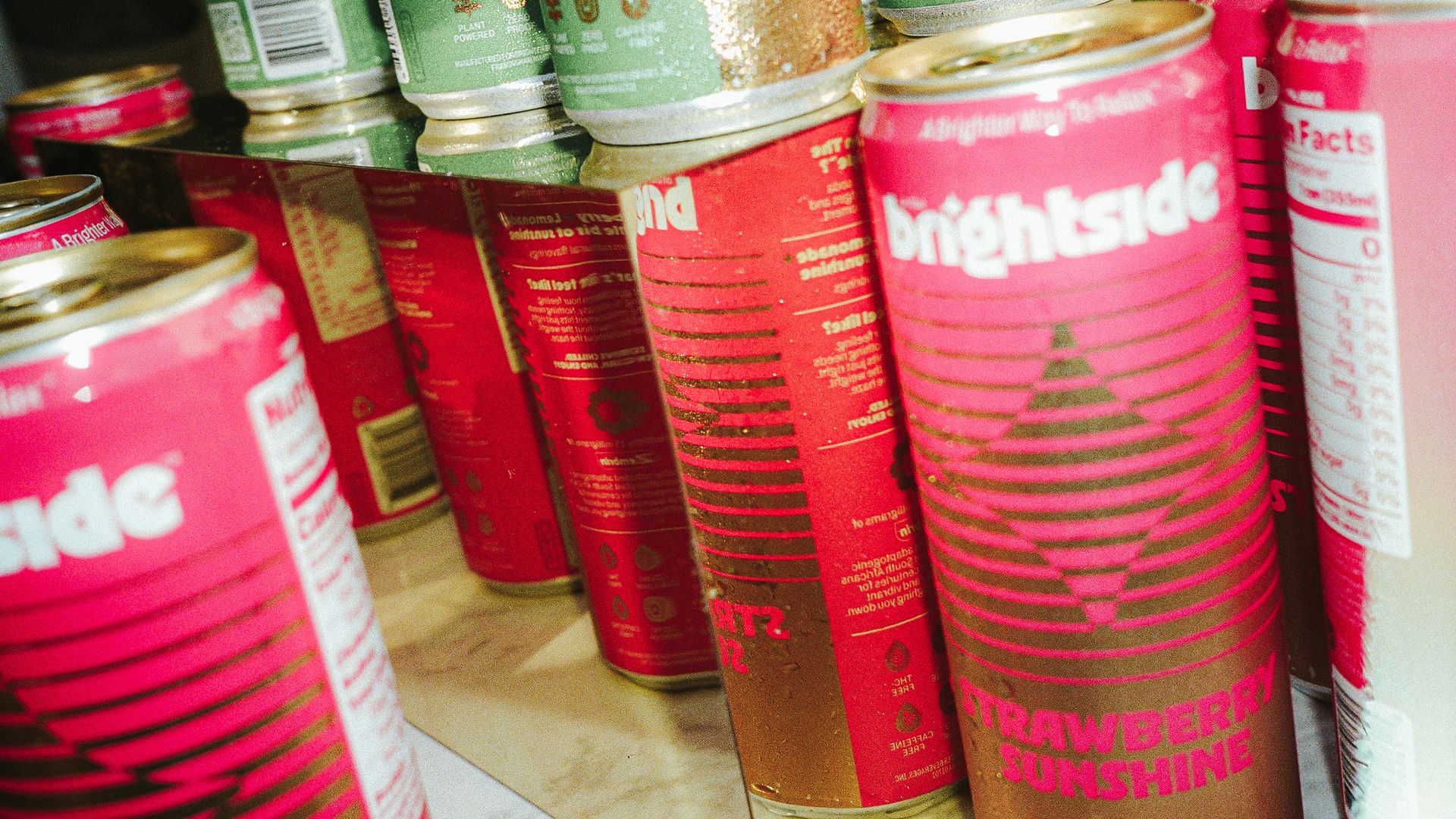
On the Brightside launched cans made with Zembrin, which founder Adam Terry says is designed to promote a calming effect. Photo: Courtesy of Collin Findlay
As Americans rethink alcohol, beverage startups are racing to fill the gap with drinks that promise social connection without the hangover.
Why it matters: Consumers are increasingly choosing beverages based on what they want the drink to do — energize them, improve gut health or help unwind — fueling a boom in products marketed around function rather than flavor.
Driving the news: On the Brightside is among the latest entrants, launching canned drinks made with Zembrin, a patented extract of the succulent kanna that founder Adam Terry tells Axios is designed to promote a calming, "pro-social" effect without intoxication.
- The Massachusetts-based company, which held a launch party in Austin last month, joins brands like Recess, Hiyo and Trip — all of which market mood-support beverages as alternatives to alcohol or THC.
Terry says he wanted to create a drink that could occupy the same social space as alcohol without causing intoxication or a hangover.
- "Can I make an actually pro-social drink that tastes good but doesn't get you inebriated?"
By the numbers: Sales of functional beverages, or drinks marketed for health benefits, generated $31.3 billion in U.S. sales over the past year — up nearly 11% year-over-year and about 147% over four years, per NielsenIQ data shared with Axios.
- The category reaches 91% of U.S. households.
What's happening: The growth reflects a broader shift in how consumers shop for beverages.
- "The old beverage map was built around categories — soda, water, coffee, alcohol, sports drinks," Sally Lyons Wyatt, a global consumer packaged goods and food service industry advisor at Circana, tells Axios.
- "The new map is increasingly built around effects and occasions."
Zoom in: Younger consumers "are not necessarily abandoning alcohol — they are redefining what belongs in the adult beverage occasion," she adds, pointing to moderation, novelty and mood support as growing priorities.
- "The category is not yet a full substitute for alcohol," Lyons Wyatt says.
Reality check: Like other functional beverages, drinks with mood-enhancing ingredients aren't evaluated by the FDA for effectiveness, and evidence supporting their effects varies widely by ingredient.
The bottom line: Americans aren't just choosing what to drink. They're increasingly choosing how they want drinks to make them feel.