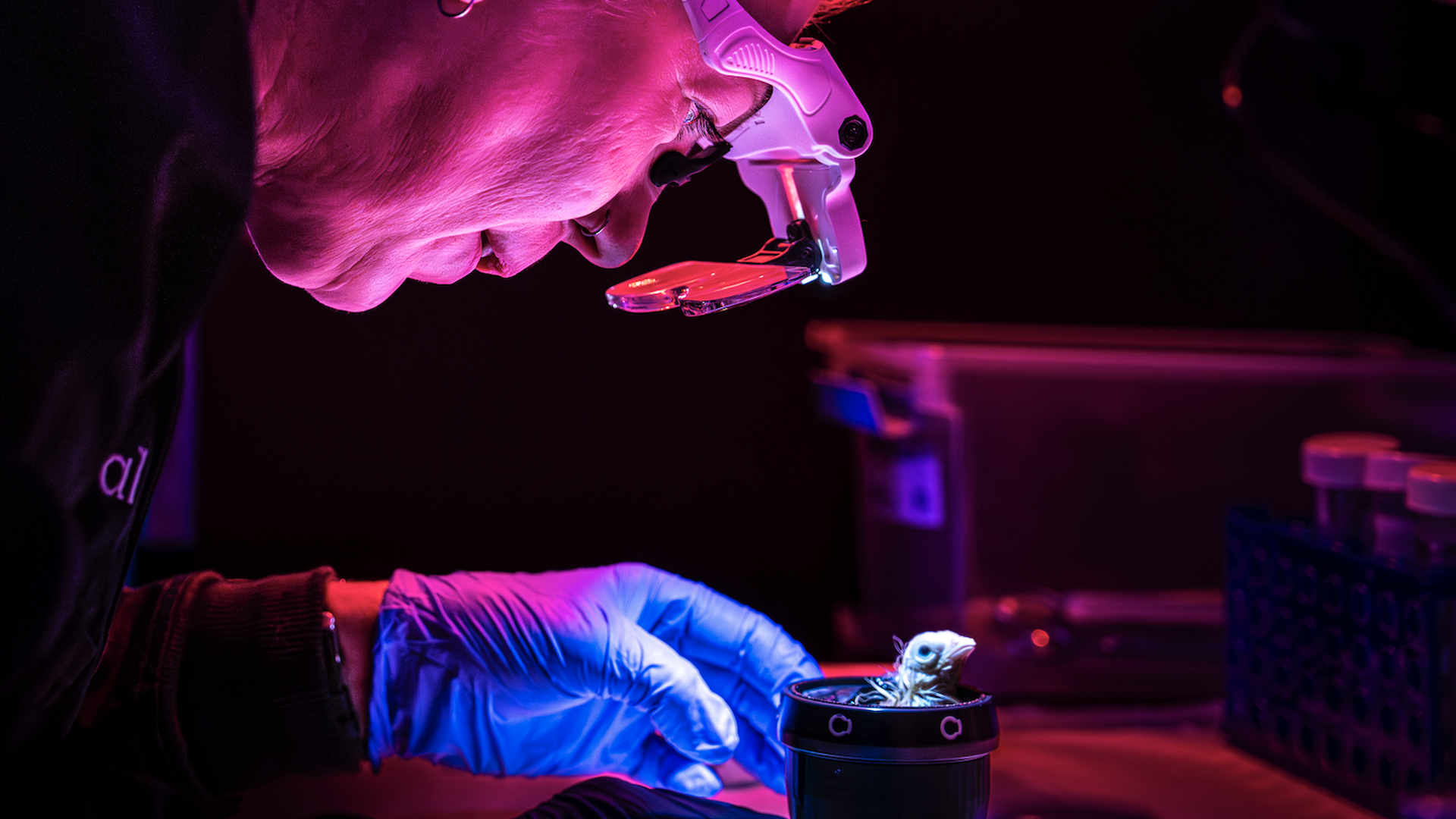
This chick didn't need a natural eggshell to hatch. Photo: Courtesy of Colossal
A Texas-based biosciences company says it has hatched live chicks from fully artificial eggs.
Driving the news: Colossal, which is based in Dallas and has an administrative office in Austin, hopes the technology will help recreate the genome of the South Island giant moa, a wingless bird that roamed New Zealand until the 1400s.
The intrigue: Paige McNickle from Colossal's animal husbandry team was one of the first people to interact with the company's first chicks.
"It's like feeling every human emotion simultaneously — you want to jump up and down and scream for joy, but you also want to protect [the chick] and bubble wrap it all at the same time," McNickle says in a video.
How it works: Eggs of the largest species ofmoa were roughly eight times the size of an emu egg, making it difficult for Colossal's researchers to find a suitable surrogate for their de-extinction project.
They 3D printed an artificial egg to support avian embryo development without requiring supplemental oxygen, which can damage DNA.
The artificial egg, developed after 14 iterations, has a bioengineered silicone-based membrane that matches the oxygen transfer capabilities of a natural eggshell. Researchers sprinkle in nutrients that the embryo needs to develop.
The chicks hatch in batches before being transitioned to a farm.
What's next: Future uses may include rescuing compromised embryos through biobanked materials and helping conserve threatened bird species, Colossal says.