What Waymo's future in Austin may look like

Add Axios as your preferred source to
see more of our stories on Google.
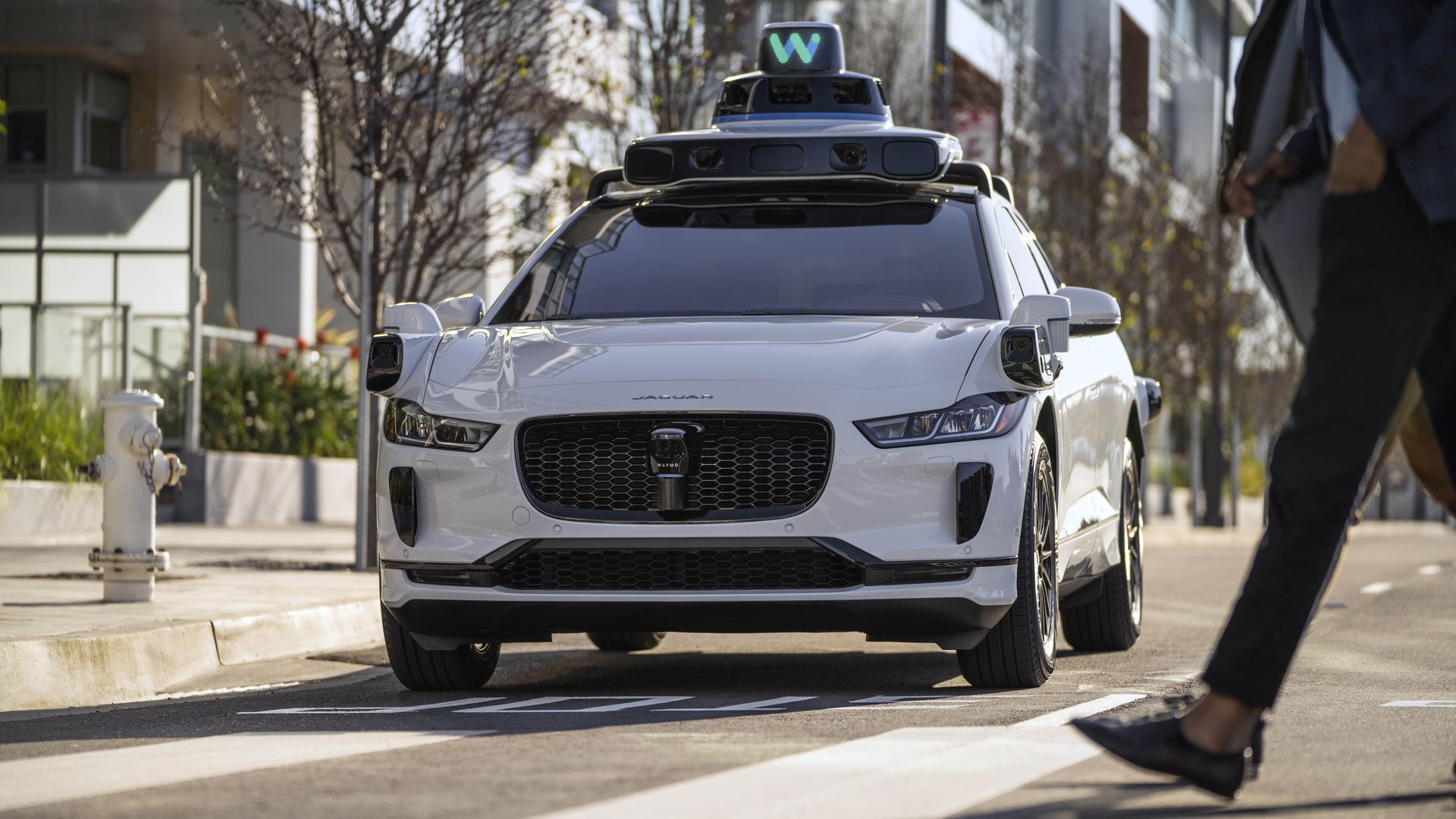
Photo: Courtesy of Waymo
Just over a year into operating commercially on Austin streets through the Uber app, Waymo says it's moved well beyond a pilot phase — rapidly expanding its footprint, logging millions of driverless miles and leaning on its own data to spot and fix safety issues.
State of play: The driverless car company started with 40 square miles a year ago and has since expanded to 130 square miles for riders on the Uber app.
- 300 vehicles make up Waymo's Austin fleet, and they've traveled 10.7 million fully autonomous miles throughout the city.
What's happening: We spoke to Shweta Shrivastava, Waymo's senior director of product management, about the operator's full year of service in Austin, tackling safety concerns, and what's next for the company here.
This conversation has been condensed and lightly edited for clarity.
What are the big takeaways from year one in Austin?
"We've been growing very well in Austin, partnering very well with Uber on ensuring that we are giving a good experience to our riders. We've been expanding the territory.
- Community engagement has been going very strong as well. ... We're also closely engaging with the city in a number of different areas. Sometimes they have concerns about some events, and we try to share as much information and educate the city members as much as possible."
There's a new law going into effect that requires AV companies to be certified with the Texas DMV. Does that make things more difficult for Waymo?
"No, they don't make things difficult for Waymo because we don't resist regulation. We don't resist questions. We welcome those. Texas has always been a very important state. ... Texas is where we have the most number of cities where we're serving commercially, so we are engaged with the DMV.
Anything coming soon in Austin with Lyft or beyond that?
"Nothing to share. I'm excited about how we're expanding our service in Austin by actively testing the freeways and also actively testing the airport with the autonomous specialists — the safety driver — behind the wheel. We're excited to bring those services to external riders in the future."
Do you have a timeline for when Austin riders could take a Waymo to the airport or on the freeway?
"I don't have timelines to share with you. We're working closely with the airport authority."
Is there anything the company is changing in how to engage with the public or the city to address concerns?
"I wouldn't say it's a change. I would say that we continue to double down on what we always set out to do, which is we understand that you can't just earn trust once and be done with it.
- ... It's also about education. For example, we realized that sometimes the information that people, regulators or city stakeholders might be getting is coming through a social media posting about something that didn't go well. In the vast majority of cases and our safety track record ... when you look at the aggregate safety performance, we are making the roads safer in a very concrete and tangible way today."
There's a growing number of companies operating in Central Texas. Where does Waymo fit into that landscape?
"I think the proof is in the pudding for us, in terms of the scale that we have. We are way past a pilot stage or a proof of concept or experiment. That's not the phase that we are in.
We are commercially serving 11 cities across the U.S. and this is fully autonomous without any safety driver. We're doing more than half a million trips per week across these 11 cities. We have, as December 2025, the last lifetime trip number is 20 million commercially fully autonomous paid trips, and 200 million miles of fully autonomous driving. That is the kind of scale that speaks for itself."
What's coming next in Austin?
"We've launched this pilot with a company called Waze in Austin and four other cities, where we are automatically detecting potholes and providing that information to the city. We do that via the Waze for Cities platform, free of charge. So far, we've already provided information on 500 potholes across these cities."