How a shorter SXSW hit downtown Austin's tourism

Add Axios as your preferred source to
see more of our stories on Google.
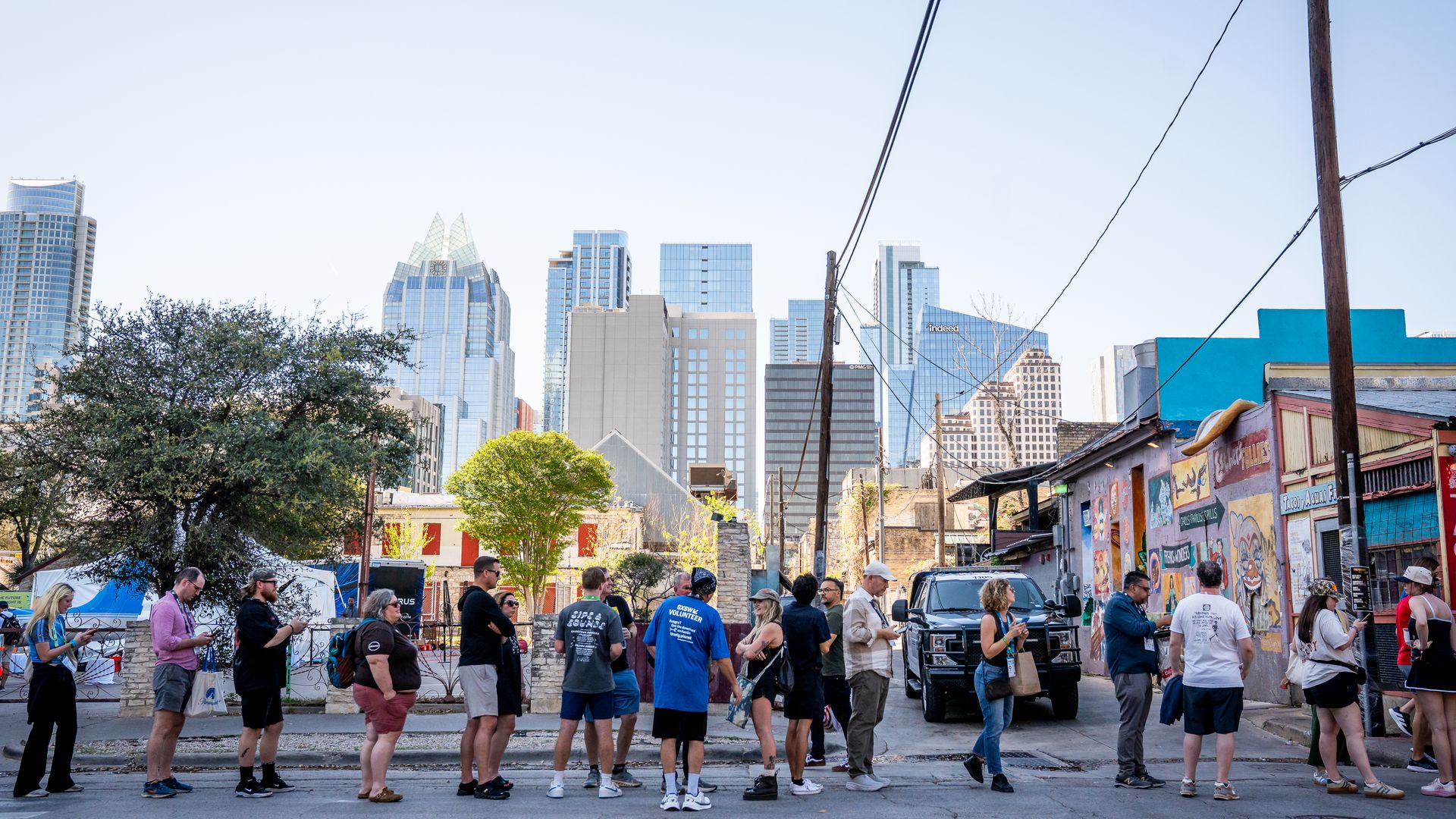
SXSW attendees wait in line for an event at Esther's Follies on March 15. Photo: Sara Diggins/The Austin American-Statesman via Getty Images
South by Southwest looked different this year, but organizers say they believe attendance held steady, even as the shorter schedule might have cut into overall tourism revenue.
Why it matters: SXSW's new schedule was a major test — not just for the fest itself, but for the hotels, restaurants and venues that rely on its economic impact.
Driving the news: Compared to last year's 9-day run, this year's 7-day schedule meant nearly 20% fewer hotel rooms sold — equating to $10.5 million less hotel revenue citywide, per data from Visit Austin provided to Axios.
By the numbers: But when looking at comparable dates during this year's 7-day run, hotels saw demand up 12% compared with the first seven days of SXSW last year.
- Friday night alone approached "sellout status" — 95% occupancy — which hasn't happened since 2019, according Visit Austin president and CEO Tom Noonan.
- "The 2026 data tells a story of two halves: a record-breaking start ... contrasted by the expected impact of a shorter event window and the ongoing absence of the Austin Convention Center," Noonan tells Axios.
Zoom in: The shortened schedule also reshaped short-term rental demands, according to data from AirDNA, which analyzed Airbnb and Vrbo bookings during SXSW.
- Bookings surged early, with a 20% increase year over year for Friday, a 15% increase for Saturday and 6% increase Sunday, according to AirDNA research analyst Linda Rollins.
- Overall short-term rental demand was down 19% year over year across the same 9-day period, mirroring hotel trends.
- "The drop-off came midweek, when visitors had largely already left with no second weekend to anchor attendance," Rollins tells Axios.
What they're saying: SXSW organizers say they haven't received final attendance figures but expect 2026 attendance to be on par with the 309,300 attendees in 2025.
- "SXSW pulled off one of the most ambitious reinventions in our 40-year history," a SXSW spokesperson tells Axios in a statement, pointing to the new 7-day format and expanded programming across the city.
Yes, but: Downtown Austin saw a slight dip in average daily foot traffic, per cell phone data from the Downtown Austin Alliance.
- On average, 164,400 people visited downtown during each day of this year's festival — roughly 7,400 fewer than in 2025, when the average daily attendance was 171,900.
Caveat: Downtown Austin Alliance's boundaries don't include SXSW venues beyond the downtown area, like programming at Auditorium Shores, a show at Concourse Project and popular film venues like Alamo Drafthouse South Lamar and AFS Cinema in North Austin.
Stunning stat: Lyft data found that demand for rides across downtown was at its highest level since 2019.
- "Lyft rides are often a good proxy of economic activity within a city," Lyft data analyst Sarah Conlisk tells Axios.
- "While the number of Lyft rides in downtown Austin typically doubles during SXSW, this year demonstrated its greatest increase since the pandemic, tracking roughly 2.1x typical levels," she says.
- Downtown Austin Alliance data also found that the festival drew the largest Saturday crowd in at least six years, per the organization.
Our thought bubble: The downtown crowds felt intense on Friday and Saturday, with shoulder-to-shoulder foot traffic in some areas.
- By Wednesday, the final day of the festival, things had noticeably thinned out. We spent a couple of hours at the JW Marriott, where much of the hotel felt empty.
Editor's note: This story has been corrected to note last year's festival ran for nine days (not 10).