Trump administration says it's in talks with UT on funding agreement

Add Axios as your preferred source to
see more of our stories on Google.
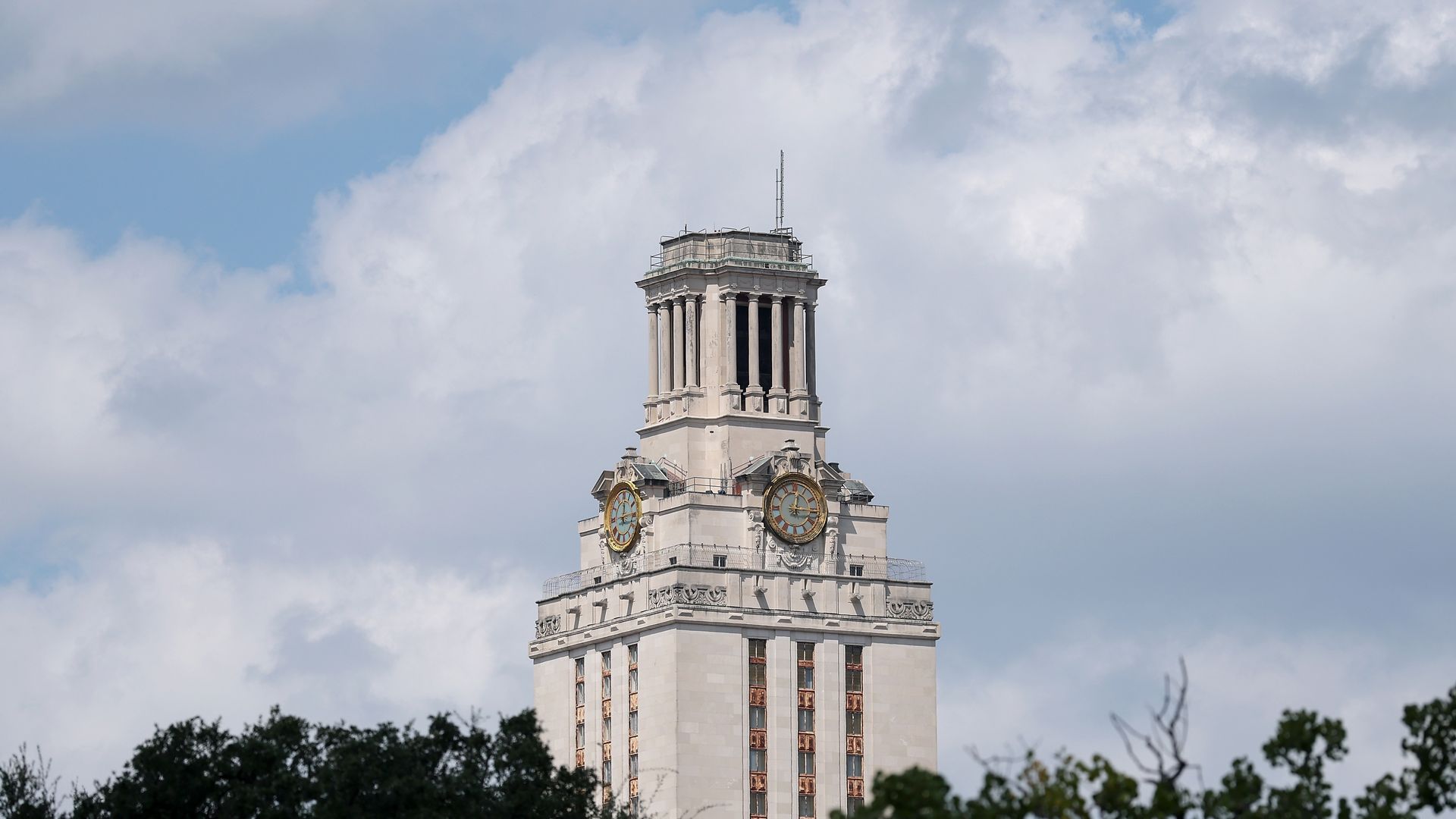
The University of Texas Tower. Photo: Tim Warner/Getty Images
The University of Texas is in talks with the White House over a proposed deal to get funding preference if administrators cap international student enrollment, commit to strict gender definitions, freeze tuition for five years and agree to other demands, Axios has learned.
Why it matters: Seven of the eight other universities that were offered the Trump administration's "Compact for Excellence in Higher Education" have rejected it, citing institutional independence. An eighth, Vanderbilt University, has neither declined nor accepted the offer, opting for a position of "institutional neutrality."
- UT System Board of Regents chair Kevin Eltife in early October said the system was "honored" to receive the offer and review it.
- Since then, UT officials have been mum on their plans, not answering questions from Axios and other outlets, even as an Oct. 20 deadline set by the Trump administration for comments has passed.
Zoom in: The compact, obtained by Axios through a public records request, also requires participating universities to prohibit anything that would "punish, belittle and even spark violence against conservative ideas."
- "University employees, in their capacity as university representatives, will abstain from actions or speech relating to societal and political events," according to the compact.
What they're saying: A White House official told Axios on Thursday that "the administration is having good conversations" with UT. The official spoke on condition of anonymity to describe the non-public talks.
The intrigue: Politically speaking, the decision to sign the compact may rest with one person — Gov. Greg Abbott.
- The Trump compact was addressed to UT president Jim Davis, but the governor has appointed every member of the Board of Regents, which oversees UT.
- Abbott has shown himself willing to give direction to state boards and commissions.
Abbott's office did not respond to an Axios question about whether he wants the compact signed.
Follow the money: Signing the compact "will yield multiple positive benefits for the school, including allowance for increased overhead payments" and "substantial and meaningful federal grants," per the Oct. 1 letter from White House officials to Davis.
The other side: "The compact's goals clearly attempt to limit discussion on topics that do not align with conservative values," The Daily Texan wrote in an editorial opposing it.
- "If staff and students fail to alter course discussions accordingly, they are at risk of ambiguous, institutionally defined punishments," the student newspaper wrote.
- "UT has an obligation to its students and faculty to reject this offer, which undermines academic freedom and politicizes higher education."
UT and the UT System did not respond to Axios requests Friday for comment about the compact.
What's next: The Oct. 1 letter to Davis says the White House wants a signed agreement by Nov. 21.