Giant spider webs engulf trees

Add Axios as your preferred source to
see more of our stories on Google.
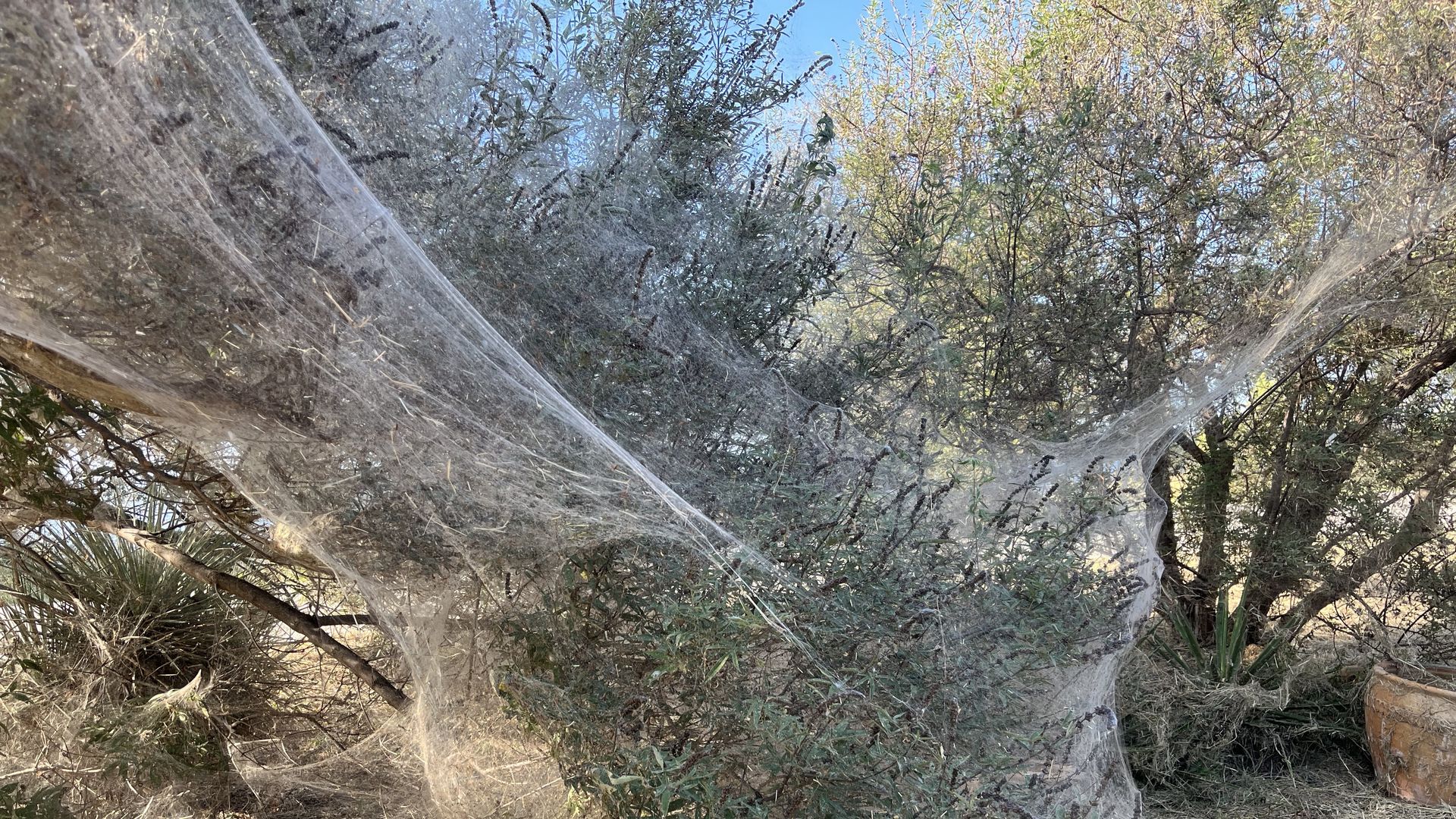
😱 Asher here, your not-very-fearless spider web correspondent.
What's happening: During a recent trip to the shores of Lake Buchanan in Llano County, about 90 minutes northwest of Austin, I spotted whole trees engulfed in very real spider webs.
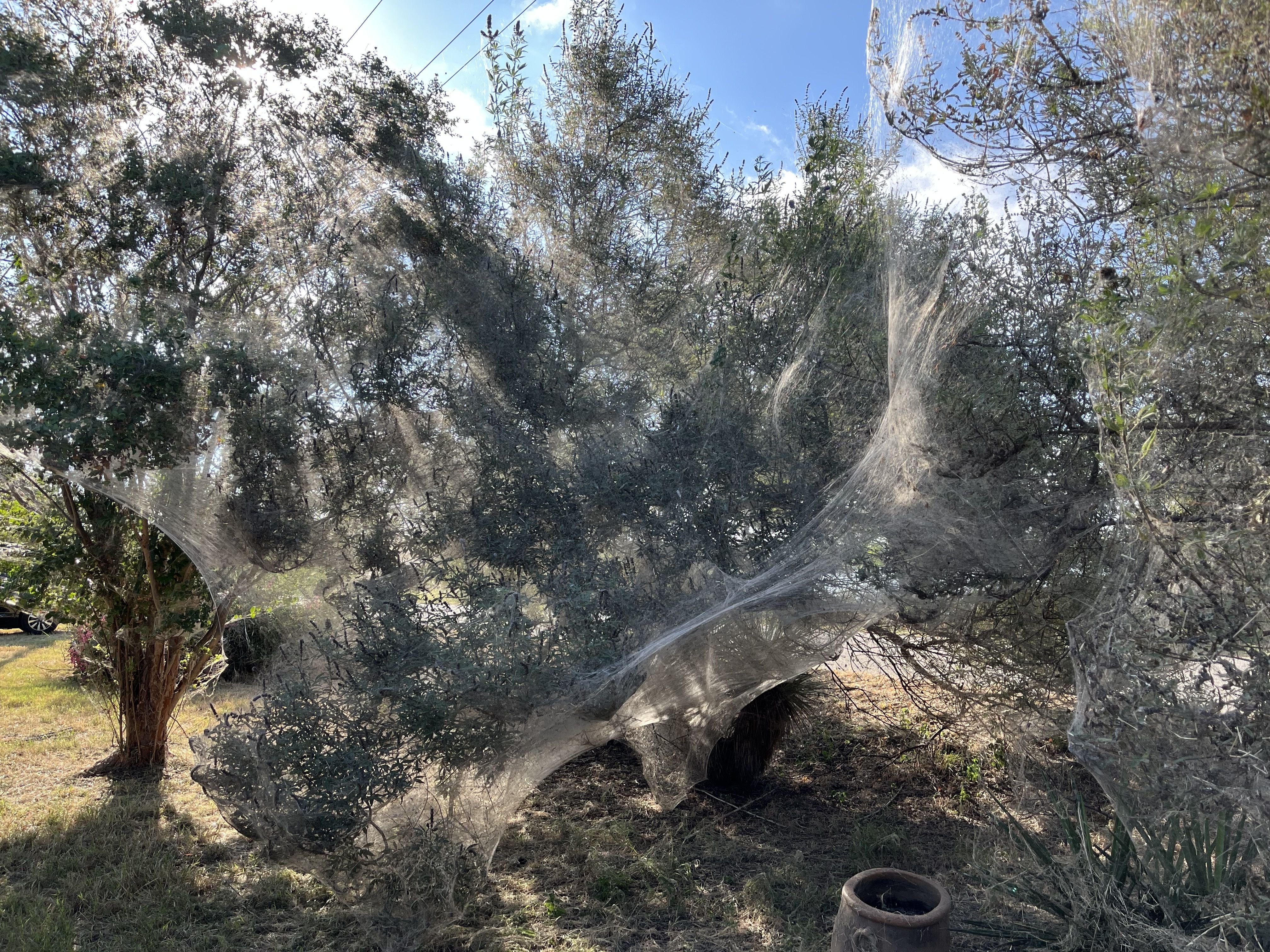
Flashback: Super spider webs — known as "sheet webbing" to some entomologists — crop up now and then in Texas. The summer of 2007 saw giant webs, for example, in Lake Tawakoni State Park, east of Dallas.
- That summer — like July of this year — saw heavy storms, leading entomologists to speculate that rains had driven up the population of midges and other small insects that make up the spider diet.
What they're saying: The species of spider that is responsible for these communal webs is Tetragnatha guatemalensis (aka, the Guatemalan long-jawed spider), Roy Vogtsberger, an entomologist at Midwestern State University in Wichita Falls, tells Axios.
- "Although the giant webs are an unusual occurrence ... conditions become just right for these events to occur," Vogtsberger says. The midge boom leads to the spiders' "unusual behavior of building these communal webs."
The bottom line: Spooky!