Cracking Austin's yogurt shop case

Add Axios as your preferred source to
see more of our stories on Google.
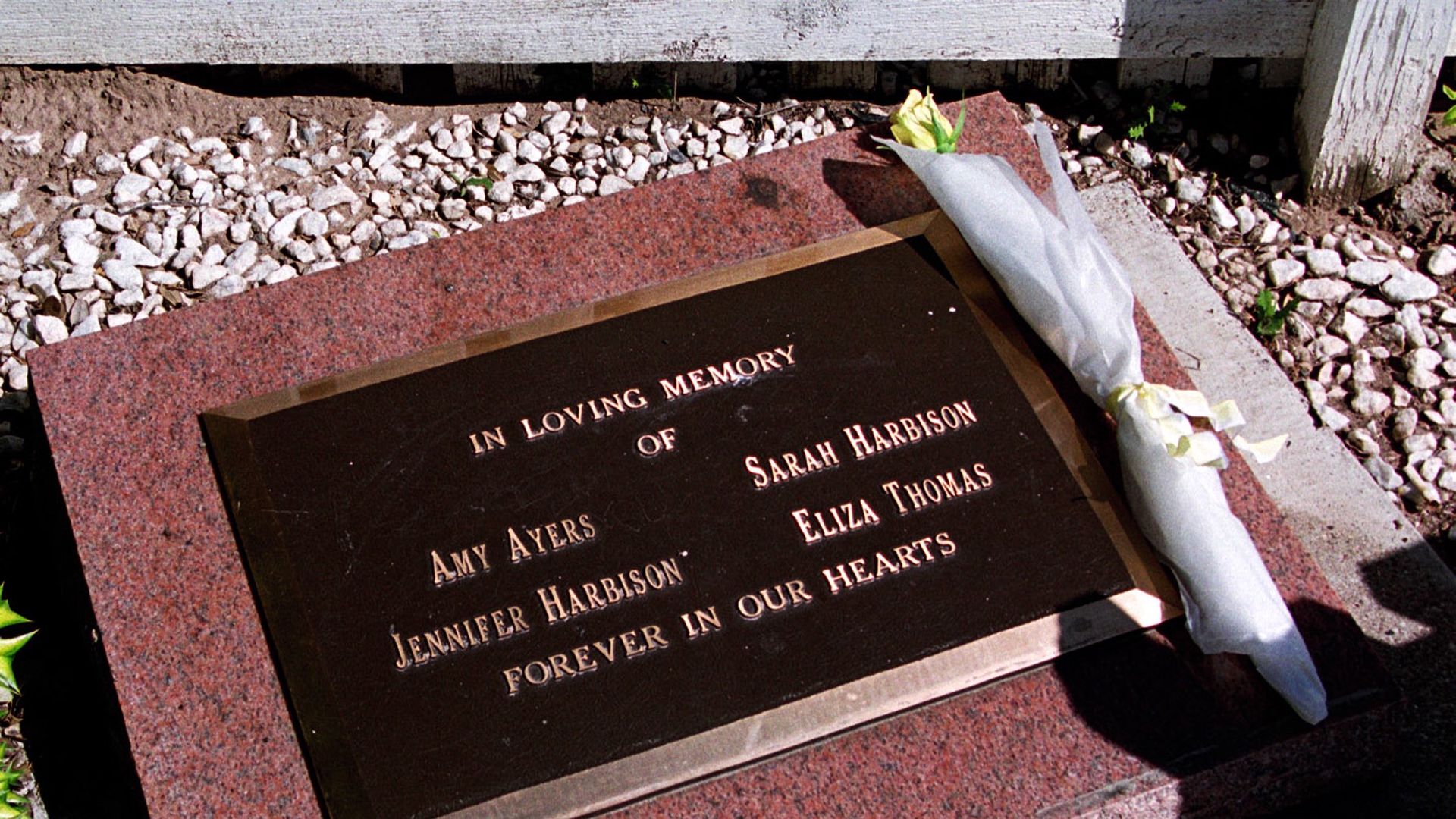
A plaque placed in 2007 in dedication to the victims of the yogurt shop murders. Photo: Sung Park/The Austin American-Statesman via Getty Images
Relying on DNA from beneath a victim's fingernails and a bullet casing found in a drain, Austin police on Monday described how they unlocked the identity of the person they say killed four girls in a yogurt shop on Anderson Lane nearly 34 years ago.
Why it matters: The announcement brings a measure of closure to the murders themselves, which shocked the city and left the families of the victims on a long, painful search for answers about the crime.
- The news also brings vindication to three of four men who were arrested in 1999 for the crime — all of whom had been teenagers in 1991. They include Robert Springsteen IV, who was sentenced to death for the murders, and Michael Scott, sentenced to life without parole. They were released after the Texas Court of Criminal Appeals overturned their convictions in 2006 and 2007 on constitutional grounds.
- Maurice Pierce, who spent three and a half years in jail awaiting trial before prosecutors dropped charges, died in 2010 in an altercation with police.
Driving the news: Police say Robert Eugene Brashers, a serial killer who killed himself during a 1999 standoff with law enforcement in Missouri, killed Amy Ayers, 13; sisters Jennifer Harbison, 17, and Sarah Harbison, 15; and Eliza Thomas, 17, and then set the yogurt shop on fire.
- All four were shot in the head, execution style. They were found nude and tied up with their own clothing, and investigators found evidence of sexual assault.
- Austin police on Monday said the gun used in Brashers' suicide was the same make and model of one of the weapons used in the murders.
Flashback: Police say Brashers entered the North Austin I Can't Believe It's Yogurt store near closing time Dec. 6, 1991.
- Investigators revealed on Monday that less than 48 hours after the murders, Brashers was stopped by U.S. Border Patrol at a westbound checkpoint between El Paso and Las Cruces, New Mexico, driving a stolen car and in possession of a .380 pistol — the same make and model identified as the weapon used in the yogurt shop murders. He was charged with auto theft and as a felon in possession of a firearm.
What happened: Using newly available DNA technology and resubmitting the scant ballistic evidence discovered at the crime scene to updated databases, the police zeroed in on Brashers, after the South Carolina State Lab found a match.
- Among the things they retested were Ayers' fingernail clippings from her autopsy.
- "Amy's final moments on this earth helped solve this case for us because of her fighting back," Austin Police detective Dan Jackson said on Monday.
Between the lines: The yogurt shop case echoes Brashers' modus operandi in other cases, police said.
- Brashers, who did itinerant construction work, was known to carry multiple weapons, tie up victims (sometimes with their own clothing), sexually assault young women, and shoot victims in the head, according to police.
- Acting alone, he was able to control four women during a 1997 Memphis home invasion and sexual assault, police said.
- He has been linked to murders or assaults in South Carolina, Missouri, Tennessee and Kentucky.
What they're saying: "Our reality doesn't change after today. Our families are still too small — and we are lesser for it" Sonora Thomas, the sister of Eliza Thomas, said at an emotional news conference on Monday.
- "The yogurt shop murders will always be part of Austin's history. The pain from that night and its aftermath will never go away, but with the knowledge we have now we can share some peace," Mayor Kirk Watson said.
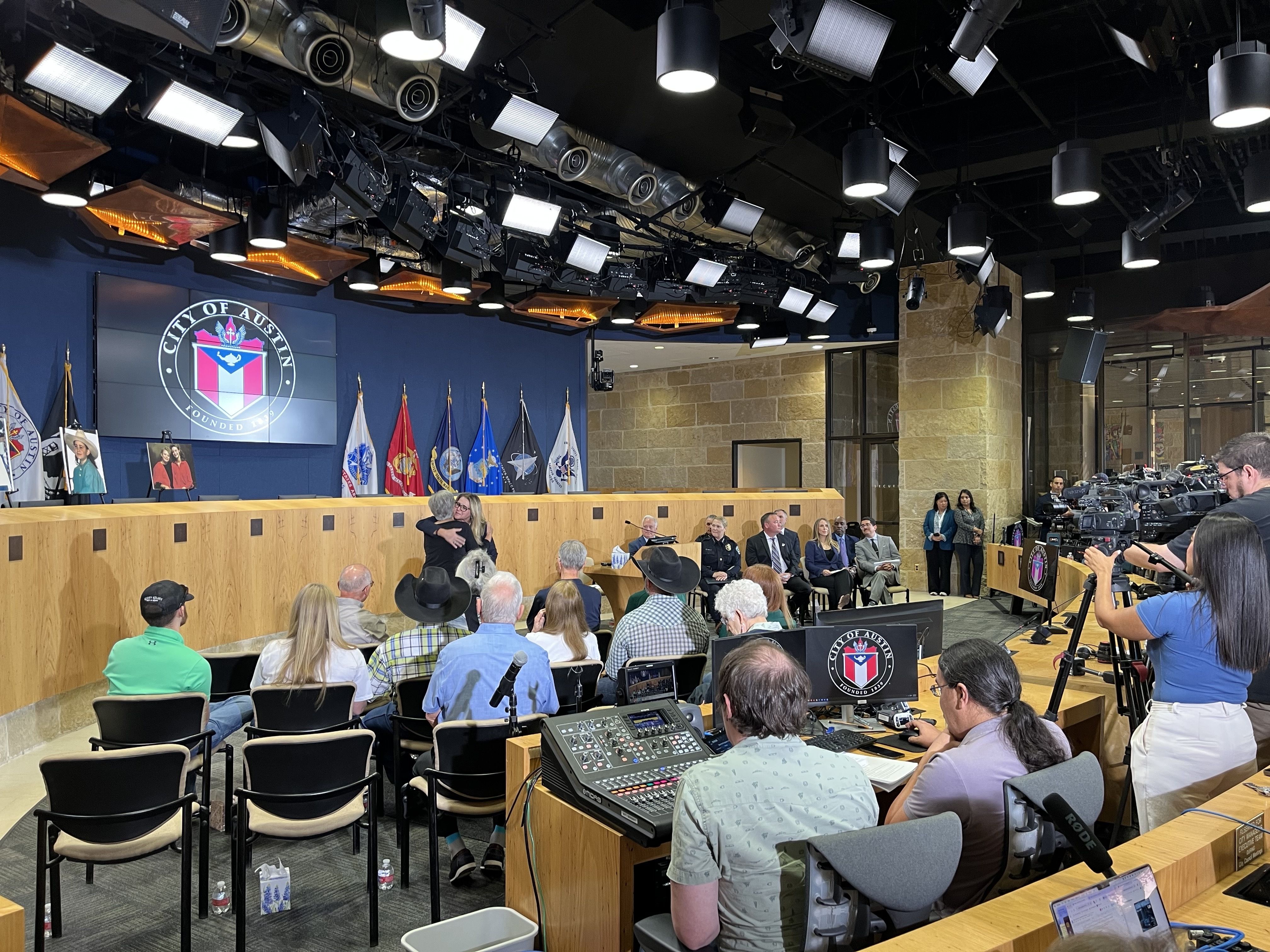
What's next: Travis County District Attorney José Garza told reporters on Monday that his office would support restitution efforts for the men who were wrongly convicted of the crime.
- "If the conclusions of this investigation are confirmed, the Travis County District Attorney's office will take responsibility for our role in prosecuting these men, in sending one to death row and one to serve life in prison," he said.
- Representatives of those men did not speak at the Monday news conference.