Austin launches final year of program to combat toxic algae

Add Axios as your preferred source to
see more of our stories on Google.
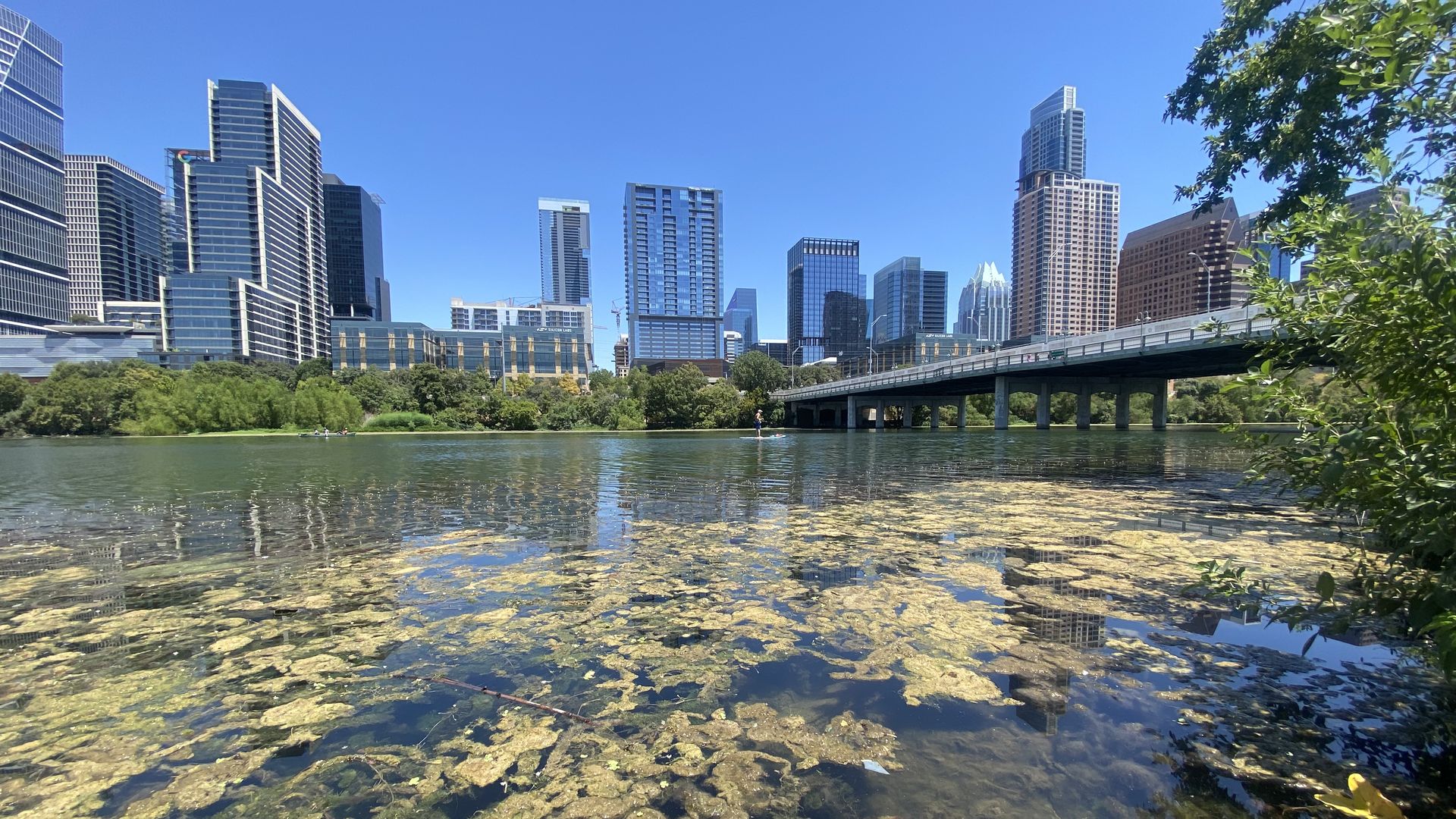
Blue-green algae in Lady Bird Lake in 2023. Photo: Courtesy of City of Austin, Watershed Protection Department
The city on Monday will undertake the fifth and final year of a pilot program to slow the growth of harmful blue-green algae in Lady Bird Lake.
Why it matters: Toxic algae blooms, or cyanobacteria, have been found in the lake every year since 2019, when six dogs died after encountering it.
- The algae is also harmful to humans, who can experience nausea, headache, watery eyes and sore throat if they ingest it.
Driving the news: City officials spotted the first signs of this year's potentially toxic algae in April at Red Bud Isle, according to Brent Bellinger, conservation program supervisor with the Watershed Protection Department.
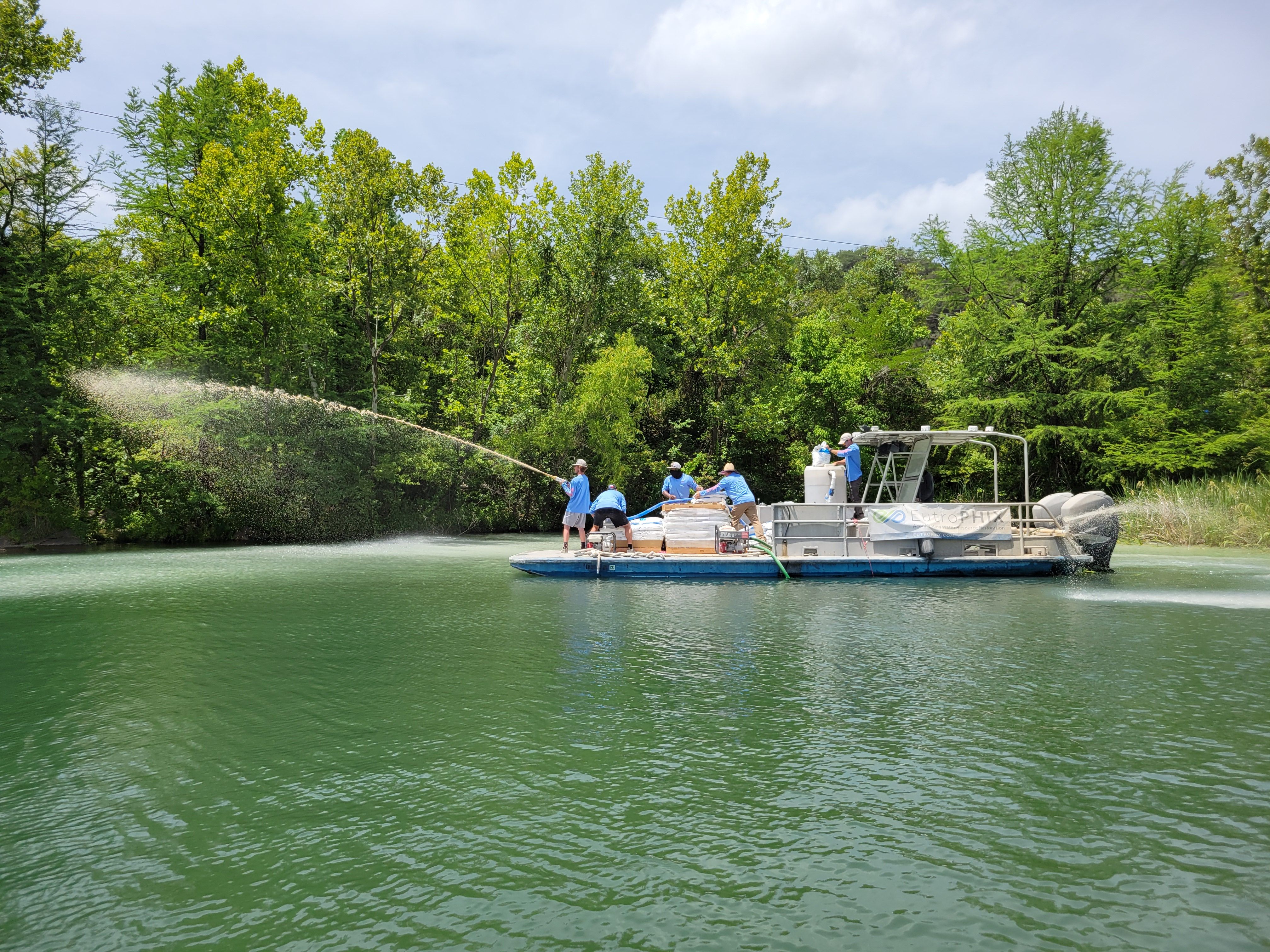
- On Monday, they'll apply lanthanum-modified bentonite to three sites on the lake in an effort to reduce phosphorus levels.
What they're saying: Results of the pilot program have been mixed, but researchers aren't ready to jump to conclusions, Bellinger tells Axios.
- Phosphorus levels at Red Bud Isle have dropped significantly, potentially limiting algal growth, though the decrease has been less pronounced farther downstream.
- "We're targeting the phosphorus and the sediment," Bellinger says. "Have we seen shifts in the sediment-phosphorus dynamic? The answer is yes."
How it works: The pilot program involves applying a lanthanum-modified clay in specific areas of the lake, which binds to phosphorus — a key source of nutrients for algae.
- The clay, which is safe for humans, the environment and wildlife, will be applied at three sites and settle to the bottom of the lake in a few hours.
- The clay makes the phosphorus unavailable to the algae, hopefully reducing its primary source of food and growth.
- The clay will be applied again July 7 and Aug. 4 at Red Bud Isle, the boat ramp on the north shore of the lake, and the north shore of the lake between I-35 and the lagoon behind the Festival Beach boat ramp.
Follow the money: The pilot program, which is funded through the drainage charge assessed on utility bills, costs $300,000 per year.
Between the lines: City officials believe the most effective solution to algae growth would be to limit the amount of nutrients being washed into the reservoir.
- Residents can help by limiting the use of fertilizers, picking up after pets, and planting trees if they live near creeks.
What to watch: Researchers will collect the same data next year to understand how the sediments respond without fresh lanthanum before presenting their findings.