How much federal funding Austin-area school districts get


Add Axios as your preferred source to
see more of our stories on Google.
Local school districts in Texas are struggling with funding deficits and could face more shortfalls under a Trump administration plan to dismantle the U.S. Department of Education.
Why it matters: As the White House signals that less help could be coming, Texas public school districts are closing campuses while facing teacher shortages and falling school performance ratings.
Driving the news: Austin ISD officials announced Friday that they're gathering public input to identify campuses for closure "to avoid deeper budget cuts."
- "Currently, our resources are spread too thin, leaving all schools feeling under-resourced," AISD's newsletter says. "Consolidating schools will allow us to invest more fully in fewer campuses."
The big picture: Education has been a focus of the Texas Legislature this year. Gov. Greg Abbott this month signed legislation creating a $1 billion private school voucher program.
- Lawmakers are also advancing long-sought legislation to bolster public school funding. The Texas House last month passed House Bill 2, which would spend nearly $8 billion to increase per-student funding by $395, among other measures.
- The Senate last week released its counter-proposal, which would increase per-student funding by just $55, per the Texas Tribune.
Reality check: It's unclear precisely how the potential demise of the Education Department will affect federal funding to local school systems. The department is the primary source of federal money to local schools, but not the only one.
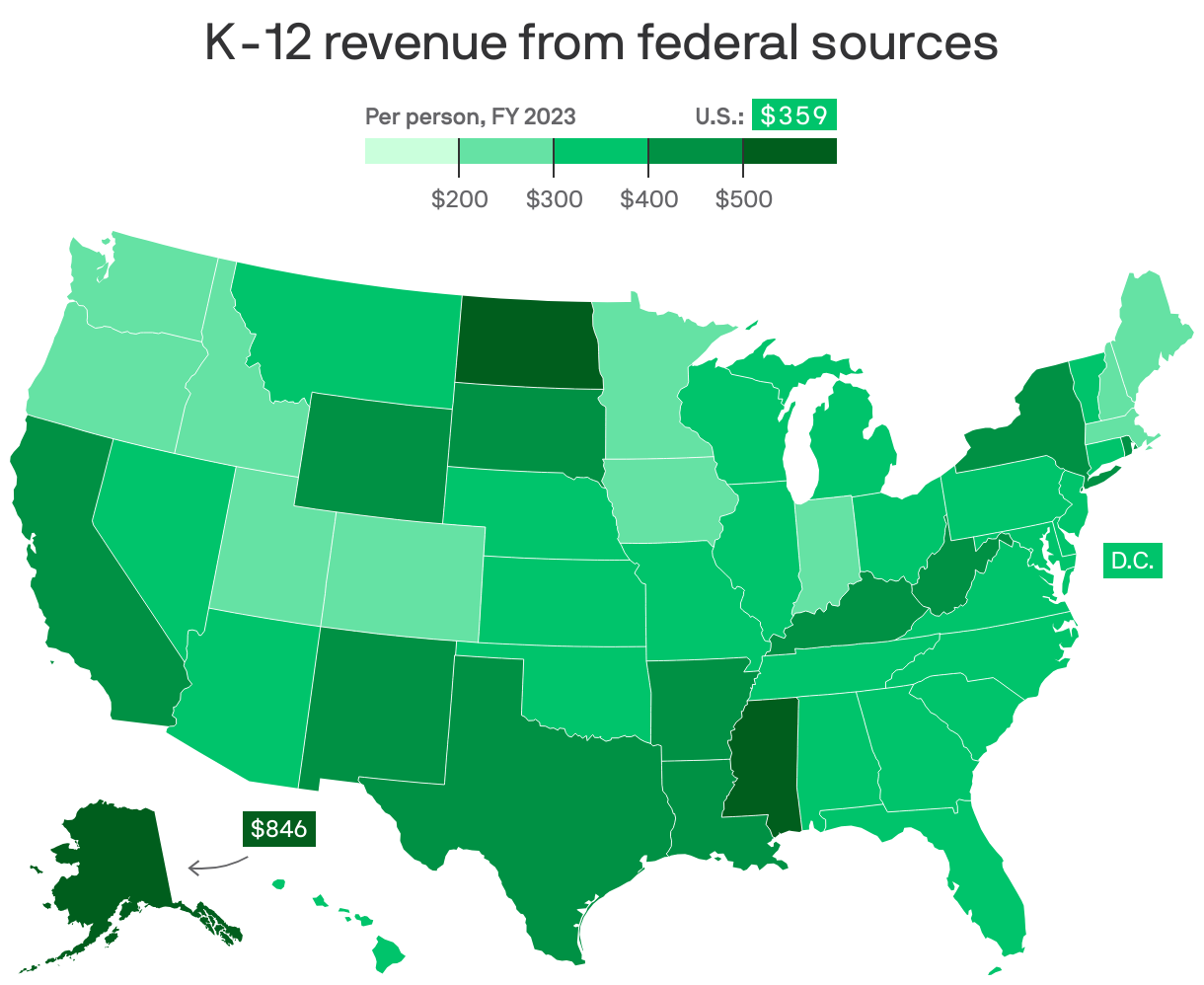
Zoom in: Public schools across Texas receive about $13.4 billion in funding from federal sources, per Census Bureau data. That's about $439 per person, making Texas No. 9 in the nation for per person federal school funding.
- Austin ISD gets about 17% of its revenue from federal sources. That's more than $216 million.
What they're saying: Federal funding goes to teacher positions, contracted services and support staff, according to Christy Fox, executive director of state and federal compliance and accountability for Austin ISD.
- Federal funding also covers professional learning and development for teachers, emergent bilingual education, gifted and talented services, child nutrition and more, Fox adds.
- "Given the district's current financial situation, any loss of funding has a significant impact," Fox tells Axios.
- "This was evident when anticipated funding" for reimbursements for Medicaid-related services provided to students "declined from $16 million to $4 million in FY 2024-25, highlighting the challenges of maintaining essential services amid a budget deficit."
Between the lines: Nationally, federal funds now make up an average of about 14% of a public school system's budget, with more typically going to lower-income areas.
Other area districts counted federal funding among their revenue in 2023:
- Eanes ISD: 4.8%
- Pflugerville ISD: 9.9%
- Lake Travis ISD: 3.3%
- Lago Vista ISD: 3.7%
- Del Valle ISD: 16.3%
- Manor ISD: 12.5%
- University of Texas Elementary Charter School: 20.4%
- University of Texas University Charter School: 28.8%
The other side: Trump's order to close the Education Department is a step toward fulfilling one of his campaign promises: removing federal oversight of states' public education systems.
- "President Trump's executive order to expand educational opportunities will empower parents, states and communities to take control and improve outcomes for all students," Harrison Fields, White House principal deputy press secretary, previously said in a statement.
What's next: Residents can complete Austin ISD's school consolidation survey by June 6.