Texas A&M researcher examines bulletproof vests for women

Add Axios as your preferred source to
see more of our stories on Google.
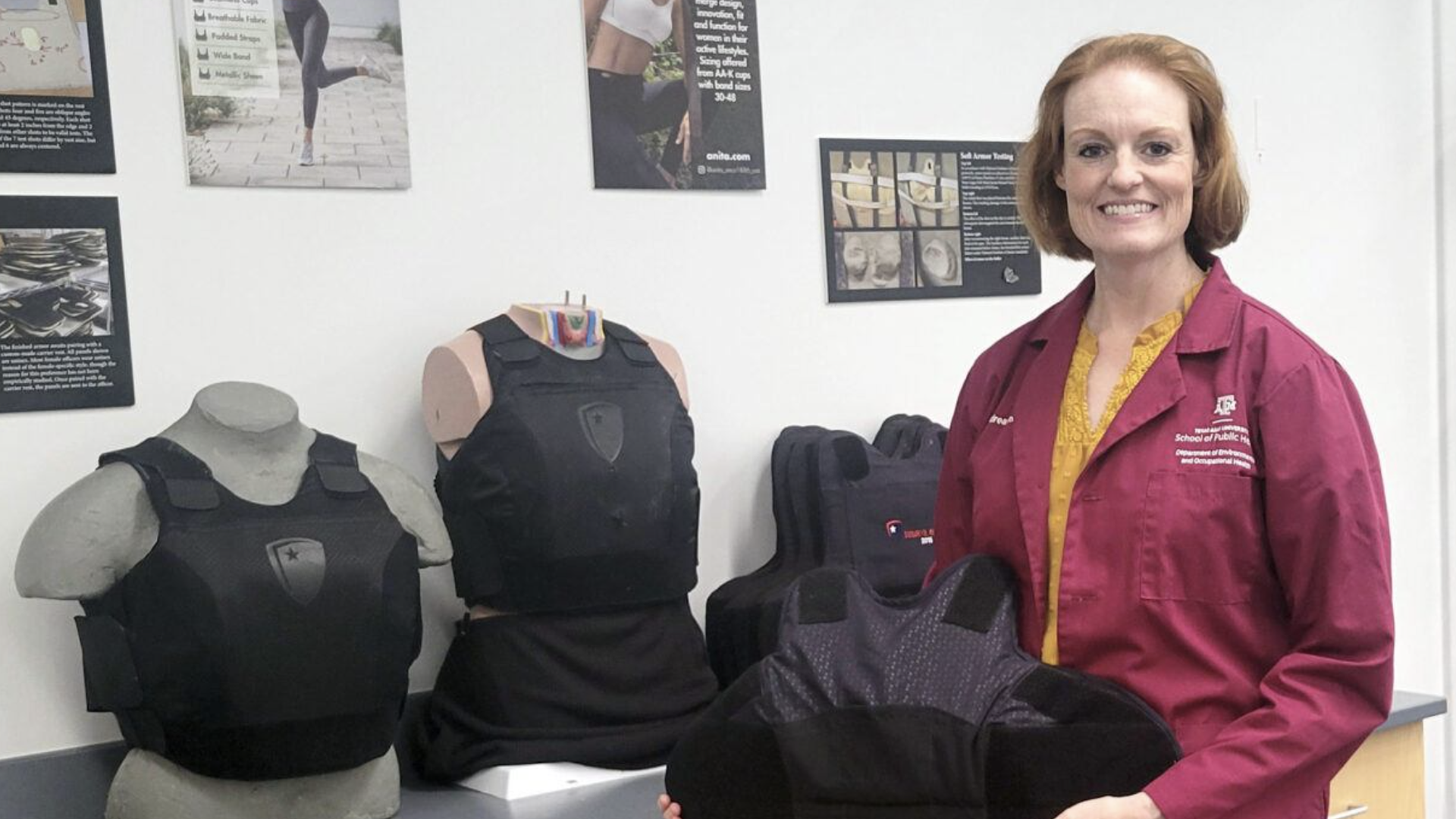
Andrea Porter with body armor. Photo: Courtesy of Andrea Porter via Texas A&M.
Bra choice is key to right-fitting body armor for women, per new research out of Texas A&M University.
Why it matters: Police agencies have been trying for years to encourage more women to join their forces. Yet one key component of the job — body armor — is still largely designed for men and often is an uncomfortable fit for women.
Between the lines: Andrea Porter, an A&M doctoral student in multidisciplinary engineering, grew interested in the challenges women officers and soldiers face in the field with awkward-fitting but crucial equipment.
What they're saying: "Women face a no-win situation," Porter said in an A&M news release about her work. "They can either hold the vest with at least one arm while running, which slows their speed, or tighten the armor around their torso, which restricts breathing. Neither is a good choice."
What they found: Porter tested gunfire on a clay dummy wearing silicone breasts, a bra and soft armor.
- Examining the depth of the gaps between the armor and the dummy, she found that the larger the air gap created by the breasts, the more protective the vests were.
- "We found shots to the areas with gaps between the body and the armor experienced less harm than a shot to an area where the armor was in direct contact," Porter said.
- In an interview with Axios, she said women working in situations that require armor should opt to wear sports bras beneath their clothing. "A regular daily bra is not meant for everything faced in a normal police day."
State of play: The chief woman-specific armored vest currently on the market, Porter tells Axios, has a pronounced concave shape — "it's called a Madonna vest, and it's awful," she said. "It doesn't quite have the look a female police officer needs when coming in to handle a situation."
- At least half of woman police officers tend to use unisex body armor, she said.
- "One armor fitter told me, either you come in face first or chest first."
Zoom in: In Austin, women make up about 11% of sworn police officers, the Austin Monitor reported in December.
- The Austin Police Department has signed a "30×30" pledge to increase the representation of women officers to 30% by 2030.
- The latest APD cadet class began with 79 students — 86% of them men.
The bottom line: "Professionals across work sectors must understand how to optimize environment-necessary equipment and tools for different types of human bodies," Mark Benden, Porter's research adviser and a professor in the department of environmental and occupational health at the Texas A&M University School of Public Health, said in the news release.