Five questions with InKind's Johann Moonesinghe

Add Axios as your preferred source to
see more of our stories on Google.
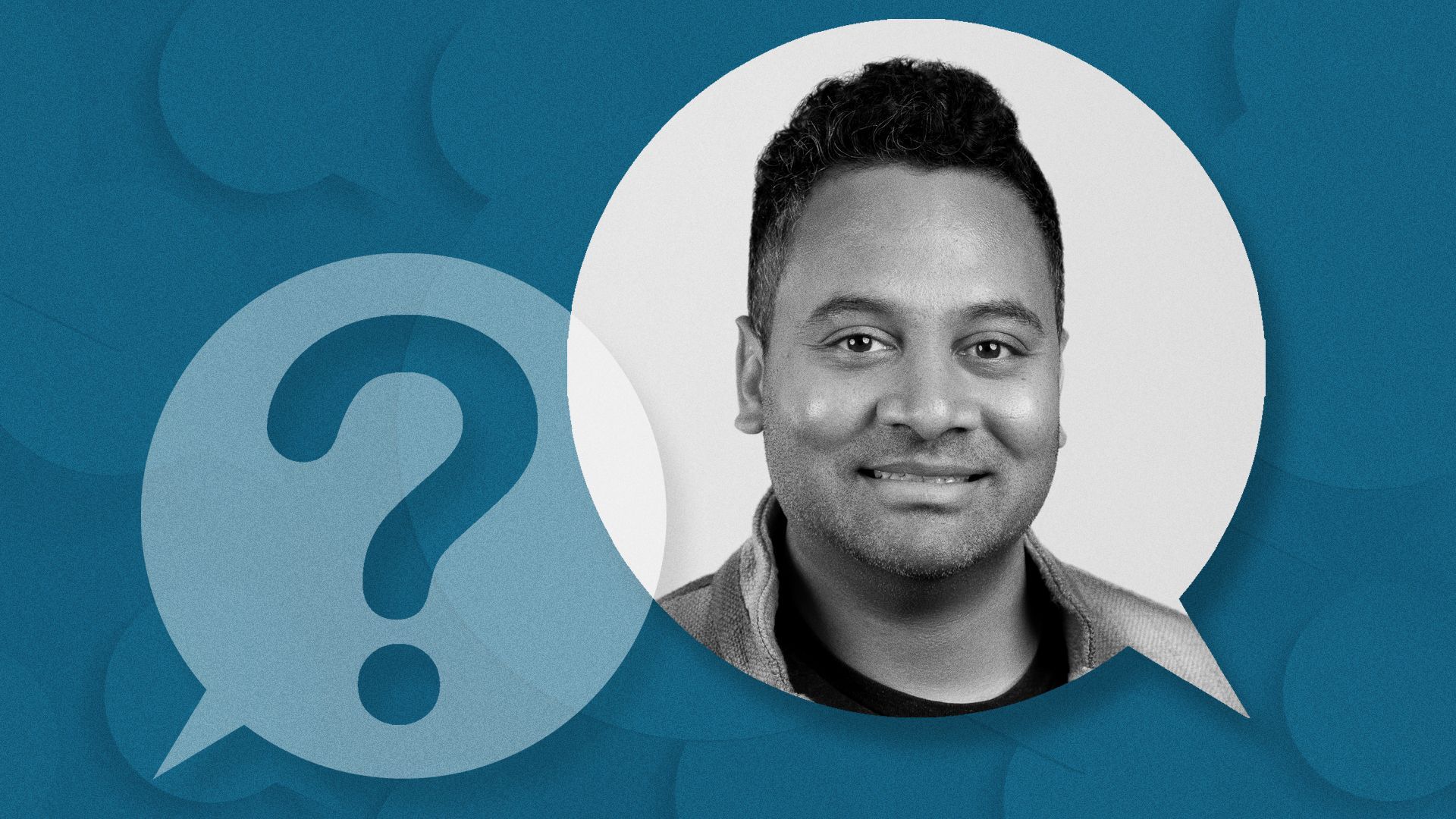
Photo illustration: Axios Visuals. Photo: Courtesy of InKind
Johann Moonesinghe, founder and CEO of Austin-based company InKind, has helped finance dozens of restaurants across the country over the last decade.
How it works: InKind doesn't charge interest or equity for financing a restaurant. Instead, for every $1 in funding, InKind receives $2 in food and beverage credit from the restaurant.
- The restaurant's repayment happens over time as InKind diners pay with InKind, and receive a 20% reward back for all spending in the app.
- Because of the large gap between menu prices and the actual cost of food, InKind's credit system covers a restaurant's operational costs and leaves a profit margin.
Zoom in: Moonesinghe launched InKind when he owned a restaurant in Washington, D.C., betting that restaurants would opt for his method of financing.
- Now, more than 3,500 restaurants are available on the InKind app, and the company has deployed over $350 million in capital to restaurants across the country.
- "We don't take revenue that you would've gotten anyway," he tells Axios. "A restaurant only has to pay for the cost of the food that they're serving," and often that's significantly cheaper than the cost of the item on the menu.
We spoke with Moonesinghe about InKind's model, local business strategy and what's next for the company.
This conversation was condensed and edited lightly for clarity.
You actually own two restaurants in Austin, correct?
"I own Ember and Guest House. ... Ember opened because I wanted a way for our Austin employees to really understand restaurants.
At Ember, we've gone through four different point of sale systems and through different ordering, food ordering systems and labor management, and we just test a lot of software there. If something's great, we recommend it to the rest of the restaurants that we finance."
How do you decide which restaurants to finance?
"The most important thing for us is that it's a high-quality restaurant. ... First thing we do is we measure the quality and the hospitality of the restaurant, so we have a score that we assign internally."
What's the biggest risk factor here for InKind? Restaurant closures?
"If we buy credit at a restaurant and the restaurant closes, then then we lose money. So we really do everything we can to try to make sure restaurants don't close.
Last year, half of 1% of the restaurants that we funded closed, which is super, super low for the industry. If we feel like a restaurant is struggling, we double down to try to help them to get through it."
Is there a restaurant in Austin that InKind has financed that you think is underrated?
"Top Roe. It's pretty new so maybe that's why it's not well known. ... It's a hand roll bar, and then at dinner, they open up the full restaurant."
What's next for InKind? Where do you see the company in five years?
"We're very deliberate in building the restaurants and users at the same pace. I think in five years you're going to see hundreds of thousands of restaurants on the app and tens of millions of consumers.
On the other side, we've added our first non-restaurant as a test: AustinDeep. I think we'll be expanding this year or next year, we'll be expanding into new verticals. My guess is hotels, hair salons, massages, etc."