Heat-related illness calls climb

Add Axios as your preferred source to
see more of our stories on Google.
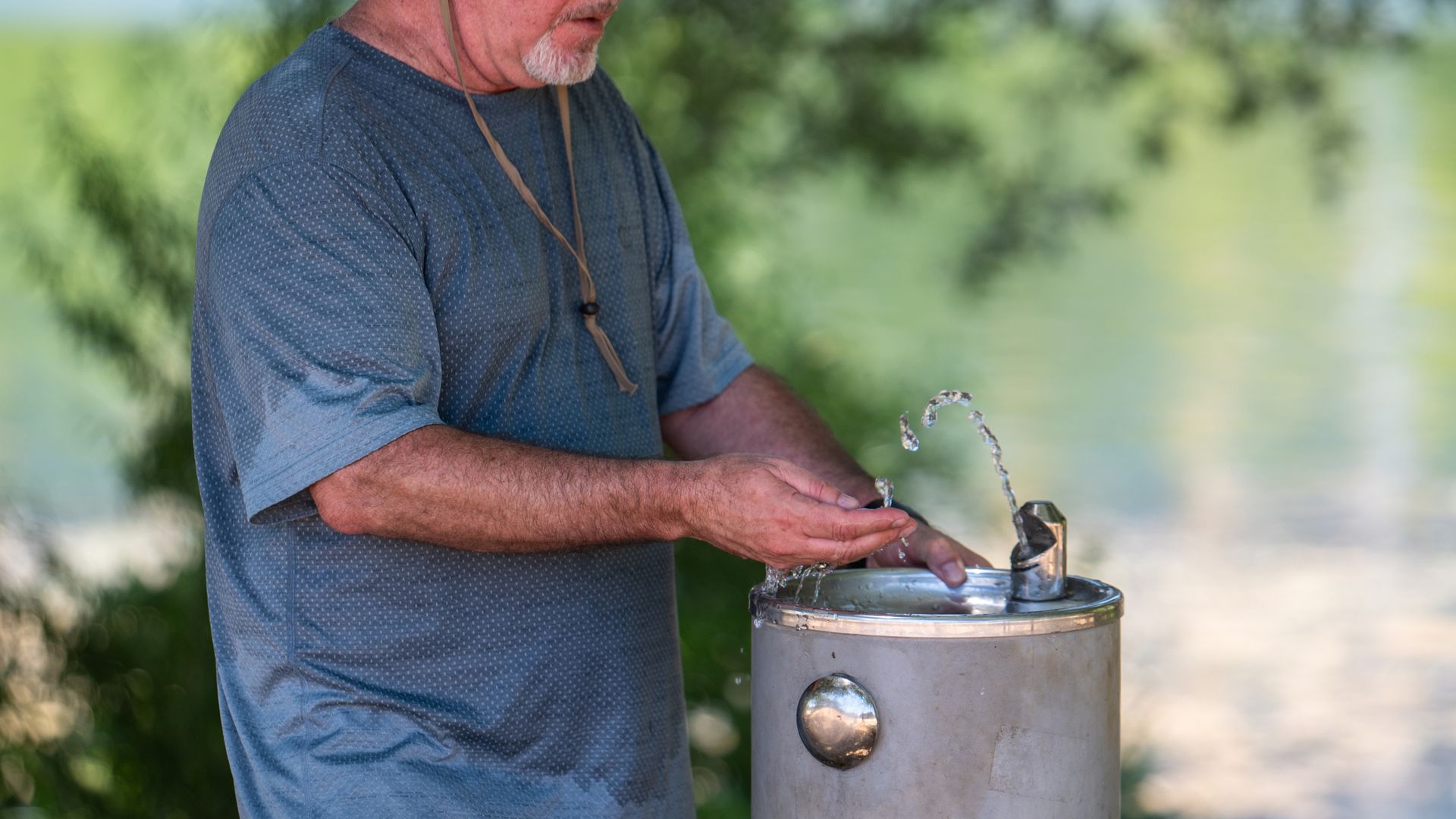
An Austin resident tries to cool down during a heatwave last year. Photo: Sergio Flores/Bloomberg via Getty Images
Heat-related illnesses surged last week as Austin endured a stretch of triple-digit days — including the hottest day of the summer so far, according to Austin-Travis County EMS officials.
Why it matters: Prolonged heat exposure can lead to health emergencies.
By the numbers: In the last week of July, Austin-Travis County EMS responded to 12 heat-related illness calls. On Wednesday alone, there were 21 calls.
- Camp Mabry, Austin's central weather station, reported a high of 109 degrees that day.
What they're saying: "Once we hit August, and temperatures started to hit those triple digits, we see what feels like a pretty big increase in the number of heat-related illness calls," Sara Henry, a spokesperson for Austin's Office of Homeland Security and Emergency Management (HSEM), told Axios.
- Most calls related to heat illness are among men aged 25 to 45, according to Henry — likely because men are often working outside or exercising outside. "Guys are tough, right? We just don't think heat will affect us, right? But it does," Henry said.
- To get the word out about heat exposure, Henry said, HSEM is focusing on outreach at pop-up events, on social media and TV and at the airport to warn visitors of the dangers of heat.
What happens: Heat cramps and spasms are common signs of dehydration or an imbalance of electrolytes.
- These early, mild symptoms can lead to heat exhaustion, when heat syncope can set in, causing fainting or dizziness.
- If untreated, heat exhaustion can turn into heat stroke, in which the body struggles to regulate temperature on its own and is stuck above 104 degrees. If this happens, immediate action is required.
What to do: If heat cramps set in, move to a shaded or air-conditioned area and start hydrating, gently fanning yourself until the conditions subside.
- If heat exhaustion is suspected, do the same — but watch for signs of heatstroke, which include seizures, loss of consciousness and an inability to keep fluids down.
- If heatstroke is suspected, call 911.
What's next: EMS officials are expected to release last week's heat-related illness data Monday.