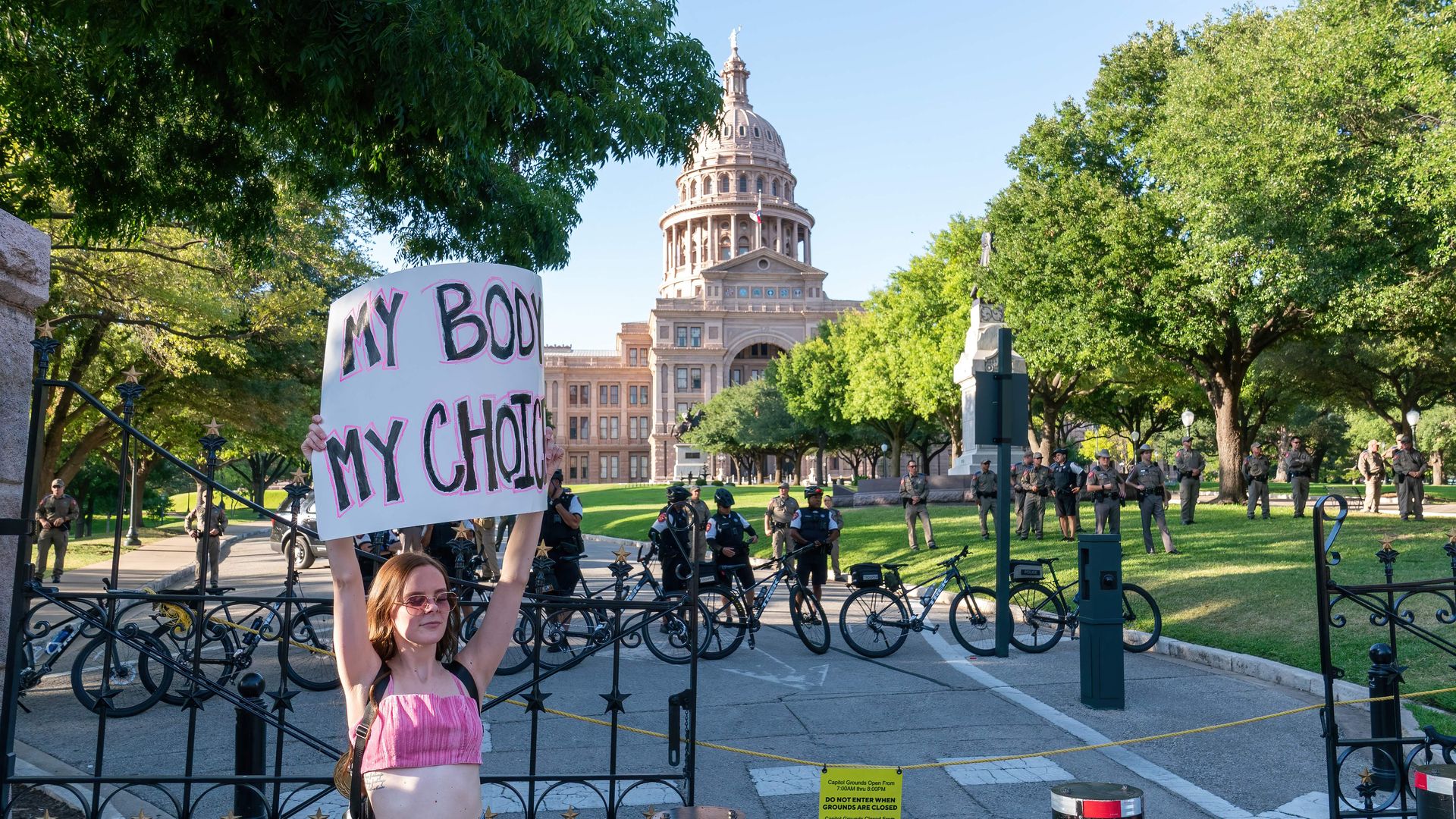
Abortion rights protesters assemble outside the capitol grounds in 2022. Photo: Suzanne Cordeiro/AFP via Getty Images
Pregnant Texans with severe complications likely will continue to seek abortions outside the state after the Texas Supreme Court declined to clarify when a medical emergency justifies an abortion.
Why it matters: While the Texas abortion ban includes a few exceptions, the Friday ruling against 22 women, four of them from Austin, who suffered complications during pregnancy, did not provide the clarity patients and doctors sought.
The big picture: Under the Texas abortion ban, which took effect in 2022, a licensed physician can perform an abortion only if the pregnant person's life is at risk or if the pregnancy "poses a serious risk of substantial impairment of a major bodily function."
Catch up quick: The case didn't seek to overturn the state ban but to clarify when medical exceptions are allowed under the law.
Critics of the ban have said the ambiguity over when exceptions are allowed has contributed to confusion among doctors — who can be charged with a first-degree felony if they violate the law.
They have also argued the confusion and possibility of criminal liability endangers the lives of pregnant women, who could be denied necessary and potentially life-saving abortions.
What they're saying: "This leaves us right where we were when Roe was overturned," Emily Berman, a professor at the University of Houston's Law Center, tells Axios.
"Any physician knowing that this law is on the books is going to be risk averse because the penalties are so profound."