Austin's true rate of unemployment


Add Axios as your preferred source to
see more of our stories on Google.
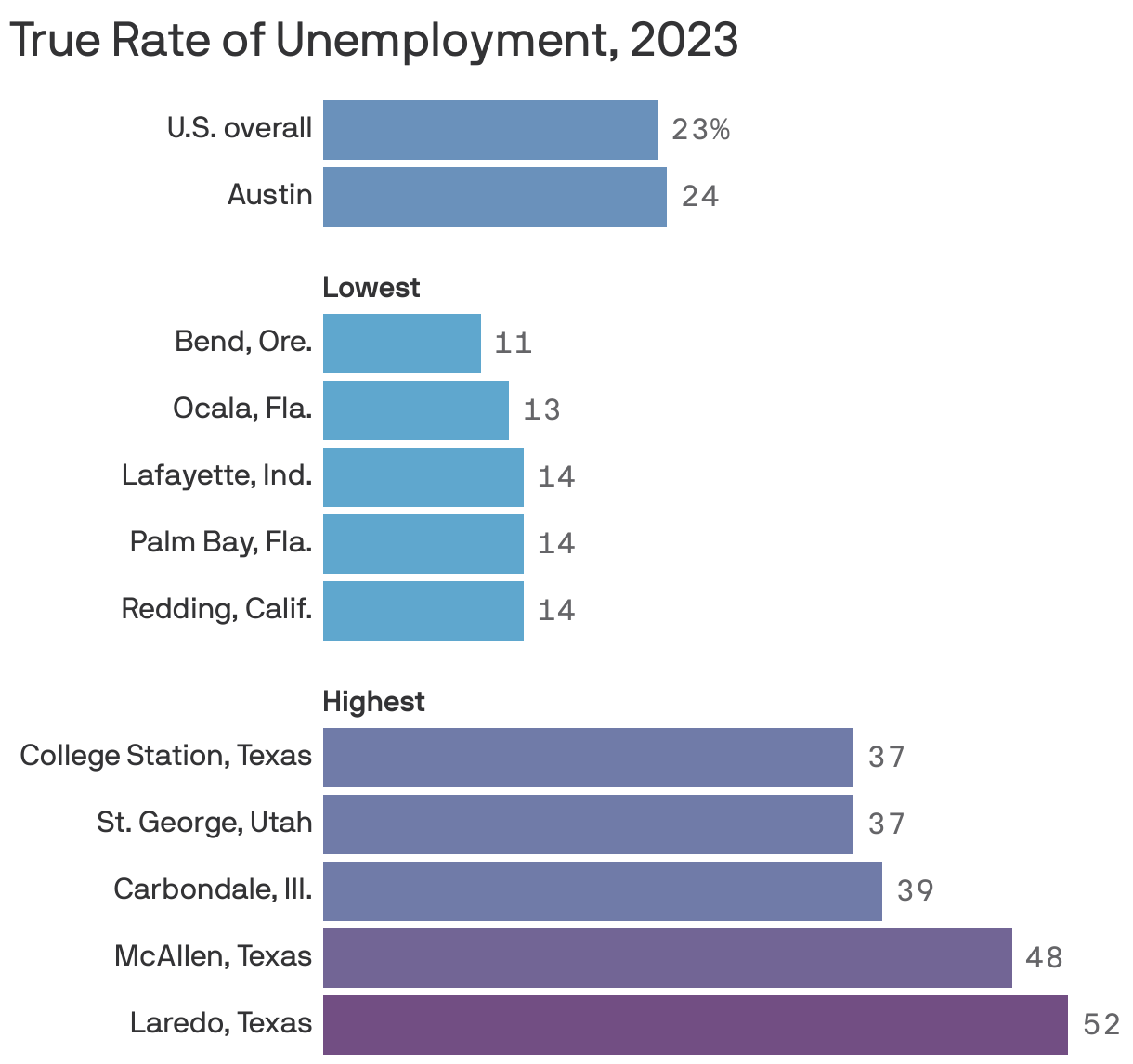
The full spectrum of inequality within the U.S. is on display in an updated dataset released Friday by the Ludwig Institute for Shared Economic Prosperity (LISEP).
Why it matters: Boom towns like Dallas are seeing very low levels of unemployment — in stark contrast to areas with large numbers of low-wage jobs, such as El Paso.
How it works: LISEP's True Rate of Unemployment measures the proportion of workers looking for a full-time job that pays a living wage — and who are unable to find one.
Zoom in: Austin's TRU increased 4.6 points, the sixth-most nationally, over the last year as companies like IBM, Apple and Amazon, with large presences here, implemented significant job cuts.
- Those layoffs led in turn to a slowdown in service industries (such as restaurants and retail) that rely on tech worker spending, as well as stalled growth in professional services (such as legal and accounting) that support the tech sector, Phil Cornell, who leads LISEP's economic research, tells Axios.
The big picture: The True Unemployment rate tends to track — but also be much higher than — the headline Bureau of Labor Statistics unemployment rate.
- That's because the BLS rate excludes people who might be earning only a few dollars a week; LISEP, by contrast, counts as unemployed anybody earning less than $25,000 per year.
Between the lines: Within Texas, the range is huge — while the border towns of Laredo and El Paso struggle, the Dallas-Forth Worth area is much better than the national average, at 20%. And in oil-rich Odessa, the rate is 17%.