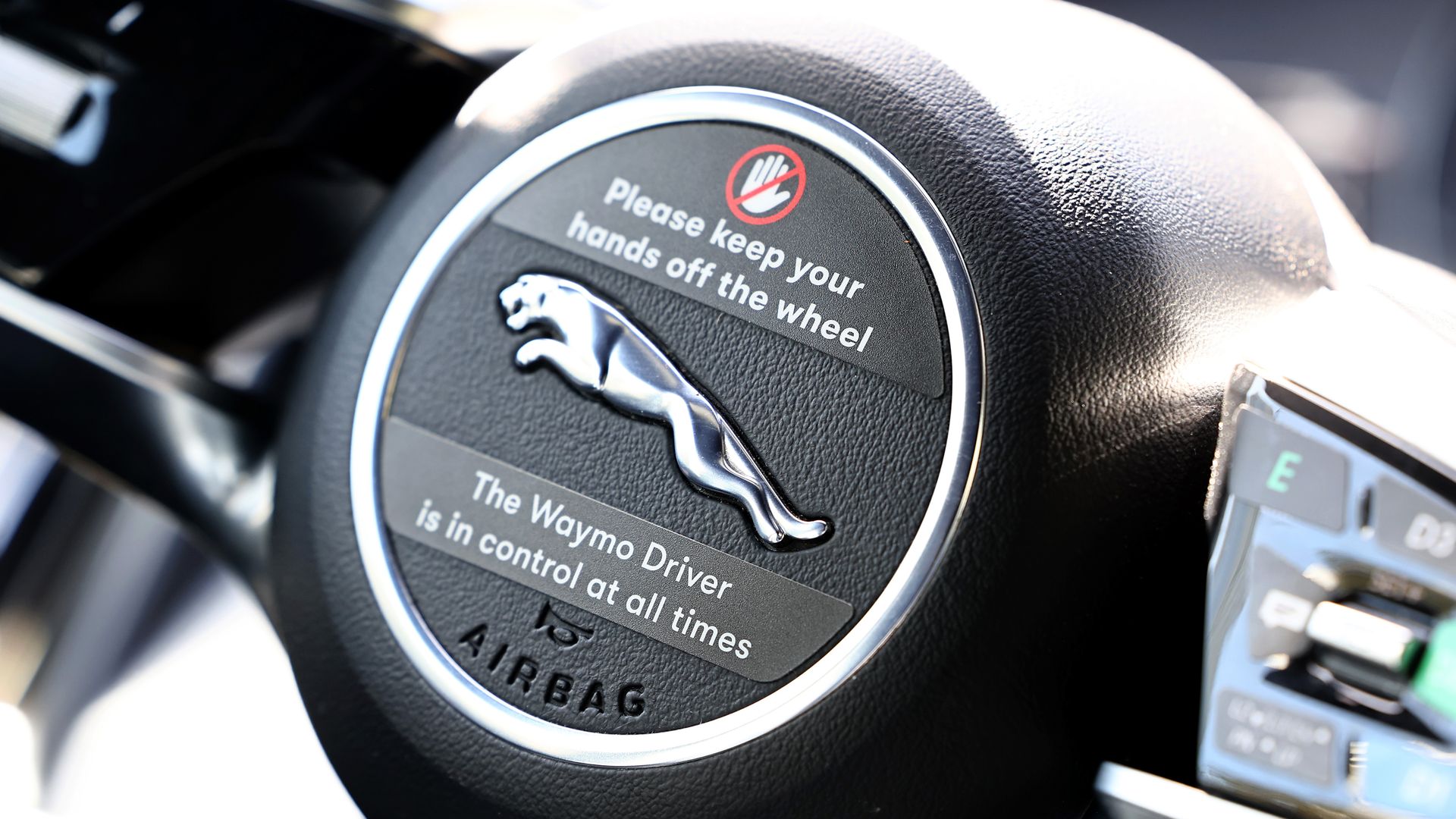
The steering wheel of a Waymo autonomous self-driving Jaguar taxi. Photo: Mario Tama/Getty Images
On the subject of robots, a dwindling numberof self-driving car companies are striving to earn the public's trust, a challenge complicated by their competitors' mistakes.
Why it matters: High-profile incidents like the dragging of a pedestrian by a Cruise robotaxi last October have shaken public confidence in autonomous vehicle (AV) technology, writes Axios' Joann Muller.
Autonomous vehicles were the subject of complaints last year from Austinites and emergency workers.
What they're saying: AVs were a big topic at SXSW last week.
In anon-stage conversation with Uber CEO Dara Khosrowshahi, Austin Mayor Kirk Watson said AV companies need to do a better job of working with cities to avoid costly failures.
"I'm all for profit margins and stuff, but ultimately the public good has to play a role in this, and it shouldn't be sacrificed, and it shouldn't be secondary to the profit of the private entity," Watson said.
Asked about the mayor's remarks during a different session, Waymo co-CEO Tekedra Mawakana said the company has worked hard to engage with local community groups and first responders.
At the same time, she defended against criticism from others that Waymo's robotaxis are too cautious and that the company is moving too slowly.
"We took a lot of heat for obeying traffic laws," she said. "Making sure that people feel safe in the vehicles before we actually scale in a particular jurisdiction, I think that's the right approach."
The bottom line: It takes years for AV companies to earn the public's trust, but they can lose it instantly if they're not careful.