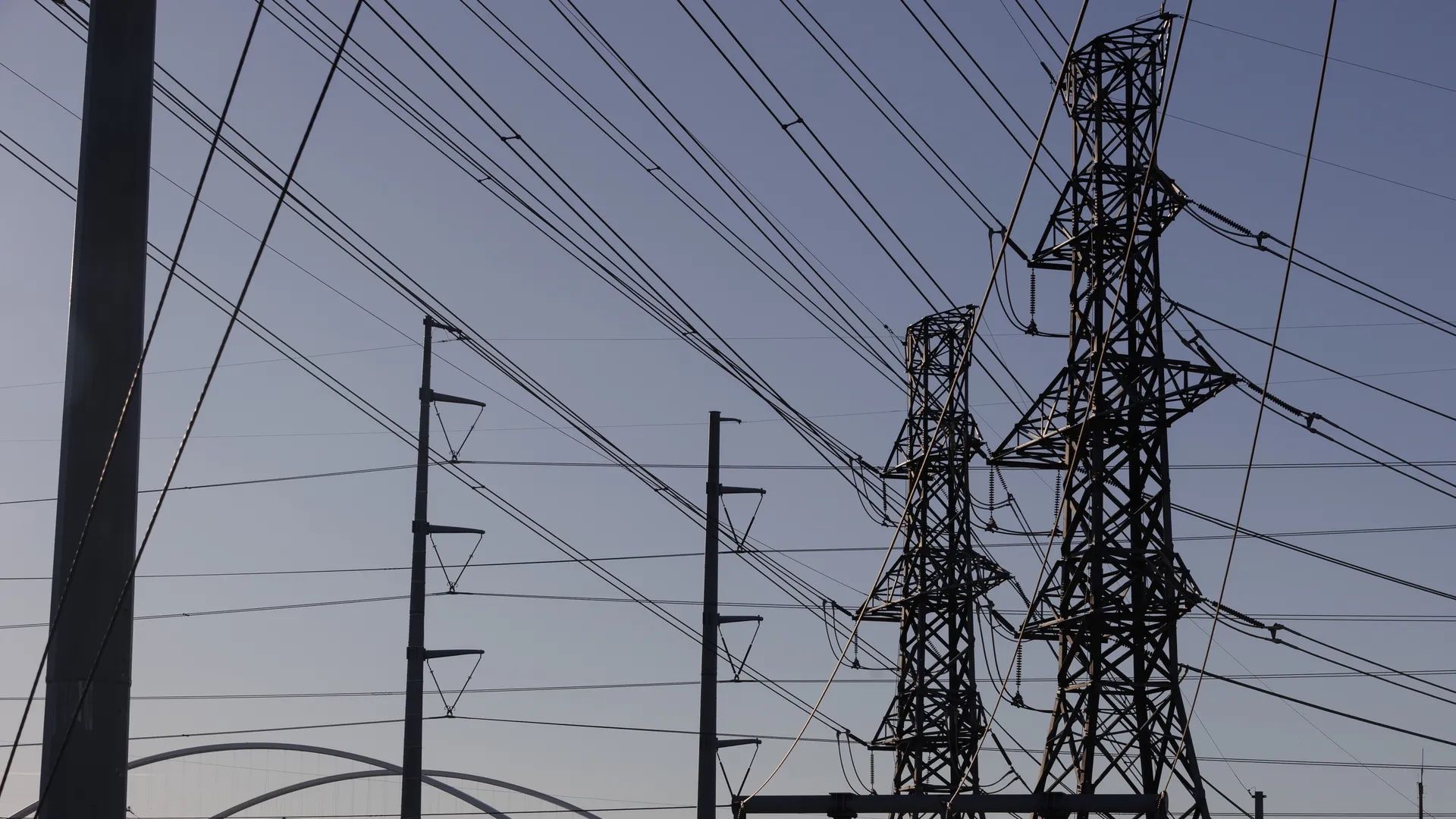
A substation in Dallas on Jan. 16. Photo: Shelby Tauber/Bloomberg via Getty Images
Solar power helped keep the lights on during the latest Arctic blast in Texas.
Texas' power grid comfortably endured another winter test last week.
Why it matters: Texas' grid has been vulnerable to winter and summer weather extremes and has faced intense scrutiny since mass power outages during a historic multi-day winter storm in February 2021 contributed to hundreds of deaths, writes Axios' Jacob Knutson.
The latest: Last week's freeze was the state's second-longest winter storm in the past 15 years and its third coldest, Woody Rickerson, an ERCOT senior vice president and its COO, said during a public utilities meeting on Thursday.
Rickerson said surplus energy from solar generation throughout the storm helped charge batteries and gave operators a chance to correct issues at thermal plants.
By the numbers: Energy demand soared as temperatures in Austin and other Texas cities fell into the mid-20s and then teens beginning a week ago Sunday.
Peak demand last Tuesday will likely be the state's third highest, being around 7,370 megawatts lower than the all-time record set in August 2023.
Details: Later that afternoon, Texas set a new solar power generation record, with panels contributing 14,835 megawatts to the grid, or around 20% of the total generated power at the time.
The bottom line: "The fact we got through this without really any major issues I think should give some confidence that the system can survive the 'normal' extreme weather events," Joshua Rhodes, a research scientist at the University of Texas who examines energy issues, tells Axios.