Austin City Council eyes major property reforms

Add Axios as your preferred source to
see more of our stories on Google.
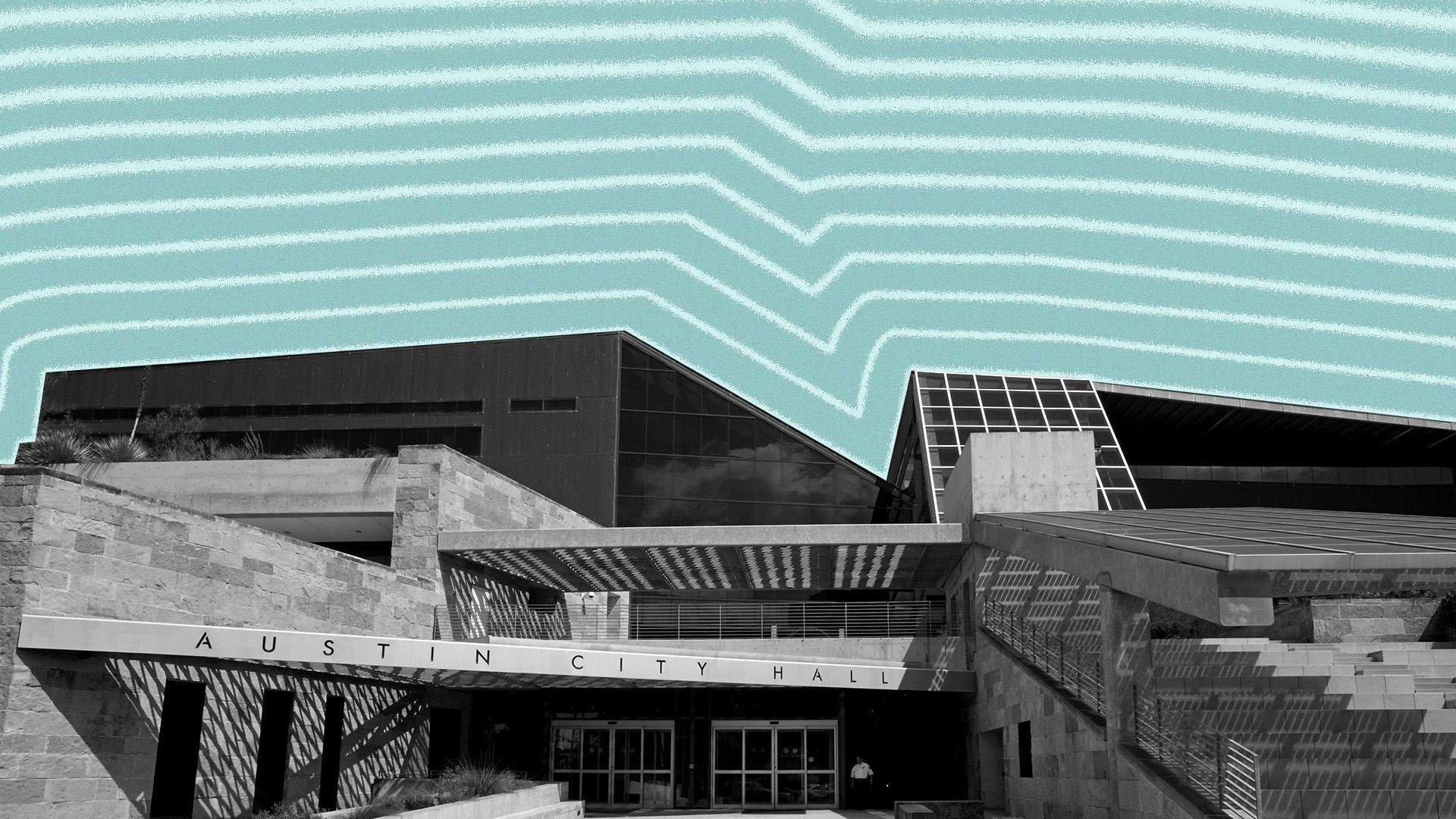
Illustration: Allie Carl/Axios
A massive re-ordering of how Austinites can develop their property is on the Austin City Council agenda Thursday.
Why it matters: The meeting promises to be a battle royale between new urbanists and neighborhood leaders over the rezoning of Austin to allow more dense development.
Catch up quick: City Hall has long grappled with how to increase density — with the hope of making housing more affordable — while preserving neighborhood integrity.
What's happening: Council members could vote to give the green light for more homes – up to three total – on single-family properties, which is one more than what is currently allowed on most lots.
- The council could also add flexibility for the building of tiny homes and remove restrictions on the number of unrelated adults living in a housing unit.
Between the lines: Advocates for the plan say it will ease the way for homeowners to earn more income by building more units on their property — and ratchet up housing availability for middle-income earners.
What they're saying: "Austin used to be a place for young people who came here for college or work and wanted to stay and could find a starter home," Council member Leslie Pool, who's spearheading the effort, said at a press conference this week. "Now that's simply not possible."
- Pool's initiative is called the HOME plan — for Home Options for Middle-income Empowerment.
Of note: The plan has support from homebuilders, chambers of commerce, nonprofits like Habitat for Humanity, labor unions, public transit advocates and the city's chief preservationist group.
- The plan "will change the math on what is preserved and what is demolished, and potentially lead to better preservation outcomes than Austin is witnessing today," Preservation Austin executive director Lindsey Derrington said in a statement.
The other side: "This plan will spur speculation and gentrification," Carmen Llanes, executive director of the East Austin community group Go Austin/Vamos Austin, said in a statement in October. "We need thoughtful, planned growth; we don't need to give unfettered access to our land to developers."
- The proposals will "allow developers to build affluent, multi-family units where they make the most profit and not where it serves our middle class and working class families," said Ana Aguirre, Austin Neighborhood Council president. "It will be an unparalleled disaster for our Austin neighborhoods."
- Community Not Commodity — a nonprofit whose board of directors includes Aguirre, Save Our Springs Alliance executive director Bill Bunch, longtime neighborhood advocate Mary Ingle and housing activist Fred McGhee — has encouraged Austinites to voice opposition to the plan.
- "The plan will raise property taxes, force longtime residents to sell, and dismantle Austin's single-family neighborhoods," per the organization's website.
Flashback: For decades, Austin's central, active voting blocs in older neighborhoods like Travis Heights, Hyde Park and Clarksville called the shots at City Hall — and turned back efforts to loosen development rules.
- But in 2012, their power was diluted when Austin voters opted to change the council makeup from at-large members to geographic representation.
Yes, but: Previous attempts to rewrite Austin's land use rules have been stymied by lawsuits.
If you go: The meeting is at 10am Thursday at City Hall and will be livestreamed.
What's next: The initiative appears likely to pass. A resolution paving the way over the summer passed 9-2.
- In the spring, the council will take up a second phase of the HOME initiative that proposes a reduction in a property's minimum lot size requirement as a way of promoting smaller starter homes, such as townhomes or cottage courts, that might be more affordable for middle-income homebuyers.
What we're watching: If the powerful neighborhood forces that have long held sway will lose at City Hall — but win in the courts.