Texas peaches in short supply this year

Add Axios as your preferred source to
see more of our stories on Google.
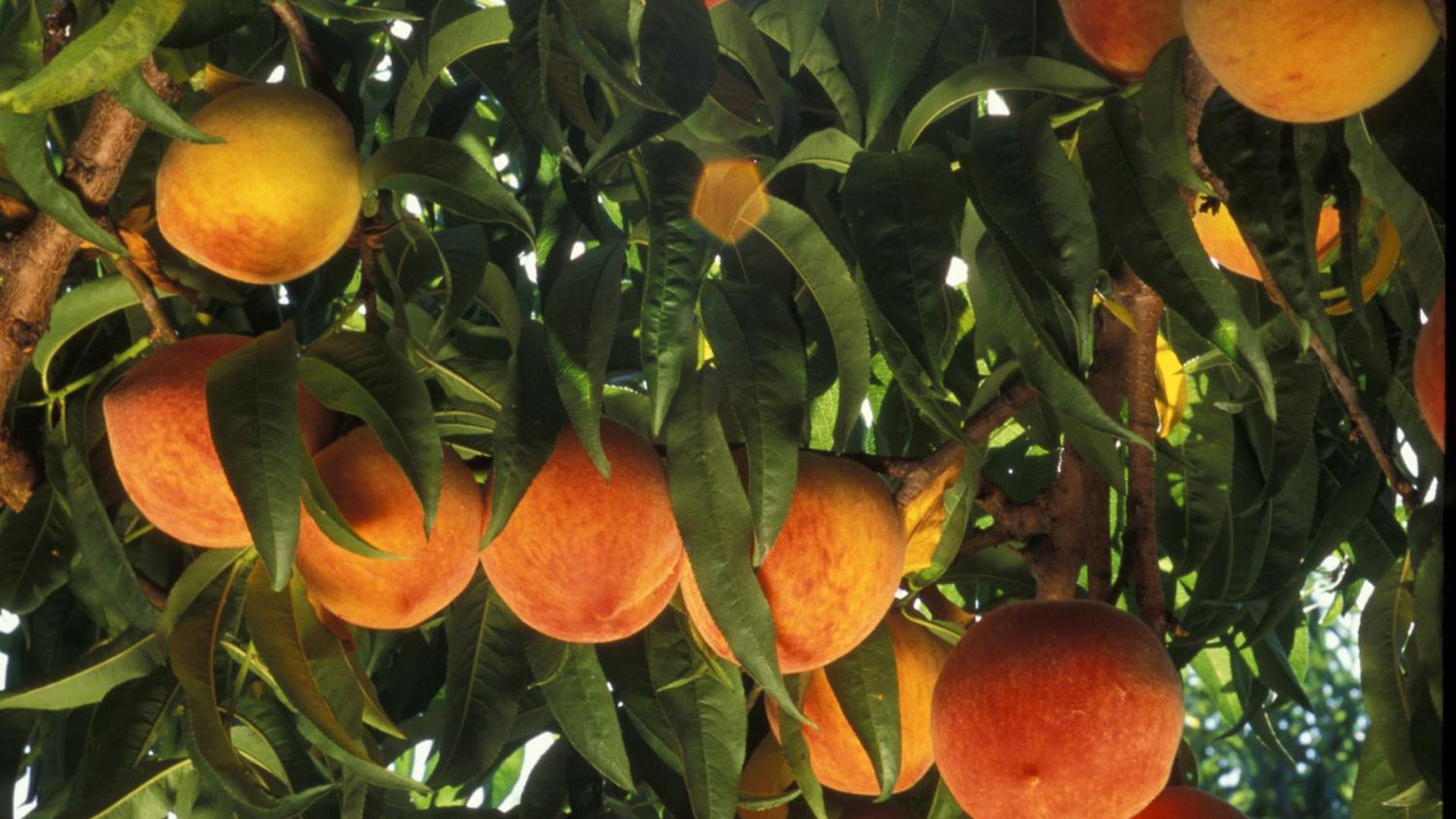
Juicy-looking peaches hanging from a tree. Photo by Randy Mallory via Portal to Texas History
Hill Country peaches are in short supply as a mild winter and spring, combined with a long-term drought, have crippled fruit production.
Why it matters: A juicy Fredericksburg peach — sweet, fuzzy, with a teasing trace of tartness — is the taste of a Texas summer.
- Lounging on a screened-in porch, scarfing varieties with names like Flame Prince, Regal and Majestic, can make a person feel like royalty.
Get smart: Fruit trees depend on cool winter weather to promote proper growth in the spring. If plants don't receive enough chill hours, they can be slow to leaf out, which typically leads to misshapen fruit or none at all.
What's happening: Texas peach trees should receive around 830 hours of chilling — measured as hours at or below 45 degrees after the last frost — but through mid-spring they had received only 530, per the Texas A&M AgriLife Extension Service.
The upshot: "We're looking at 30% of a typical season at best,” AgriLife Extension fruit specialist Jim Kamas predicted in the mid-April Texas Crop and Weather Report.
What they're saying: Sure enough, at Fredericksburg's Jenschke Orchards, "the harvest is only 25% of normal," employee Gabe Moreno tells Axios.
- The farmstands still have peaches, but there's no pick-your-own option.
- "The chill hours weren't good when we needed them — and we're in the middle of a seven-year drought," Moreno said.
Of note: Roughly a third of the state's peaches come from Gillespie County, home to Fredericksburg and Stonewall.
Zoom in: Fredericksburg peaches are typically a big seller at Wheatsville Co-op, supermarket marketing director Nick Conn tells Axios, but this year the company's vendors said they were selling their limited supply at farmers markets instead of wholesale.
- "We're resigned to not having Fredericksburg peaches," Conn said.
Between the lines: You can still pick up some tasty peaches at your local supermarket, but — shh! — they might be from Georgia or California.
What's next: In what amounts to a race against a changing climate, Texas scientists continue to work on devising low- and medium-chill peach varieties.
Yes, but: A new release could take as long as 20 years to develop, as breeders evaluate and hybridize fruit characteristics.
💭 Our thought bubble: If you see a Fredericksburg freestone peach, grab one and hold on tight.