Austin soon to be Texas' tallest city, per report


Add Axios as your preferred source to
see more of our stories on Google.
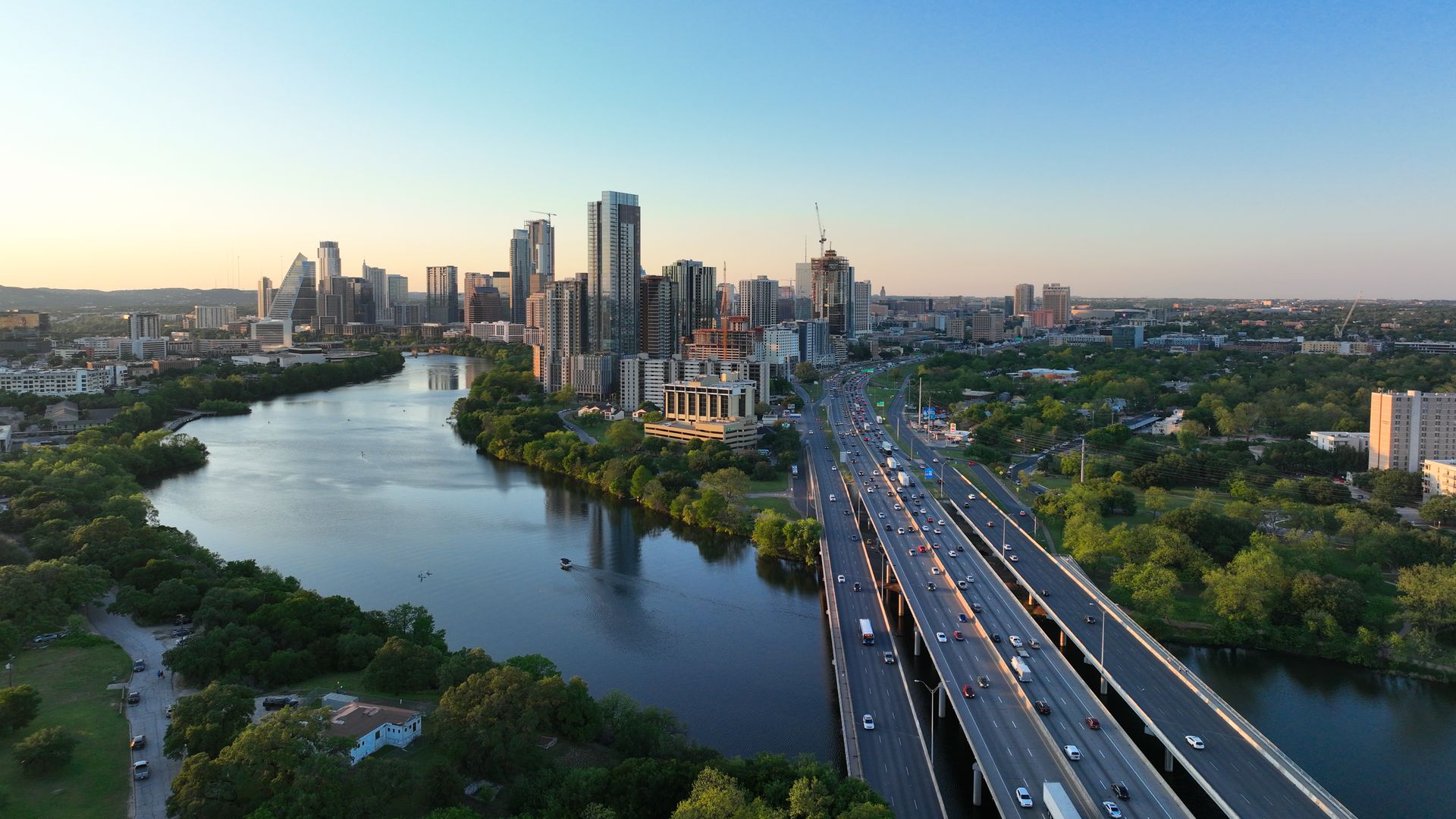
Looking north along I-35 to downtown Austin. Photo by Brandon Bell/Getty Images
Once upon a time, the Texas Capitol towered over Austin — but from the city's ever-loftier C-suites it increasingly looks like a plaything.
Driving the news: Austin is expected to grab the title of tallest Texas city by 2026, per a new study by Texas Real Estate Source.
Zoom in: Combined, Austin's skyscrapers measure 23,582 feet — second in the state to Houston's 30,498 feet of high-rises. But the analysis expects Austin to take the title in a few years due to the rapid rate of high-rise construction here.
- Additionally, the 74-story Waterline tower in downtown Austin will soon be the tallest building in Texas at 1,022 feet tall, beating the Bayou City's 1,002-foot-tall JPMorgan Chase Tower, per the Austin American-Statesman.
Why it matters: Houston has the old oil money, but the skyrocketing skyscraper boom is a sign of Austin's newfound corporate wealth and globally-minded ambition.
Yes, but: Rent downtown was $42.25 a square foot in Q1 this year, per an analysis by real estate firm CBRE — down from $46.72 the previous quarter as the city goes through a real estate market correction.
- The developer of Wilson Tower, a downtown apartment building that was slated to be the tallest building in Texas at 1,035 feet tall, disclosed in April that he was lopping it down from 80 floors to 45 after Austin's Design Commission did not approve of the high-rise's original plans.
Zoom in: Height doesn't correlate with architectural achievement.
- For every distinctive building going up in Austin — the swooping Google skyscraper, the Jenga tower, the Frost Bank Tower — our skyline has its share of plain vanilla glass-and-steel construction.
- The Instagram account Ugly Buildings of Austin recently scathingly captioned a rendering of one such downtown building thusly: "There's just something about this proposed tower that tells me a recession is coming. It's the type of tower you'd see on a sign announcing 'Coming Spring 2009' that stayed up for 8 years before the site was re-repurposed as a food truck trailer park."
Meanwhile: There's a lot of evidence that downtown Austin is a lighter version of what it was pre-pandemic, as loads of workers continue to labor remotely.
- But businesses and political leaders are increasingly trying to curtail remote and hybrid work — and Austin's downtown has a robust mix of nightlife, supermarket shopping and trail-running options.
The bottom line: Austin's tall-building boom means that high-rise-dwelling empty-nesters and DINKs can always get in a hefty stair workout — no matter the weather.