Houses sprout up in the Texas Hill Country

Add Axios as your preferred source to
see more of our stories on Google.
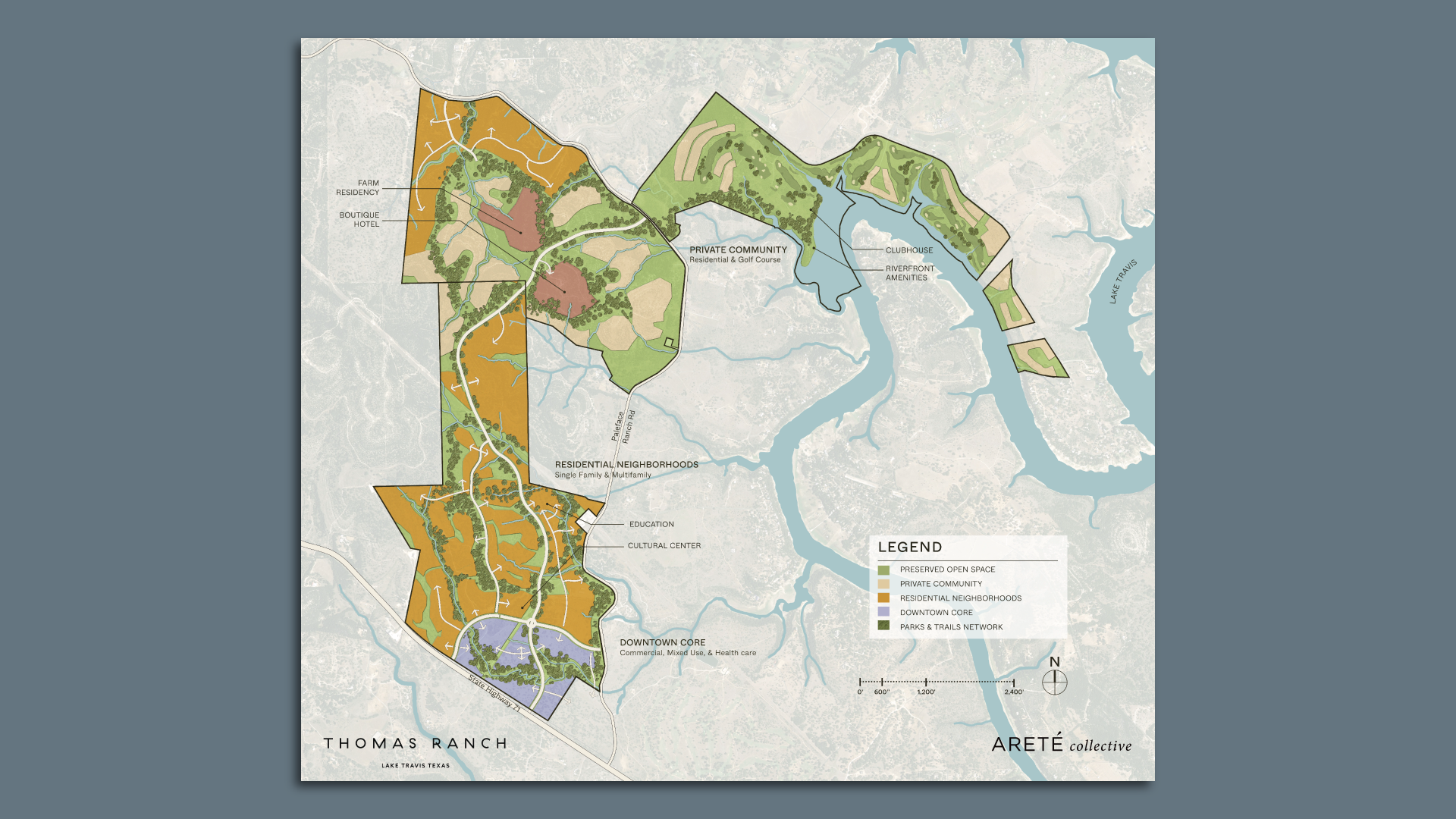
A map of the new Areté Collective project, which will be built on the 2,200-acre Thomas Ranch. Photo courtesy of Areté Collective
Construction is set to begin next year on a 3,500-home subdivision on a ranch fronting Lake Travis, the latest batch of homes to blanket Austin's western flank.
Why it matters: Suburban sprawl continues virtually unabated in the environmentally sensitive Hill Country.
What they're saying: The Areté Collective — developers of the planned Thomas Ranch subdivision — say their project will feature "sustainability as a foundational pillar."
- "While the last generation was about what you build, this generation is focused on what you preserve," Rebecca Buchan, CEO of Areté Collective, said.
Details: The homes, for rent and sale, will be built on the 2,200-acre ranch in Spicewood, just off Texas Highway 71.
- A press release notes "multi-mobility options" to make getting around less car dependent, "most notably through the development of a 15-minute walkable downtown village."
- Bike paths and open space will "connect residents to the land where they live."
- An "eco-friendly golf course" has a "focus on water conservation."
The other side: "Building thousands of single-family homes in the exurbs in endangered songbird habitat in an area with disappearing water supplies is not eco-friendly," Bill Bunch, executive director of Austin environmental group Save Our Springs Alliance, tells Axios, referring to nesting habitat for the golden-cheeked warbler.
Of note: Through a contract with the Lower Colorado River Authority, the development can draw as much as 520 million gallons of water a year from Lake Travis — enough to fill about 790 Olympic-sized pools.
Zoom out: Less than 5% of Hill Country land has been set aside for conservation by landowners as ranches are broken up and transformed into sprawling subdivisions.
- Creeks key to the region's recreational economy are under threat from a proliferation of sewage-treatment plants aimed at dealing with the waste that accompanies thousands of new residents, per a report earlier this year by the Texas Hill Country Conservation Network.
- Attendant light pollution means dark skies, key to local tourism economies and wildlife, are slowly brightening, per the report.
By the numbers: The population of unincorporated Travis County grew by 98% between 1990 and 2020, by 109% in Burnet County — and by 195% in Hays County, with much of it in the northern areas around Dripping Springs.
Between the lines: The Texas Legislature, known for its friendliness toward the real estate industry, has been uninterested in lending authority to county governments to regulate land development.
What we're watching: How greater Austin continues to balance lake life with cars and cul-de-sacs.