Stealth fuel costs drive inflation

Add Axios as your preferred source to
see more of our stories on Google.
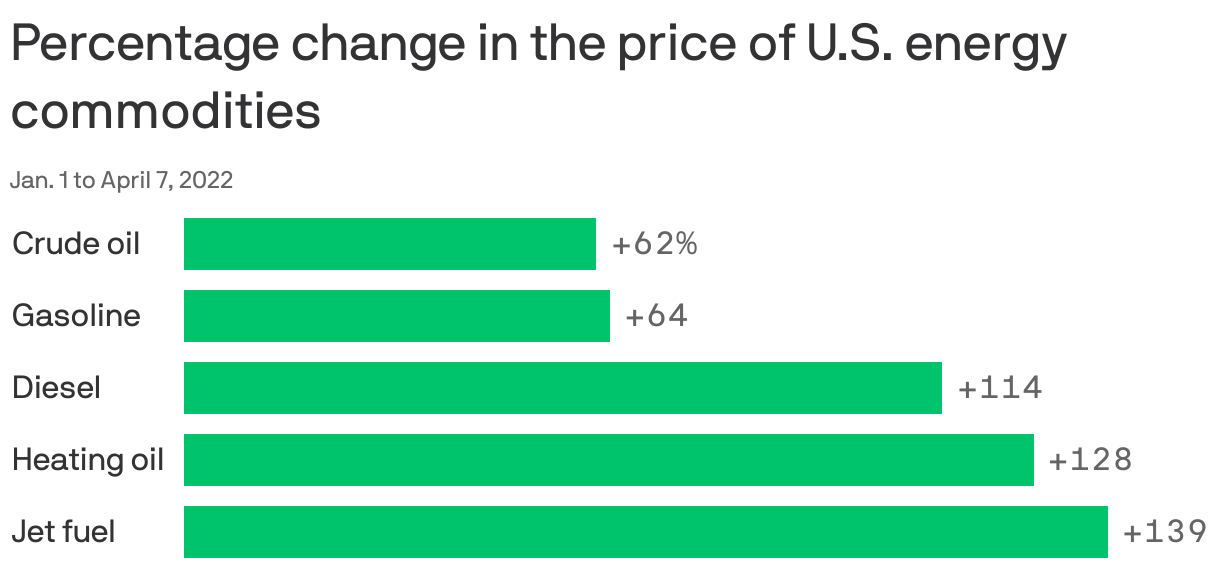
We're all familiar with "pain at the pump," the narrative that launched a thousand local news segments. But there's more than one fuel product that can be pumped, and the extent of the pain can vary.
Driving the news: The price surge for industrial fuels such as diesel and jet fuel — byproducts of petroleum refining, known as distillates — have far outstripped the rise in price for consumer-facing products such as gasoline.
Why it matters: The surge in these acts as a stealth inflationary force, pushing up prices of a wide range of goods — anything that's trucked in — and services, such as air travel.
State of play: The difference in prices among these fuels crisply illustrates the economic concept of "elasticity," or how sensitive demand is to changing prices.
- Gasoline demand is much more elastic than distillate demand. That's because consumers can, in many instances, drive less, if gasoline prices get too high.
- Industrial fuel like diesel, however, is less sensitive to climbing costs, because those costs can often be passed along to an end customer elsewhere.
- Because of this, the oil market depends, in part, on high gasoline prices to dissuade people from driving — known as "demand destruction" — to allow overall energy markets to adjust supply and demand.
