Sign up for our daily briefing

Make your busy days simpler with Axios AM/PM. Catch up on what's new and why it matters in just 5 minutes.

Please enter a valid email.

Please enter a valid email.

Subscription failed
Thank you for subscribing!

Catch up on the day's biggest business stories

Subscribe to Axios Closer for insights into the day’s business news and trends and why they matter

Please enter a valid email.

Please enter a valid email.

Subscription failed
Thank you for subscribing!

Stay on top of the latest market trends

Subscribe to Axios Markets for the latest market trends and economic insights. Sign up for free.

Please enter a valid email.

Please enter a valid email.

Subscription failed
Thank you for subscribing!

Sports news worthy of your time

Binge on the stats and stories that drive the sports world with Axios Sports. Sign up for free.

Please enter a valid email.

Please enter a valid email.

Subscription failed
Thank you for subscribing!

Tech news worthy of your time

Get our smart take on technology from the Valley and D.C. with Axios Login. Sign up for free.

Please enter a valid email.

Please enter a valid email.

Subscription failed
Thank you for subscribing!

Get the inside stories

Get an insider's guide to the new White House with Axios Sneak Peek. Sign up for free.

Please enter a valid email.

Please enter a valid email.

Subscription failed
Thank you for subscribing!

Axios on your phone

Get breaking news and scoops on the go with the Axios app.

Download for free.

Catch up on coronavirus stories and special reports, curated by Mike Allen everyday

Catch up on coronavirus stories and special reports, curated by Mike Allen everyday

Please enter a valid email.

Please enter a valid email.

Subscription failed
Thank you for subscribing!

Want a daily digest of the top Denver news?

Get a daily digest of the most important stories affecting your hometown with Axios Denver

Please enter a valid email.

Please enter a valid email.

Subscription failed
Thank you for subscribing!

Want a daily digest of the top Des Moines news?

Get a daily digest of the most important stories affecting your hometown with Axios Des Moines

Please enter a valid email.

Please enter a valid email.

Subscription failed
Thank you for subscribing!

Want a daily digest of the top Twin Cities news?

Get a daily digest of the most important stories affecting your hometown with Axios Twin Cities

Please enter a valid email.

Please enter a valid email.

Subscription failed
Thank you for subscribing!

Want a daily digest of the top Tampa Bay news?

Get a daily digest of the most important stories affecting your hometown with Axios Tampa Bay

Please enter a valid email.

Please enter a valid email.

Subscription failed
Thank you for subscribing!

Want a daily digest of the top Charlotte news?

Get a daily digest of the most important stories affecting your hometown with Axios Charlotte

Please enter a valid email.

Please enter a valid email.

Subscription failed
Thank you for subscribing!

Sign up for Axios NW Arkansas

Stay up-to-date on the most important and interesting stories affecting NW Arkansas, authored by local reporters

Please enter a valid email.

Please enter a valid email.

Subscription failed
Thank you for subscribing!

Please enter a valid email.

Please enter a valid email.

Subscription failed
Thank you for subscribing!

David Paul Morris/Bloomberg via Getty Images

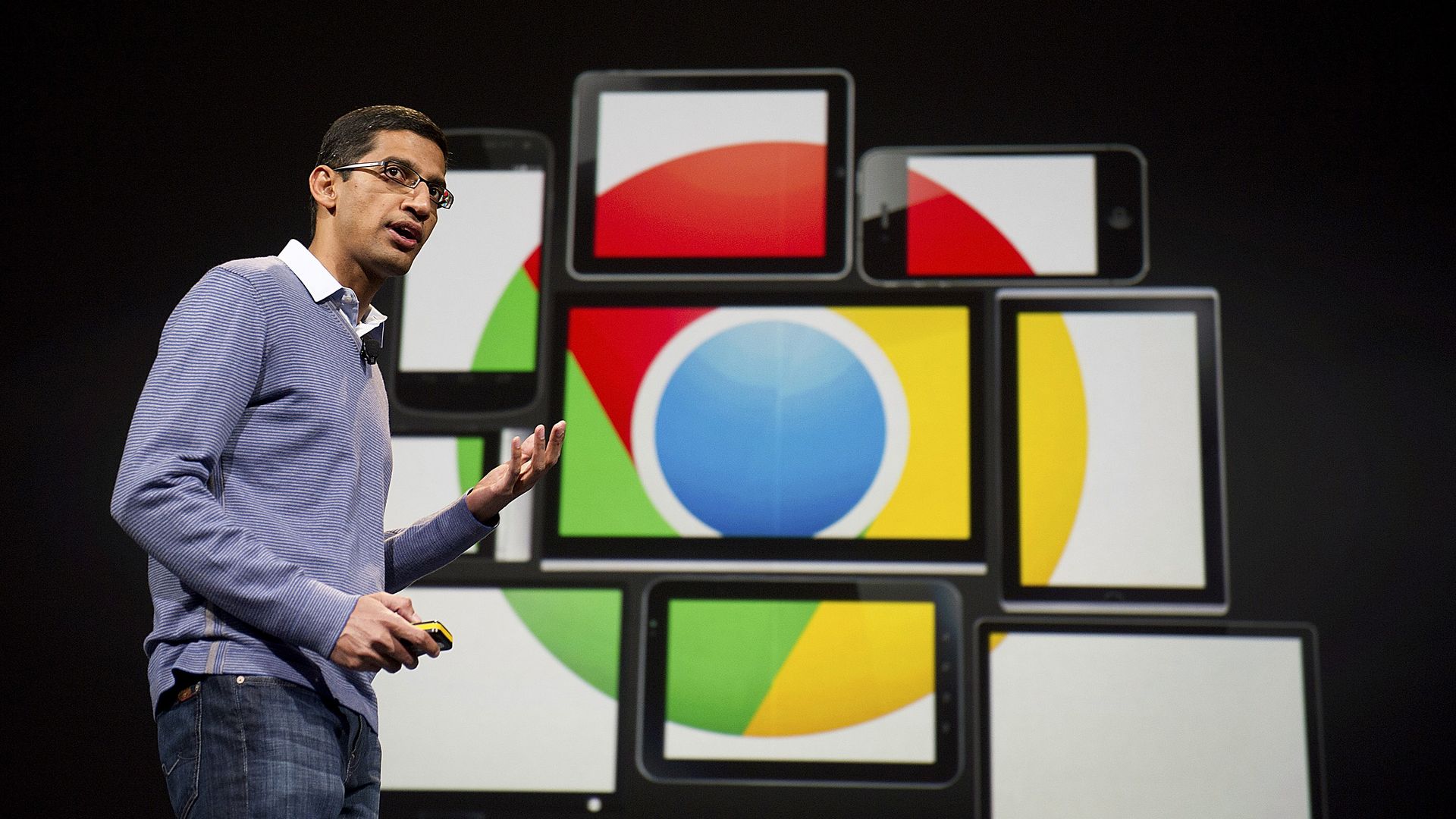
Google says that roughly 1% of publishers aren't compliant with third-party ad blocking standards, meaning the vast majority of web-publishers will not be impacted by the ad blocker the tech giant will install in its latest version of the Google Chrome web browser next week.

Why it matters: Publishers were initially worried when the ad blocker was announced eight months ago that compliance would be difficult, hindering their ability to make ad revenue. This data should mitigate those concerns.

Google reviewed over 100,000 websites in North America and Europe since June as part of an ongoing audit of publishers' ads to ensure they're compliant with third-party industry standards. The sites are being reviewed to make sure publishers are aware of bad ads on their site so they can take quick action to fix them.

  • Of the 100,000+ sites surveyed, only .5% were at the "warning" level of potentially being blocked. Only .9% were at the "failing level" and would be blocked.
  • Google says that 37% of sites found in violation of the Coalition's standards have already fixed their advertising issues.

Sites like the LA Times, Chicago Tribune and Forbes that initially violated the Coalition's standards were made aware of their ad violations through Google's Ad Experience report for publishers, which was provided to publishers a few months ago.

"There’s a user experience issue online. If web experiences are annoying experiences, people will not want to search the web. We make money on search and good user experiences."
Scott Spencer, Director of Product Management for Sustainable Advertising at Google

According to Google's research:

  1. One-in-five Chrome feedback reports mentions annoying/unwanted ads
  2. There were 5+ billion mutes from people using Google's "mute this ad" feature in 2017

Three common misconceptions around the blocker should relieve worried publishers.

  • Publishers won't be punished for one bad ad. Instead, publishers have a 7.5% non-compliance threshold before their ads are blocked. Eventually that threshold will move down to 2.5% as publishers work to comply with the standards.
  • The ad-blocker weighs ads by page views, so if you have a pop-up ad every time someone visits a page, it's considered much worse than if you use them sparingly.
  • House ads, or promotional ads, are not included in the ad-blocker.
  • All of these standards are set by a third-party group called the Coalition for Better Ads, which is comprised of publishers, agencies, industry groups and tech companies.

Google introduced "funding choices" earlier this year for publishers to help sites better communicate to ad-blocking consumers the value exchange of content for ads. Since having implemented the "funding choices" language, more consumers are allowing sites to pass through their ad blocker.

  • 30% of sites have been whitelisted for “hard wall” ad-blocking messages, which prompts users to allow that site to have ads show.
  • 5-15% of sites have been whitelisted for “soft wall” blocking messages, which give users the option to dismiss the message.

One big point that Google wants to make clear is that they have tried hard not to catch publishers off guard with these changes. "We've been working closely with publishers for months," says Spencer. "Our goal is to not filter anybody. Our goal to get rid of annoying ad experiences to make the internet a better."

Go deeper

Updated 2 hours ago - Sports

Olympics dashboard

Team USA's Simone Biles watching the women's uneven bars final at the Olympic Games in Tokyo, Japan, on Sunday. Photo: Jamie Squire/Getty Images

🚨: Simone Biles will compete in her final Olympic event

⚽: U.S. women's soccer team falls to Canada in semifinals, ending chances at gold

🏋️‍♀️: Laurel Hubbard becomes first openly trans woman to compete at Olympics

🤸: U.S. gymnast Jade Carey wins Olympic gold in floor exercise final

🪧: IOC "looking into" American Raven Saunders' Olympic podium protest gesture

📷In photos: Day 10 Olympics highlights

🏳️‍⚧️: Axios at the Olympics: Games grapple with trans athletesTrans athletes see the Tokyo Games as a watershed moment

Go deeper: Full Axios coverage

Updated 2 hours ago - Sports

Laurel Hubbard becomes first openly trans woman to compete at Olympics

Laurel Hubbard. Photo: Stanislav Krasilnikov\TASS via Getty Images

New Zealand weightlifter Laurel Hubbard made history on Monday as the first openly transgender female athlete to compete at the Olympics.

Why it matters: The presence of trans and nonbinary athletes at this year's Games has been celebrated by LGBTQ+ rights advocates, but stirred controversy among critics, who argue trans women have an unfair advantage even after taking hormones to lower their testosterone.

Index fund investors saved $357 billion over last 25 years

Illustration: Sarah Grillo/Axios

Investors who’ve opted to passively track the stock market haven’t just outperformed most active fund managers. They’ve also saved a ton of money in fees while doing it.

Why it matters: There are loads of active fund managers aiming to beat the returns of funds that track indexes like the S&P 500.