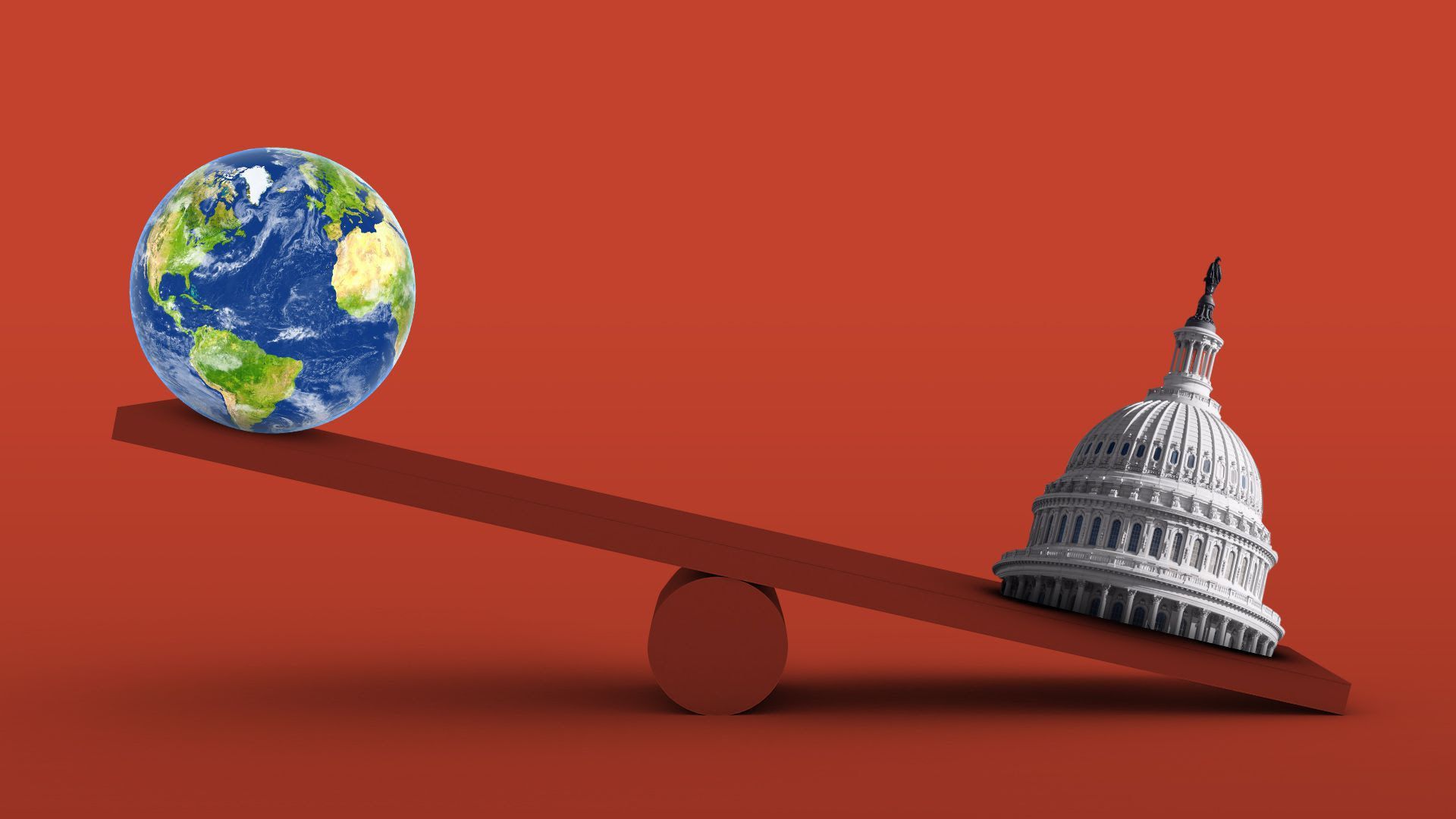
Scientists this year will update how they calculateaverage temperatures, altering our reference point of a "normal climate."
Why it matters: What we think of as normal in life — whether in climate, politics or society — is always changing due to what's known as the "shifting baselines syndrome." Because we often miss those changes, we end up with a warped image of the present that shapes our policies and our future.
There's good news and bad news when it comes to curbing carbon emissions from Uber, Lyft and other ride-hailing services, courtesy of new analysis from the Rocky Mountain Institute.
Why it matters: Ride-hailing creates new emissions challenges.
There are lots of energy policy implications if Democrats have indeed pulled off a surprising sweep of Georgia's Senate races that hands them both chambers of Congress. As of 10am Wednesday, Raphael Warnock has defeated Kelly Loeffler, and Jon Ossoff is on track to beat David Perdue.
The big picture: Senate rules work against moving big bills without a supermajority (a topic we explored yesterday). But that said, the party in power controls the agenda and has some room to maneuver even with the thinnest possible margin.
A federal judge on Tuesday denied a bid to thwart the Interior Department's plan to sell oil drilling leases in Alaska's Arctic National Wildlife Refuge.
Why it matters: District court judge Sharon Gleason's ruling clears the way for the Interior Department to unseal bids tomorrow for drilling rights in the region.
Anyone thinking that the immediate past is a prologue for Capitol Hill dealmaking could be in for rough years ahead.
Catch up fast: In late December, Congress passed and President Trump signed legislation to cut a major greenhouse gas, extend clean energy tax incentives and bolster Energy Department tech deployment programs.