Total, the French multinational oil-and-gas giant, said Tuesday it hopes to reach "net zero" emissions by 2050, joining European peers including Shell and BP in setting ambitious mid-century targets.
Why it matters: Total’s plan includes targets for Scope 3 emissions — that is, emissions from use of its products in the economy that comprise by far the largest share of total CO2 linked to the industry.
A new working paper finds that trade barriers worldwide are generally lower for carbon-intensive goods than cleaner products, creating a large "implicit subsidy to CO2 emissions."
Why it matters: UC Berkeley economist Joseph Shapiro pegs this "subsidy" at $550 billion to $800 billion annually, making it harder to fight climate change.
The powerful American Petroleum Institute and GOP senators are attacking big banks’ financial restrictions on Arctic oil drilling — and mulling ways to go beyond just verbal pushback.
What they’re saying: “We don’t think it’s appropriate for banks to discriminate against fossil-fuel communities,” API president Mike Sommers tells Axios.
Two Brookings Institution analysts say it's possible to revive the economy while maintaining the benefits of greatly reduced traffic — but only with important policy changes.
Why it matters: The radical decline in movement during the pandemic has caused steep reductions in car travel. Going forward, the extent of the bounce back of vehicle and air travel will affect oil demand and emissions of CO2 and traditional pollutants.
Power giant Southern California Edison has signed contracts to procure 770 megawatts of battery storage projects that are slated to come online in the summer of 2021.
Why it matters: That's a lot! The seven projects appear to comprise largest battery storage procurement announcement ever, per battery wonks talking about it here.
Communities from around the world have proven wind energy can make for a cleaner environment, but political and technological barriers are still holding back its full potential.
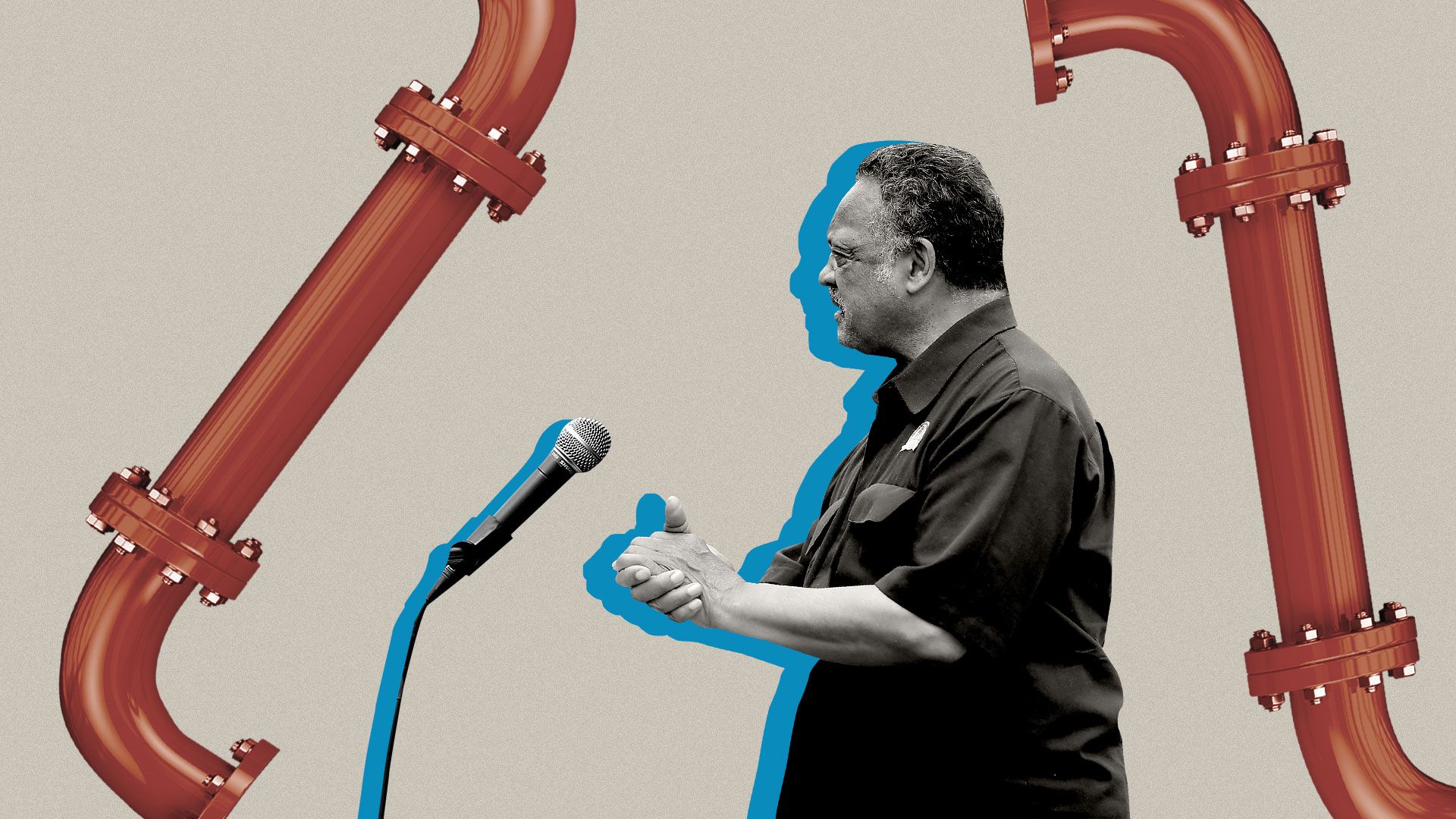
Breaking from other progressives, Rev. Jesse Jackson is calling to build a natural gas pipeline to serve an impoverished community near Chicago.
Why it matters: This is one example of the complex tug of war between energy affordability and tackling climate change. The tension is poised to grow as America and much of the world careen into pandemic-fueled recessions.