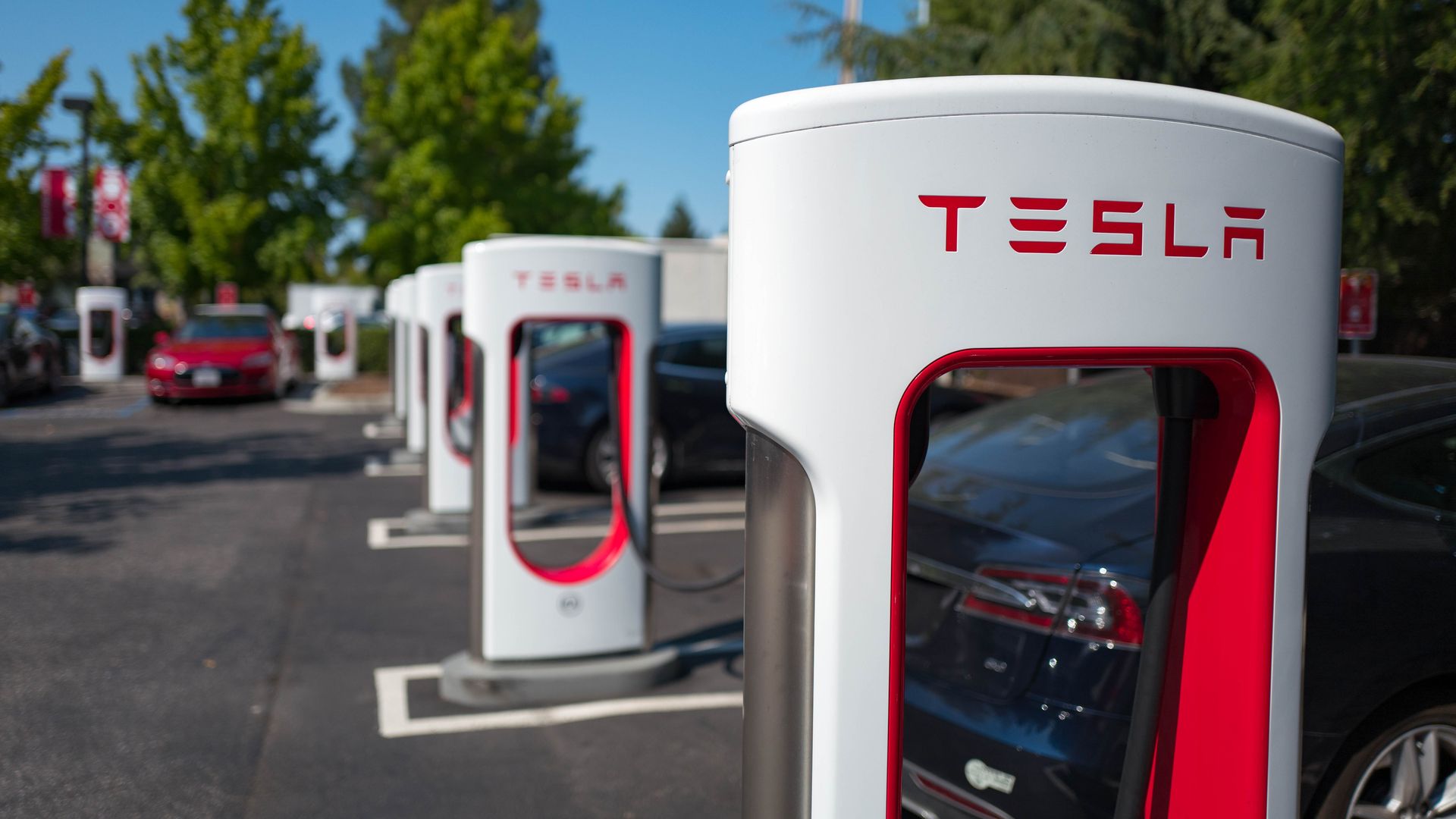
Tesla confirms that resource-draining thieves installed cryptocurrency mining malware onto the company's cloud platform and even test vehicles. The incident was first reported by researchers at the security firm Red Lock.
What they're saying: In a statement, a Tesla spokesperson said: "We maintain a bug bounty program to encourage this type of research, and we addressed this vulnerability within hours of learning about it. The impact seems to be limited to internally-used engineering test cars only, and our initial investigation found no indication that customer privacy or vehicle safety or security was compromised in any way."
BP has increased its long-term forecast for the rise of electric vehicles and sees a potential peak in global oil demand within two decades, but is nonetheless warning that even the more bullish scenarios they modeled will not lead to a collapse in oil consumption.
The forecast is in its just-published 2018 Energy Outlook, a big collection of scenarios for global fuels, power and emissions trends through 2040.
Bottom line: The "evolving transition" scenario sees growth in global demand for liquid fuels (largely a proxy for oil) ending in around 2035. More aggressive scenarios, including one that models global ban on sales of internal combustion (ICE) vehicles starting in 2040, show a more aggressive move away from oil, as the chart above shows.
President Trump and his administration have gone to extreme lengths to wipe climate change from the U.S. federal government’s lexicon andquestion whether it’s a real issue at all. That’s got people working to tackle the problem wondering, paradoxically, how to make progress without the Trump administration acknowledging it.
The bottom line: A surprisingly large amount of progress is being made, actually, including on certain federal policies, within corporations and by local governments.Ultimately, though, the scale of the problem needs not only federal acknowledgment but also concerted backing.