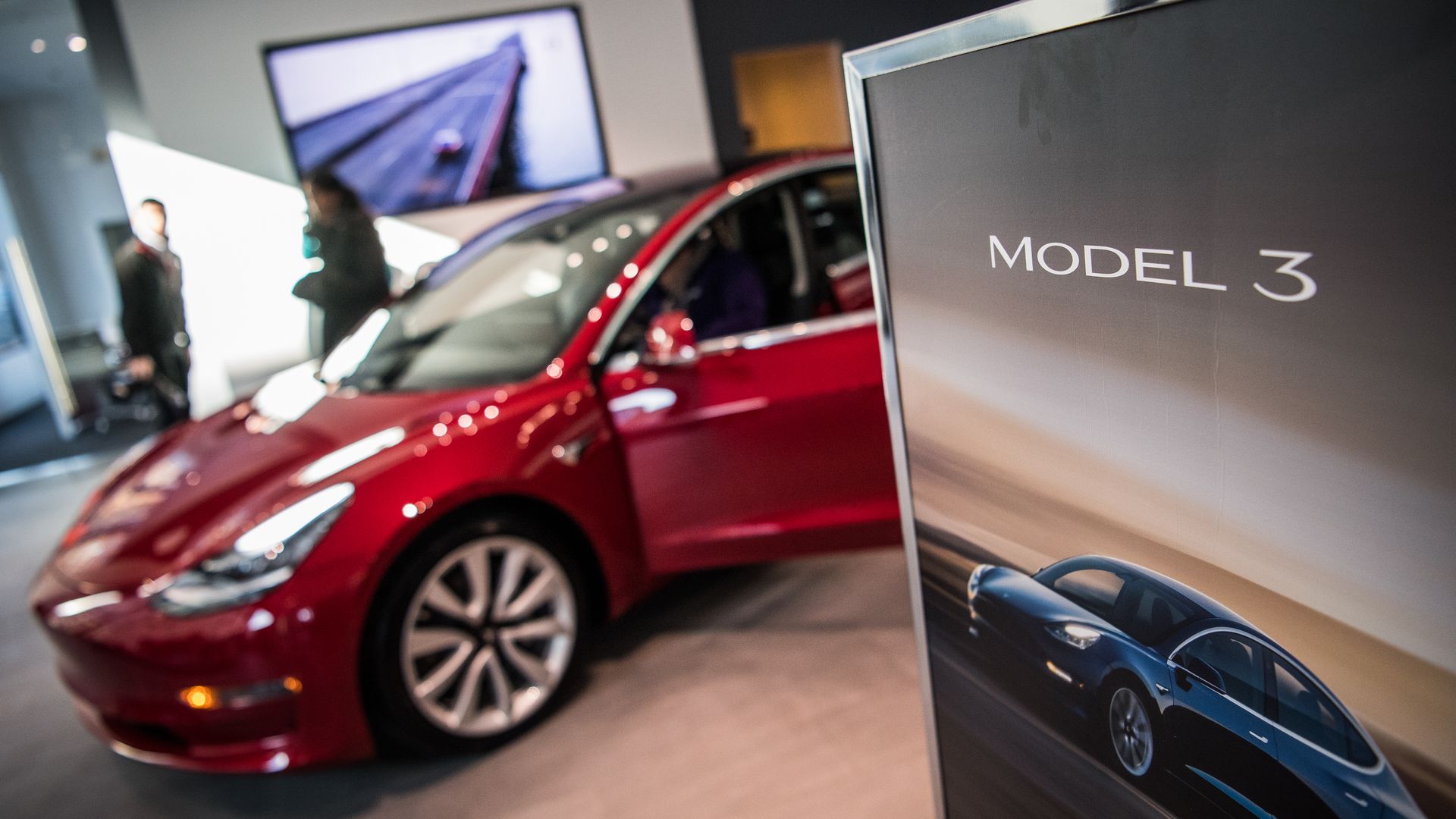
Bloomberg has built an interesting tool to track the number of Tesla's mass-market Model 3 electric vehicles that are emerging from the company's California factory.
Driving the news: Check out their Model 3 production tracker here, which as of Friday morning was showing 7,535 built and a current rate of 956 per week.
A newly published paper from the Sabin Center for Climate Change Law looks carefully at the 82 legal battles over climate change that got underway during President Trump's first year. Roughly 75% seek to uphold or advance climate policies.
Why it matters: The courts are an important battleground for climate policy, in part because unwinding or freezing a predecessor's policies often requires careful bureaucratic and legal spadework that provides opponents with avenues for litigation.
The Federal Energy Regulatory Commission had to reject a Trump proposal boosting coal and nuclear plants because it was "following the law," Neil Chatterjee, a member of the commission appointed by Trump says in an interview.
“I understand conservative frustration with it. It was a tough issue. Part of that stems from the judicious role that FERC plays. We’ve got to abide by the statutes that govern us. … I can understand how that’s frustrating to people. We are not betraying conservative principles. We are in fact following the law.”
Why it matters: Conservative websites like Townhall and Redstate had criticized the decision, claiming it was like President Obama hadn’t stopped running FERC. One of the articles also called wind and solar “fake energy.” Chatterjee said he did not agree with that.
A deeply reported Financial Times piece provides new details about British inventor James Dyson's multi-billion dollar bid to enter the electric vehicle market with a car launched in 2020 or 2021.
Why it matters: Dyson is a hugely successful entrepreneur, so his EV initiative can't be ignored when the innovation and market-share battle is pretty open.
America's solar industry has gone from almost nonexistent a decade ago to nearly 50 gigawatts of total installed capacity, enough to power nearly 10 million homes.