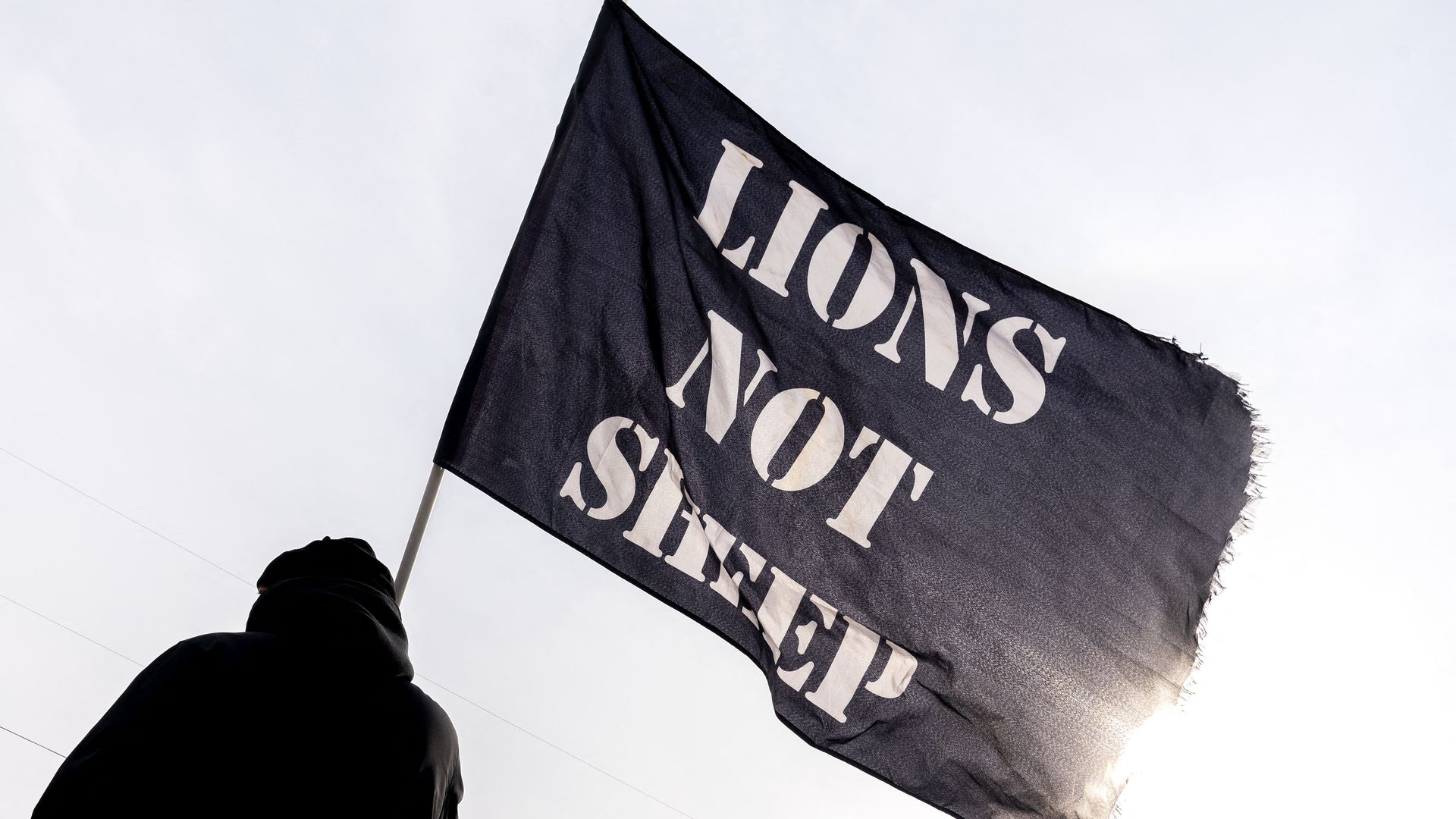
The Federal Trade Commission ordered apparel company Lions Not Sheep and its owner Sean Whalen to stop labeling its products with fake "Made in USA" tags and pay more than $200,000 in fines.
The big picture: Lions Not Sheep is known for its pro-gun and pro-Trump shirts, featuring phrases like "Let's Go Brandon," "Give Violence a Chance" and "Shall Not Be Infringed."
The current pivot to profitability in the world of venture-backed companies is far from unprecedented. What's new is the degree to which the gory details of corporate finances at former unicorns like Coinbase and Robinhood are now public.
Why it matters: A private company can quietly battle on without its investors having to take any kind of write-down until the very end. When your financials are public, however, your struggles become public, too.
An obscure company started trading on July 15, at $7.80 per share. By August 3 it traded, at one point, for $2,555.30 per share. It's a pattern that looks very familiar — but don't be fooled. AMTD Digital isn't a meme stock.
Why it matters: Sometimes markets act in inexplicable ways; this was one of those cases. But there's no retail frenzy behind HKD, the ticker symbol of AMTD Digital, and there's no Discord server or Reddit thread full of teens investing their entire net worth in this crazy bet and trying to drive it to the moon.
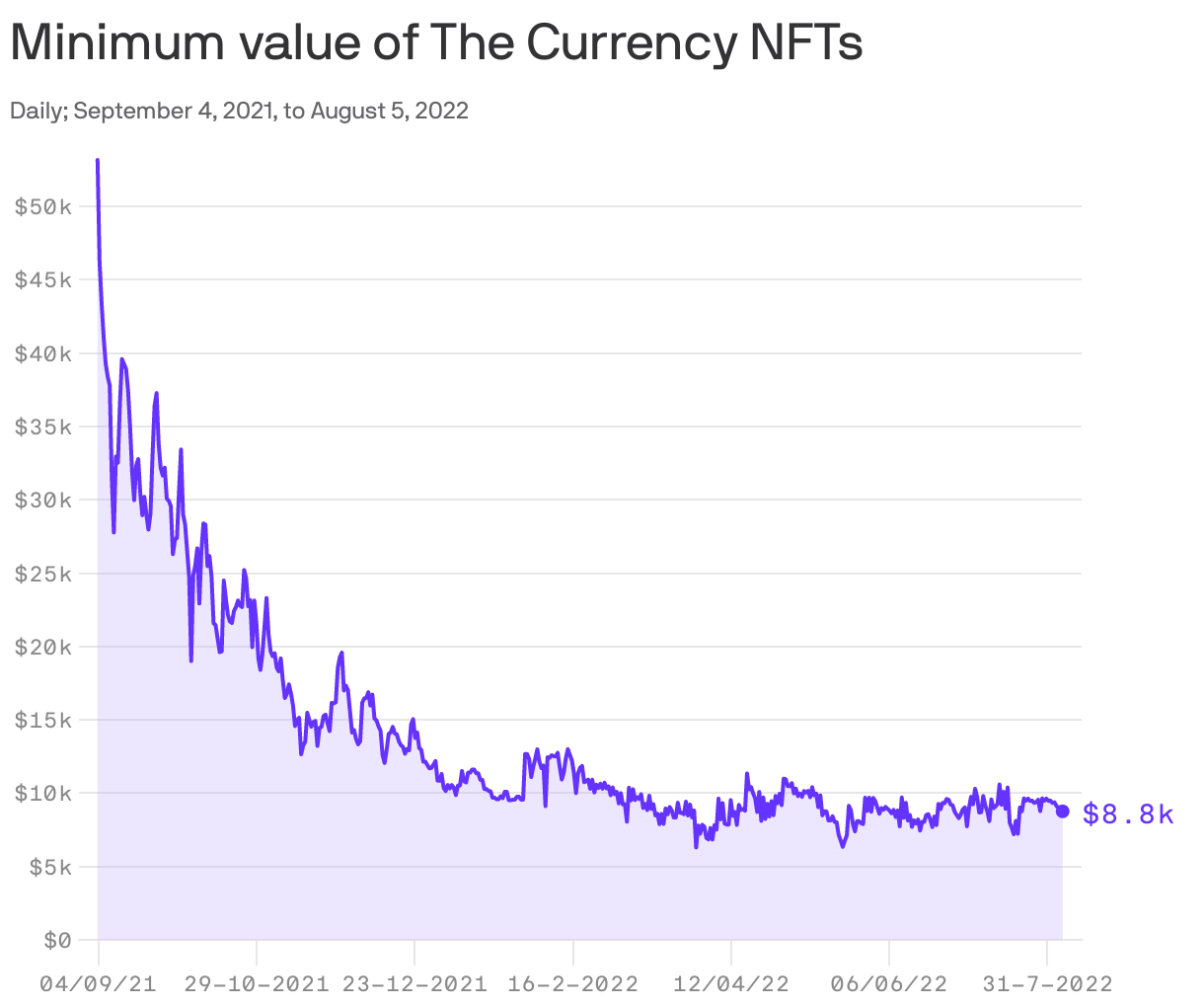
When given the choice between physical and digital art, people prefer the physical. That's the verdict from one of the more interesting NFT experiments, which came to its major inflection point last week.
How it works: UK artist Damien Hirst made 10,000 small (letter-sized) paintings on paper, in a series called The Currency. He then minted 10,000 NFTs, each one corresponding to one of the paintings, and sold 9,000 of them for $2,000 each.
Driving the news: Credit-card balances are defying the gravitational pull of stubborn inflation and slower growth. They account for about $890 billion of Americans' staggering $16 trillion in household debt.