Get the latest market trends in your inbox

Stay on top of the latest market trends and economic insights with the Axios Markets newsletter. Sign up for free.

Please enter a valid email.

Please enter a valid email.

Subscription failed
Thank you for subscribing!

Catch up on coronavirus stories and special reports, curated by Mike Allen everyday

Catch up on coronavirus stories and special reports, curated by Mike Allen everyday

Please enter a valid email.

Please enter a valid email.

Subscription failed
Thank you for subscribing!

Denver news in your inbox

Catch up on the most important stories affecting your hometown with Axios Denver

Please enter a valid email.

Please enter a valid email.

Subscription failed
Thank you for subscribing!

Des Moines news in your inbox

Catch up on the most important stories affecting your hometown with Axios Des Moines

Please enter a valid email.

Please enter a valid email.

Subscription failed
Thank you for subscribing!

Minneapolis-St. Paul news in your inbox

Catch up on the most important stories affecting your hometown with Axios Minneapolis-St. Paul

Please enter a valid email.

Please enter a valid email.

Subscription failed
Thank you for subscribing!

Tampa-St. Petersburg news in your inbox

Catch up on the most important stories affecting your hometown with Axios Tampa-St. Petersburg

Please enter a valid email.

Please enter a valid email.

Subscription failed
Thank you for subscribing!

Please enter a valid email.

Please enter a valid email.

Subscription failed
Thank you for subscribing!

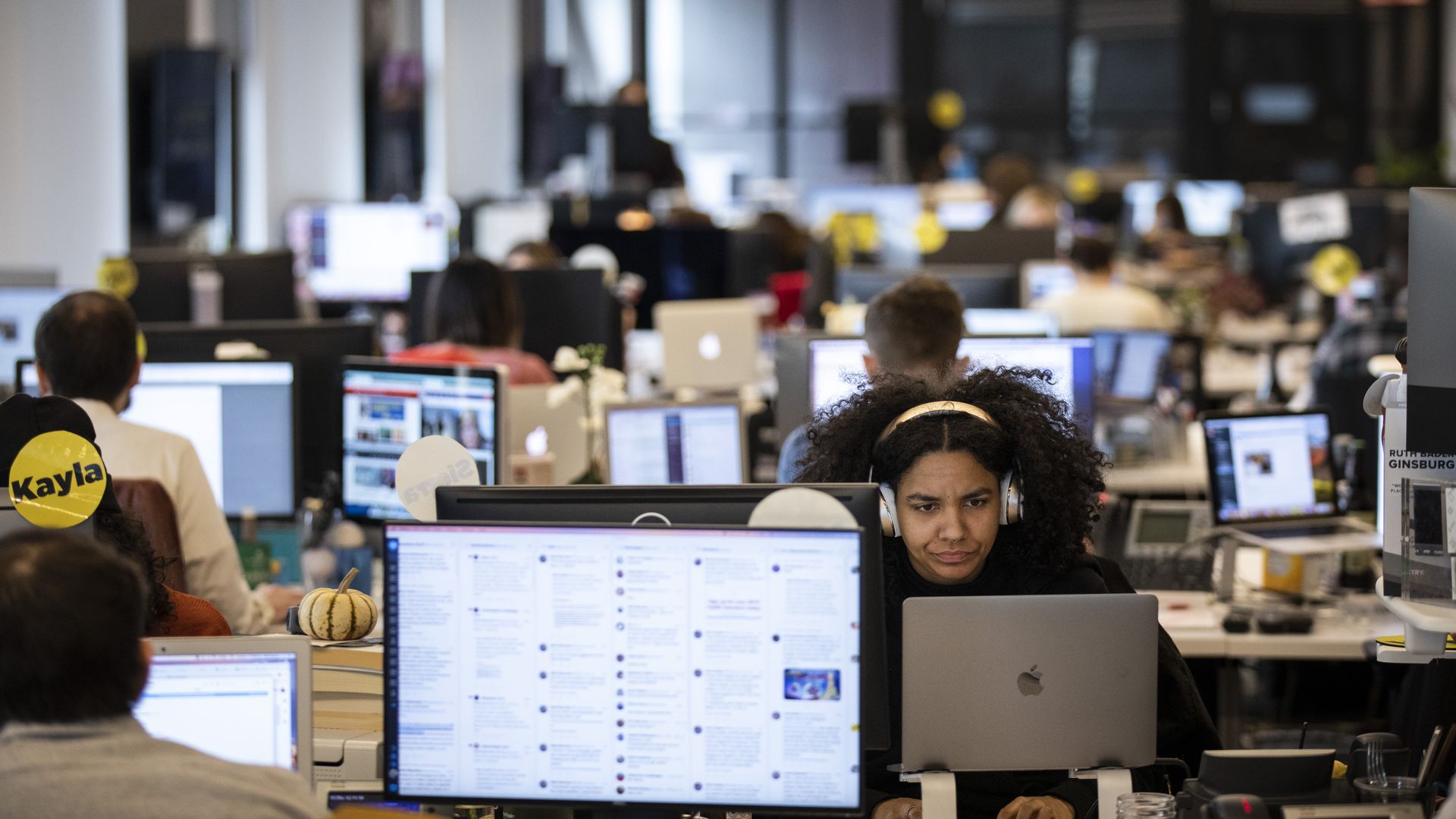
Photo by Drew Angerer/Getty Images

The media industry's current round of cuts and consolidation is accelerating. Sizable layoffs at Buzzfeed, Gannett and Verizon Media (home of AOL, Yahoo, HuffPost and others) were announced Wednesday, totaling over 1,000 jobs cut.

Why it matters: If the headlines signal anything, it's that the news media will continue to struggle to find a sustainable business model in an advertising and attention ecosystem dominated by tech companies like Google, Facebook and Netflix.

By the numbers:

  • Verizon Media will cut roughly 800 jobs, or 7% of its global workforce across the organization, as well as certain brands and products. Verizon CEO Hans Vestberg told Axios earlier this month that each of the company's three units, including the media business, needed to be able to stand on their own. (A company spokesperson later clarified to Axios that Verizon Media Group will still have access to Verizon customer data when customers opt in to provide such information.)
  • Buzzfeed will cut roughly 250 jobs, or roughly 15% of its workforce, including jobs within its news division.
  • Gannett cut over 20 jobs Wednesday, per Poynter, with more expected as the company tries to shed costs amid buyout talks.

The big picture: The struggle to create businesses that can support a healthy news environment is universal across the information ecosystem. It exists at the local, national and global levels, and across digital, print and television operations.

Events in the past year that underscore this reality:

  • the cheap sales of websites that had raised tons of money, like Mic.com and Mashable
  • big layoffs at digital properties like Vox and Refinery29
  • Massive write-downs of media properties owned by bigger companies, like Vice and Verizon Media

Be smart: Policymakers around the world want to address the problem, but most are still struggling to find workable solutions.

  • In Europe, lawmakers have proposed a copyright directive that would force tech giants to pay publishers for linking to their content, but the directive experienced a setback five days ago after member states failed to agree on some rules.
  • In the U.S., regulators at the FCC has rolled back decades-old broadcast ownership rules to allow local news companies to more easily merger to be better able to scale and potentially compete with some of their tech counterparts.
  • The U.S. newspaper industry is still waiting on Congress for a proposed temporary safe harbor that would allow it to bargain as a group against big tech companies.

Bottom line: Many news companies are struggling to find sustainable business models in the digital era. There's no sign it's getting any easier.

Go deeper

Scoop: Vice President Pence to receive televised vaccine shot

Vice President Mike Pence. Photo: SOPA Images / Getty Images

Vice President Mike Pence plans to receive his coronavirus vaccine shot on camera Friday morning at the White House to build "vaccine confidence" among the American people, according to an administration official with direct knowledge of the plans.

Driving the news: Details are still being worked out, but Pence wants the TV networks to carry the moment live in the morning, the source said, to maximize the audience for the vaccination.

Scoop: Top Biden aide's "f*cker" quote under fire

Andre Chung for The Washington Post via Getty Images

Some advisers close to President-elect Joe Biden are frustrated over a Glamour magazine interview in which incoming White House deputy chief of staff Jen O'Malley Dillon referred to Republicans on Capitol Hill as "f*ckers."

Why it matters: Biden campaigned for the presidency by promising to "restore the soul of America" and not to question the motives of political opponents, whom he insists aren't enemies. Fighting words from a high-level staffer could give Republicans ammunition to cast doubt on Biden's sincerity.

45 of 50 biggest U.S. companies turned profit since March

Drone shows cars lining up at Share Your Christmas food distribution event in Kissimmee, Fla. Photo: Paul Hennessy/SOPA Images/LightRocket via Getty Images

2020 has been an awesome year for Corporate America, but not so much for Working America.

The big picture: 45 of America’s 50 biggest publicly traded companies have turned profits since March, while nearly 8 million Americans have fallen into poverty since June, the WashPost reports in a pair of striking stories.