Sign up for our daily briefing

Make your busy days simpler with Axios AM/PM. Catch up on what's new and why it matters in just 5 minutes.

Please enter a valid email.

Please enter a valid email.

Subscription failed
Thank you for subscribing!

Catch up on coronavirus stories and special reports, curated by Mike Allen everyday

Catch up on coronavirus stories and special reports, curated by Mike Allen everyday

Please enter a valid email.

Please enter a valid email.

Subscription failed
Thank you for subscribing!

Denver news in your inbox

Catch up on the most important stories affecting your hometown with Axios Denver

Please enter a valid email.

Please enter a valid email.

Subscription failed
Thank you for subscribing!

Des Moines news in your inbox

Catch up on the most important stories affecting your hometown with Axios Des Moines

Please enter a valid email.

Please enter a valid email.

Subscription failed
Thank you for subscribing!

Minneapolis-St. Paul news in your inbox

Catch up on the most important stories affecting your hometown with Axios Twin Cities

Please enter a valid email.

Please enter a valid email.

Subscription failed
Thank you for subscribing!

Tampa Bay news in your inbox

Catch up on the most important stories affecting your hometown with Axios Tampa Bay

Please enter a valid email.

Please enter a valid email.

Subscription failed
Thank you for subscribing!

Charlotte news in your inbox

Catch up on the most important stories affecting your hometown with Axios Charlotte

Please enter a valid email.

Please enter a valid email.

Subscription failed
Thank you for subscribing!

Please enter a valid email.

Please enter a valid email.

Subscription failed
Thank you for subscribing!

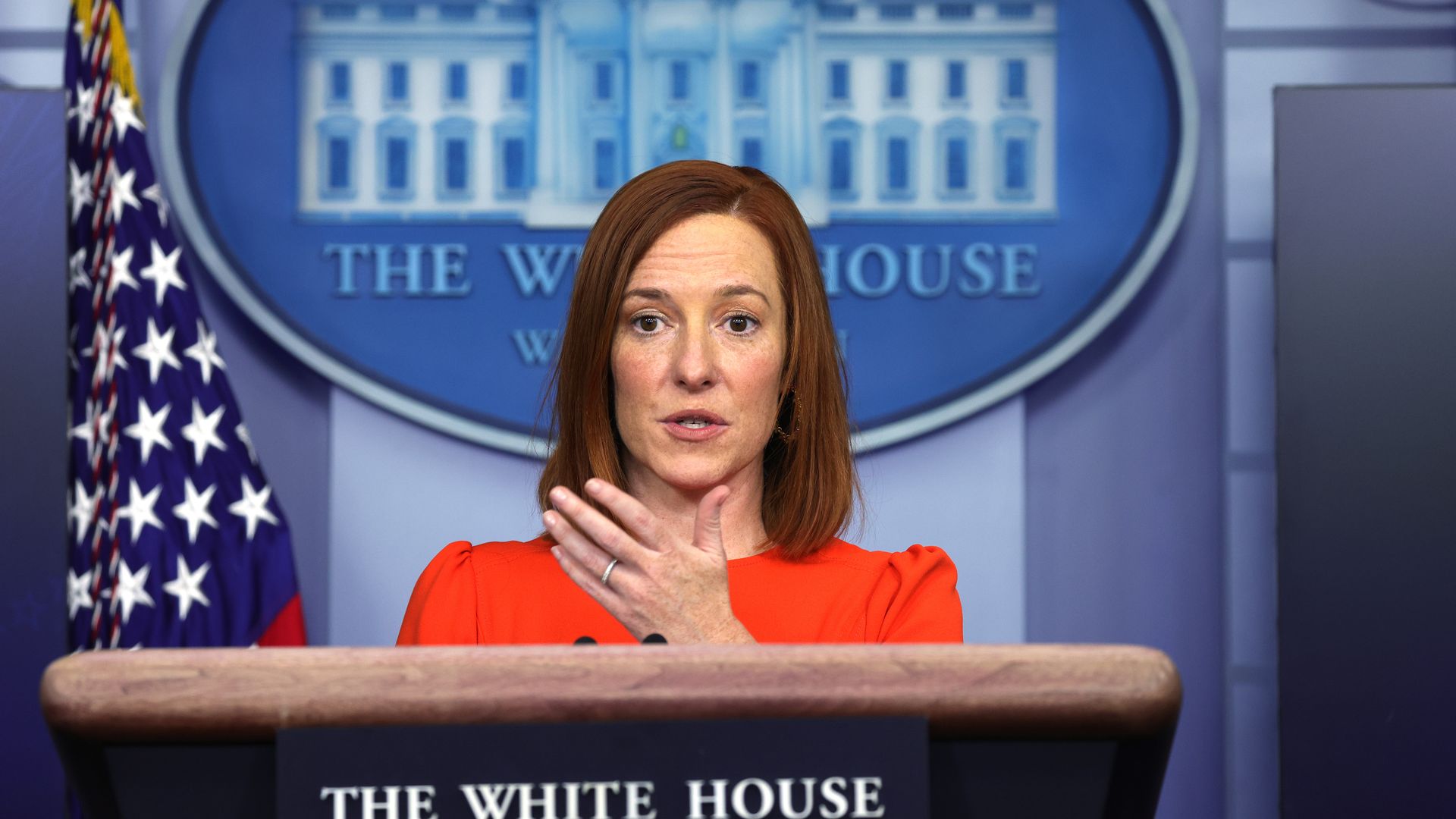
Photo: Alex Wong/Getty Images

White House press secretary Jen Psaki announced at a briefing on Friday that the Biden administration will roll out a three-pronged interagency plan to assess and combat the threat posed by domestic violent extremism.

Why it matters: The federal government's approach to domestic extremism has come under scrutiny in the wake of the Jan. 6 attacks on the Capitol by a pro-Trump mob. In his inaugural address, Biden repudiated political extremism, white supremacy and domestic terrorism, vowing to defeat them.

What they're saying: "The Jan. 6 assault on the Capitol and the tragic deaths and destruction that occurred underscored what we have long known. The rise of domestic violent extremism is a serious and growing national security threat," Psaki said.

  • "The Biden administration will confront this threat with the necessary resources and resolve. We are committed to developing policies and strategies based on facts, on objective and rigorous analysis, and on our respect with constitutionally protected free speech and political activities," she continued.

How it works:

  1. Biden has sent a request for newly confirmed Director of National Intelligence Avril Haines to conduct a threat assessment in coordination with the FBI and the Department of Homeland Security that Psaki said will produce a "fact-based analysis on which we can shape policy."
  2. The White House National Security Council will be tasked with building capacity to tackle and disrupt extremist networks. Homeland Security adviser Elizabeth Sherwood-Randall has asked Joshua Geltzer, a former NSC counterterrorism director, to lead a 100-day investigation.
  3. The administration will work to mobilize other factions of the government to address "evolving threats, radicalization, the role of social media, opportunities to improve information sharing, operational responses and more."

Go deeper

Off the Rails

Episode 8: The siege

Photo illustration: Aïda Amer/Axios. Photos: Mandel Ngan/AFP via Getty Images

Beginning on election night 2020 and continuing through his final days in office, Donald Trump unraveled and dragged America with him, to the point that his followers sacked the U.S. Capitol with two weeks left in his term. Axios takes you inside the collapse of a president with a special series.

Episode 8: The siege. An inside account of the deadly insurrection at the Capitol on Jan. 6 that ultimately failed to block the certification of the Electoral College. And, finally, Trump's concession.

On Jan. 6, White House deputy national security adviser Matt Pottinger entered the West Wing in the mid-afternoon, shortly after his colleagues' phones had lit up with an emergency curfew alert from D.C. Mayor Muriel Bowser.

3 hours ago - Politics & Policy

McConnell drops filibuster demand, paving way for power-sharing deal

Senate Majority Leader Chuck Schumer (R) and Minority Leader Mitch McConnell attend a joint session of Congress. Photo: Olivier Douliery/AFP via Getty Images

Senate Minority Leader Mitch McConnell has abandoned his demand that Democrats state, in writing, that they would not abandon the legislative filibuster.

Between the lines: McConnell was never going to agree to a 50-50 power sharing deal without putting up a fight over keeping the 60-vote threshold. But the minority leader ultimately caved after it became clear that delaying the organizing resolution was no longer feasible.

4 hours ago - Technology

Scoop: Google won't donate to members of Congress who voted against election results

Sen. Ted Cruz led the group of Republicans who opposed certifying the results. Photo: Stefani Reynolds/Pool/AFP via Getty Images

Google will not make contributions from its political action committee this cycle to any member of Congress who voted against certifying the results of the presidential election, following the deadly Capitol riot.

Why it matters: Several major businesses paused or pulled political donations following the events of Jan. 6, when pro-Trump rioters, riled up by former President Trump, stormed the Capitol on the day it was to certify the election results.

You’ve caught up. Now what?

Sign up for Mike Allen’s daily Axios AM and PM newsletters to get smarter, faster on the news that matters.

Please enter a valid email.

Please enter a valid email.

Subscription failed
Thank you for subscribing!