Trump prepares a new round of targeted tariffs

Add Axios as your preferred source to
see more of our stories on Google.
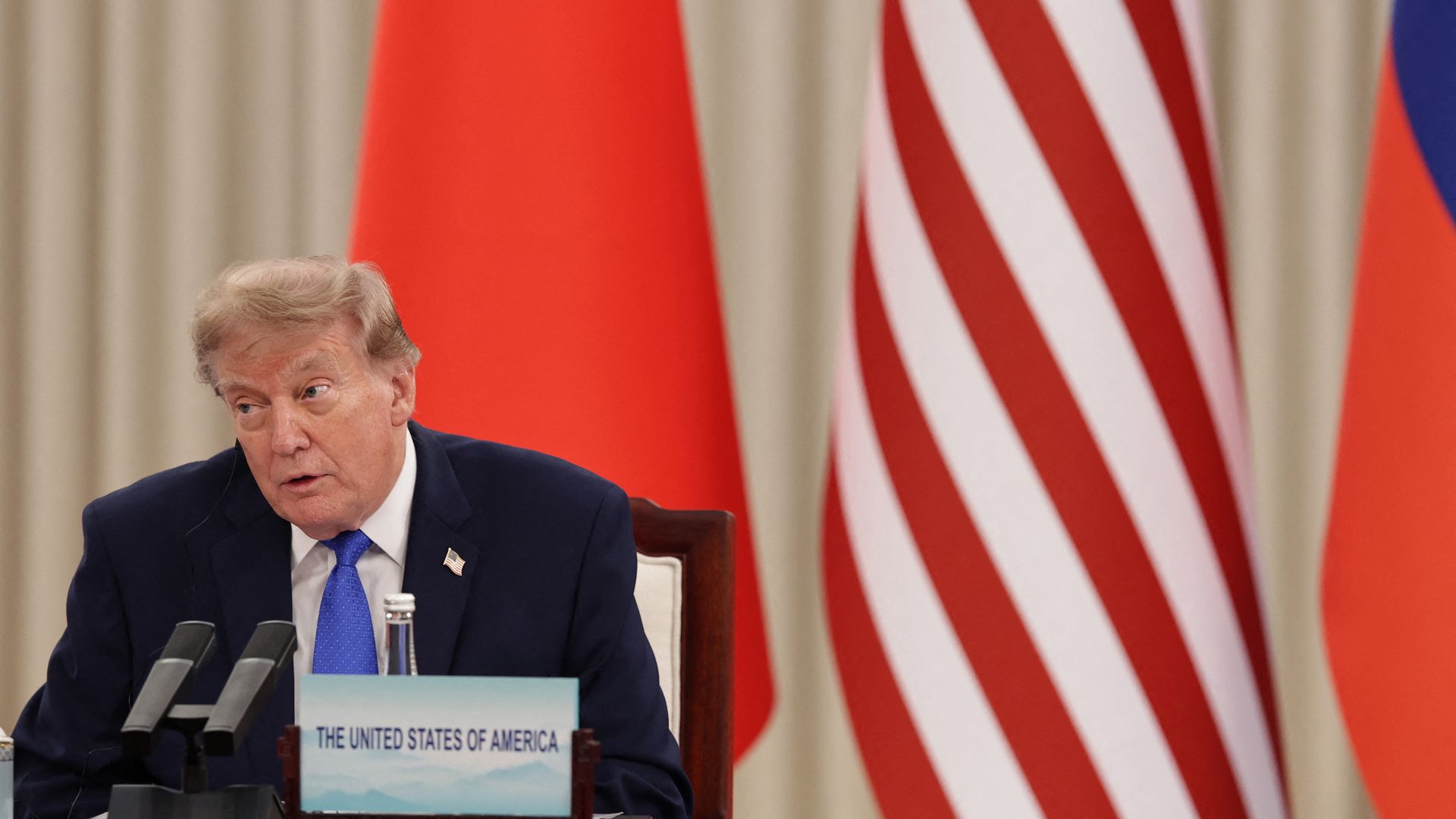
President Trump on the sidelines of the APEC summit in Shenzhen, China, last week. Photo: Andres Martinez Casares/Pool/AFP via Getty Images
The Trump administration is planning to announce a new round of tariffs as soon as tonight targeting China, Europe and other major trading partners over government policies that it says have created excess industrial capacity.
Why it matters: The tariffs stem from a trade investigation launched in March, though plans to implement them are the clearest sign yet that President Trump is pressing ahead with his trade agenda despite a Democratic midterm sweep fueled by affordability concerns.
Driving the news: The planned tariffs will be targeted and the proposed rates will honor the parameters set out in previously negotiated trade deals, according to a person familiar with the matter.
- The U.S. trade deals with the European Union and Japan struck last year, for instance, established a 15% tariff ceiling on most imports.
- News of the tariffs was first reported by the Wall Street Journal.
The big picture: The administration has argued that government subsidies and other forms of state support have encouraged excessive industrial production abroad, flooding global markets with cheap goods and putting American manufacturers at a disadvantage.
- The investigation was conducted under Section 301 of the Trade Act of 1974.
Friction point: The new tariffs may be targeted, but the administration is pressing ahead with its trade agenda at a time of heightened voter sensitivity to the cost of living. Americans continue to bear much of the cost of tariffs.
- House Speaker-designate Hakeem Jeffries told "Face the Nation" on Sunday that lowering the cost of living would be a priority for Democrats, including addressing the "Trump tariffs."
Federal Reserve officials, meanwhile, are counting on the inflationary effects of earlier tariffs to fade as they grapple with persistent price pressures elsewhere in the economy.
Flashback: The Trump administration has been working to rebuild its tariff wall since the Supreme Court struck down its sweeping emergency tariffs earlier this year.
- The latest levies are part of an effort to use other trade authorities.
The intrigue: The planned levies could potentially put the Trump administration in an awkward diplomatic position after months of efforts to build a coalition with allies to combat global industrial overcapacity.
- The tariffs could penalize some of the very countries whose cooperation officials have sought out.
- At a September meeting of G20 finance ministers chaired by Treasury Secretary Scott Bessent, every member economy except China agreed to tackle economic policies that distort trade and create an over-reliance on exports.
- Greer helped broker the "Milwaukee Framework," an agreement among 28 economies to coordinate trade restrictions and curb subsidies that contribute to excess steel production.
Of note: The administration is also embroiled in a trade fight with Canada amid negotiations over the future of the U.S.-Mexico-Canada Agreement.
The bottom line: Trump's tariff agenda is moving forward — perhaps in this case in a more targeted fashion — as Democrats in the incoming Congress look to curb presidential authority over trade policy.
